|
Welcome to the second edition of Fresh Ink, the Cambridge Language Collective’s newsletter summarising all the articles and events of the past term ͏ ͏ ͏ ͏ ͏ ͏ ͏ ͏ ͏ ͏ ͏ ͏ ͏ ͏ ͏ ͏ ͏ ͏ ͏ ͏ ͏ ͏ ͏ ͏ ͏ ͏ ͏ ͏ ͏ ͏ ͏ ͏ ͏ ͏ ͏ ͏ ͏ ͏ ͏ ͏ ͏ ͏ ͏ ͏ ͏ ͏ ͏ ͏ ͏ ͏ ͏ ͏ ͏ ͏ ͏ ͏ ͏ ͏ ͏ ͏ ͏ ͏ ͏ ͏ ͏ ͏ ͏ ͏ ͏ ͏ ͏ ͏ ͏ ͏ ͏ ͏ ͏ ͏ ͏ ͏ ͏ ͏ ͏ ͏ ͏ ͏ ͏ ͏ ͏ ͏ ͏ ͏ ͏ ͏ ͏ ͏ ͏ ͏ ͏ ͏ ͏ ͏ ͏ ͏ ͏ ͏ ͏ ͏ ͏ ͏ ͏ ͏ ͏ ͏ ͏ ͏ ͏ ͏ ͏ ͏ ͏ ͏ ͏ ͏ ͏ ͏ ͏ ͏ ͏ ͏ ͏ ͏ ͏ ͏ ͏ ͏ ͏ ͏ ͏ ͏ ͏ ͏ ͏ ͏ ͏ ͏ ͏ ͏ ͏ ͏ ͏ ͏ ͏ ͏ ͏ ͏ ͏ ͏ ͏ ͏ ͏ ͏ ͏ ͏ ͏ ͏ ͏ ͏ ͏ ͏ ͏ ͏ ͏ ͏ ͏ ͏ ͏ ͏ ͏ ͏ ͏ ͏ ͏ ͏ ͏ ͏ ͏ ͏ ͏ ͏ ͏ ͏ ͏ ͏ ͏ ͏ ͏ ͏ ͏ ͏ ͏ ͏ ͏ ͏ ͏ ͏ ͏ ͏ ͏ ͏ ͏ ͏ ͏ ͏ ͏ ͏ ͏ ͏ ͏ ͏ ͏ ͏ ͏ ͏ ͏ ͏ ͏ ͏ ͏ ͏ ͏ ͏ ͏ ͏ ͏ ͏ ͏ ͏ ͏ ͏ ͏ ͏ ͏ ͏ ͏ ͏ ͏ ͏ ͏ ͏ ͏ ͏ ͏ ͏ ͏

|
Cambridge Language Collective
|
|
|
|
|
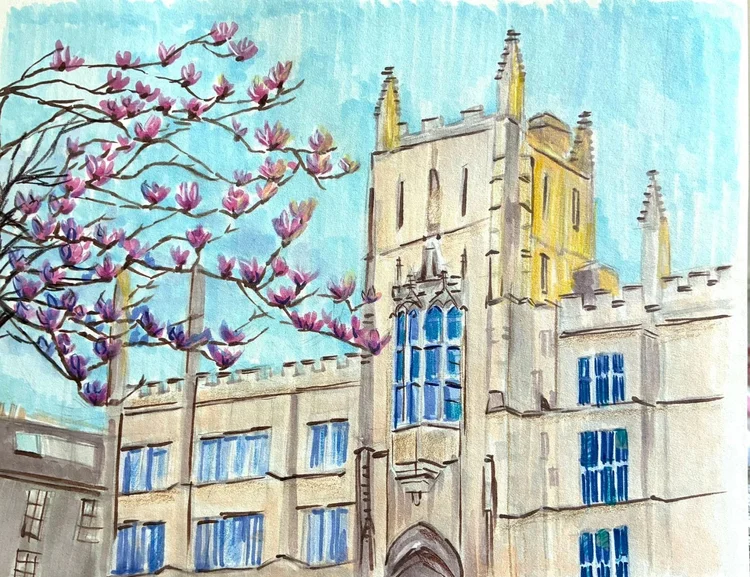
Illustration by Anne Katharina Osiander |
|
Fresh Ink |Lent EditionWelcome to the second edition of Fresh Ink, the Cambridge Language Collective’s termly newsletter. Enjoy a round-up of this past term’s articles, events, and highlights, delivered straight to your inbox, complete with an editorial from our Co-Editors-in-Chief, Alex and Soraya.
|
|
Lent term has been one of depth and range for the Cambridge Language Collective, with our publication continuing to grow. Alongside our journalistic work, it was a pleasure to bring people together in person this term. Our karaoke night in Clare Cellars offered a more light-hearted space to celebrate languages in practice! What’s more, we have just released the questions for our 5th Annual Schools’ Competition on our socials and our website. We are also in the process of putting together our Print Edition for 2026 and are excited to see how it develops over Easter term. Recent articles have taken readers from Latin America to the Mediterranean and from questions of language ownership to reflections on identity and memory. Pieces such as ‘Trump’s invasion of Venezuela and the New Age of Imperialism’ and ‘¿A quién pertenece el castellano?’ have engaged directly with political and linguistic debates, while ‘Literally Lost in Translation: The Politics of Bilingual Road Signs’ and ‘Cornerstones of Culture: What Does France Lose When It Loses Latin?’ explore the quieter but equally powerful ways language shapes public life and cultural heritage. We have also seen an influx of Year Abroad writing this term, particularly from the Middle East. In light of ongoing events, these pieces feel especially significant. They remind us of the importance of engaging with places and cultures as they are lived and experienced, rather than solely as they are presented through the lens of headlines. As Easter break comes to an end and the examination period begins, readers who may have been dispersed across different countries and time zones for the vacation start to return to Cambridge. Perhaps, in the quieter moments of Easter Term, our collection of articles will offer you a pause for thought and we hope you all enjoy. Happy reading, Soraya Shakibi and Alex Brian Co-Editors-in-Chief 2025-26
|
|
|
A crowd of Venezuelan protesters in Times Square, New York (Photo: Claire Sea Adh, via Unsplash) |
|
|
Trump’s Invasion of Venezuela and the New Age of Imperialism Natalia del Mar Green Salinas situates Trump’s invasion of Venezuela within a wider context of American imperialism throughout the continent, arguing that the attack echoes previous US interventions while marking a major shift in the country’s foreign policy as “the first time the U.S. military has directly intervened in South America to effect regime change”. In addition to offering an engaging explanation of the political implications of Trump’s invasion, the article addresses the complex responses of Venezuelans. Natalia criticises Trump’s intervention as enforcing empire while also acknowledging the “tears of joy” from Venezuelans who suffered under Maduro’s rule, encouraging the reader to let go of “rigid black-and-white perspectives”.
|
|
|
An example of a Welsh-English bilingual road sign (Photo: Isobel Dickinson-Lomas) |
|
|
Cornerstones of Culture: What Does France Lose When It Loses Latin? As the study of Latin loses its presence in French schools and becomes increasingly inaccessible, Hannah Fairburn explores the historical importance of the language, both intellectually and in public spheres throughout France. If Latin remains reserved for the privileged, Hannah argues, France will lose the belief that its cultural inheritance belongs to everyone. “How can France rewrite the narrative of Latin and elitism?” the article asks, referring to efforts in the United Kingdom to make the study of Latin more available to students from less privileged backgrounds. The piece offers a fascinating summary of the fundamental role Latin has played in France’s literary, linguistic and political history, before concluding with a call for France to “ensure that the study of Latin is open to every student”. Literally Lost in Translation: The Politics of Bilingual Road Signs Isobel Dickinson-Lomas, drawing from her experience of moving to Wales last year as an English speaker, is inspired by recent criticisms of the presence of Welsh on road signs by various public figures to argue for the respect and encouragement of the Welsh language. English is continuously taken as the “default language of the landscape,” as critics make both financial and psychological objections to bilingual road signs. Focusing on Gwynedd, where around 64% of the population speaks Welsh, Isobel convincingly argues that it is English, not Welsh, that feels the most out of place on signs some have argued Welsh should be removed from. As the number of Welsh speakers in Wales increases, Welsh must be “made essential to recognise and impossible to ignore”. ¿A quién pertenece el castellano? Charlotte Stokes’ article, written in Spanish, responds to a recent conflict between the Instituto Cervantes and RAE, two powerful institutions dedicated to promoting the Spanish language and, in the case of RAE, “a limpiarla, fijarla y darle esplendor,” or to purifying, standardising and enriching it. Charlotte discusses different ways of managing a language: striving to rigorously regulate and stop a language from changing, or allowing a language to evolve naturally. The author argues that the Spanish language does not, in fact, belong to either of these institutions, but to those who speak it. Slipping from the Mediterranean Tightrope In this article, Charlotte Stokes highlights the Spanish enclaves of Ceuta and Melilla as places existing politically and culturally between Europe and Africa. While the islands are often viewed as models of coexistence, social and religious divisions mark the reality of daily life – local languages are undervalued and the areas are marginalised within the EU.
|
|
Middle East, Central Asia and Africa
|
|
|
Taybeh Brewery (Photo: Isobel Johnston) |
|
|
A Palestinian Pint Isobel Johnston’s ‘A Palestinian Pint’ follows the Khoury brothers’ establishment of the Taybeh Brewery in the village of Taybeh in the West Bank. Johnston describes the Khoury family’s passion for beer as a “peaceful defiance of occupation”. She hears from Madees, who works in the brewery, about the challenges of running the business amid the threat of settler violence and the economic strangling of the West Bank under Israeli governmental bureaucracy. “Our international support is essential to protecting Palestinian rights in the West Bank and to the survival of businesses like Taybeh,” Isobel argues, emphasising the importance of buying ethically and intentionally. “And all this aside, why not try the best beer in the Middle East?” At the Intersection of Europe and North Africa: Reflections on Being Mixed Race in Malta “I live my life in English, yet like Malta I am torn between two linguistic worlds, English and Arabic,” writes Lyla Koch, reflecting on the complex identity of Malta as a result of British colonialism. Alongside lucid descriptions of Malta’s landscape, the article is an exploration of human connection and language, in a space defined by multiculturalism at the intersection of two continents. The author argues that to feel distinct is the “most shared feeling of the human experience”. Incorporating personal reflections on being mixed race in Malta, Lyla invites every reader to identify with the feeling of being different, of being one’s own. My Brother’s Keeper “If, as the saying goes, history really is written by the victors, I hope whoever finds these letters will write mine: the story of a fighter-boy with a rusted rifle and a hunger for a life as sweet as mangoes” – Dara Osinowo concludes a collection of letters narrating experiences of conflict, memory, and family in 1960s Western Africa. My Galilean Summers “Tobacco and cardamom still smell like the present, where there is no such thing as a past regret or a future anxiety.” Joseph Habib recalls memories of childhood summers in northern Israel in a publication that is both humorous and deeply poetic. Colonial Shadows: How French Urban Planning Still Shapes Moroccan Cities Rylan Holt’s article walks the reader through modern-day Marrakesh, a city divided between an old town of red sandstone buildings and a manicured, Art Deco “ville nouvelle” (new town). The latter was added to the city in the 1910s by the French after it became the administrative centre of the French Protectorate of Morocco. Using examples from various cities in Morocco, Rylan explains how French urban planning produced contrasting, unequal spaces that reflect broader colonial hierarchies. The dilemma of whether to continue developing towards Western standards or return to tradition is a challenging one – Rylan evokes the promising path of a “hybrid of traditional designs integrated into modern architecture”. Reconciling with Holy Land Isobel Johnston recounts their experiences of volunteering during Palestine’s annual olive harvest, describing it not only as a time of production, but as a form of peaceful resistance. Focusing on the experiences of the Nassar family, who own a farm ten kilometres southwest of Bethlehem in the West Bank, the essay highlights the struggles of Palestinian families to retain their land as Israeli settler violence increases. The author urges the reader to consider volunteering for the Tent of Nations organisation: “As their situation in the West Bank continues to worsen, international presence is more important than ever before.” Petit Dej à Casa Looking for a slower, more intimate way into a place? Set in Casablanca, this piece by Inès Oulevay lingers over the quiet rituals of morning, where food, language, and atmosphere blur into one. Through the lens of a petit déjeuner, it captures the textures and rhythms of everyday life, offering a sensory and perceptive reflection on culture, routine, and the fleeting feeling of belonging.
|
|
|
Camel Riding (Photo: Jana Abdel-Aty) |
|
|
You’re a Tourist: Act Like One Looking for a more thoughtful way to travel? This piece explores what it really means to immerse yourself in a place, questioning the idea of “authentic” experiences and encouraging readers to move beyond surface-level tourism. It’s a reflective read on curiosity, cultural engagement, and the responsibilities that come with exploring the world. Gran Canaria: Where Continents Converge Dreaming of slipping between cities, languages, and fleeting moments? This piece captures the quiet magic of travel and the connections made along the way as something a little more than a getaway – something softer, slower, and more memorable. It’s an ode to the art of wandering, where the journey itself feels like a story unfolding in the moment.
|
|
|
The Granada skyline (Photo: Asher Porter) |
|
|
Nuevas Navegaciones I This article marks the first chapter of Asher Porter’s travels in Spain, after completing his year abroad in Pavia, Italy. The author’s first experience of solo-travelling begins in Málaga. Beyond the Chicken Coop V - Photographic May This is the fifth chapter of Luca Howes’ column, in which he aims to overcome the loneliness of the “chicken coop” (symbolising isolation and foreignness). The diary-style publication gives the reader a poetic and photographic insight into Paris in May. The Value in Misspeaking Lucy Thomas’ ‘The Value in Misspeaking’ is a text all students living abroad can relate to. The disorienting and frustrating feeling of living and working in another language, regardless of fluency, can make life overseas a confusing and isolating experience. This publication interestingly highlights the uniqueness of monolingualism as an exception in Anglophone countries. Nuevas Navegaciones II - Recuerdos de la Alhambra Asher Porter’s adventures in Spain continue, this time in Granada. “The corporate vibe of Málaga had been exchanged for Thailand trousers, weed and a suspicious hippie lurking in the doorway,” Asher describes. The essay explores the fascinating, multicultural history of the city and the friendships the author made during his stay. Nuevas Navegaciones III - Capricho Árabe “Across his territories, heralds would now declare him as Caliph, the new religious leader of Islam, with Córdoba as the new capital of the Muslim world,” Asher Porter writes, referring to And al-Rahman III. Now in Córdoba, Asher once again takes the reader on a descriptive journey of the city and its people, from Flamenco dancing to Islamophobia in Spanish society.
|
|
|
A family tree of languages (created by Ibrahim Farah) |
|
|
Why Do Some Languages Feel Weirdly Familiar? Ever had the strange feeling of recognising a language you have never learned? This piece by Ibrahim Farah leans into that quiet déjà vu, exploring the invisible threads that make some languages feel oddly close. It is a thoughtful, almost playful reflection on familiarity, in which history, habit, and everyday language use blur together, reminding us that what feels “close” is not always what we expect.
|
Year Abroad Photo GalleryMany thanks to all of you who have submitted photos. Take a look at a selection of them here! Find more entries here on our website.
|
|

|
|
Buenos Aires, Argentina, photographed by Isabelle Tear |
|
|
|
|
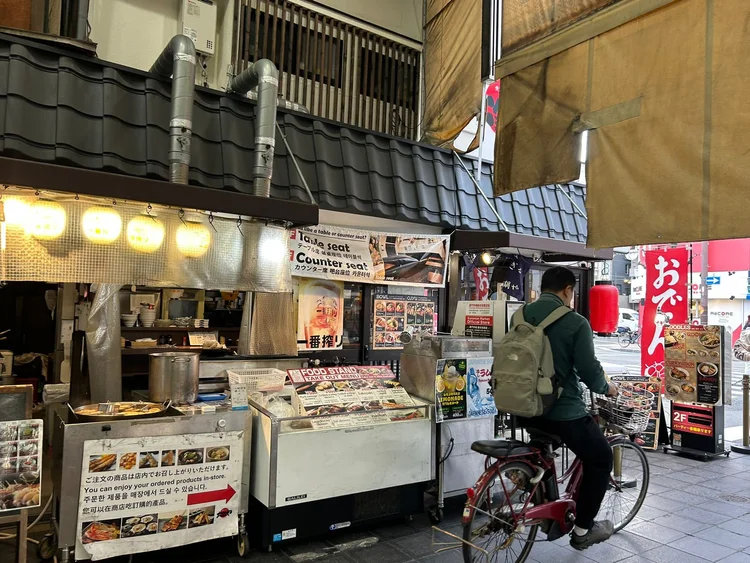
Osaka, Japan, photographed by Alex Reeves-Bonoldi |
|
|
|
|
|
|

|
|
Colonia, Uruguay, photographed by Alex Reeves-Bonoldi |
|
|
|
|
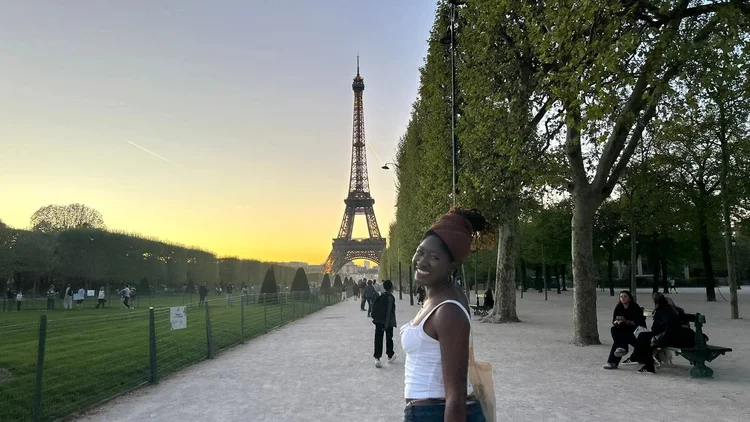
Paris, France, photographed by Yindy Fadipe |
|
|
|
|
|
|
|

|
|
Paris, France, photographed by Yindy Fadipe |
|
|
|
|
Forbidden City, Beijing, photographed by Alex Reeves-Bonoldi |
|
|

|
|
|
|

|
|
Paris, France, photographed by Isabelle Tear |
|
|
|
|
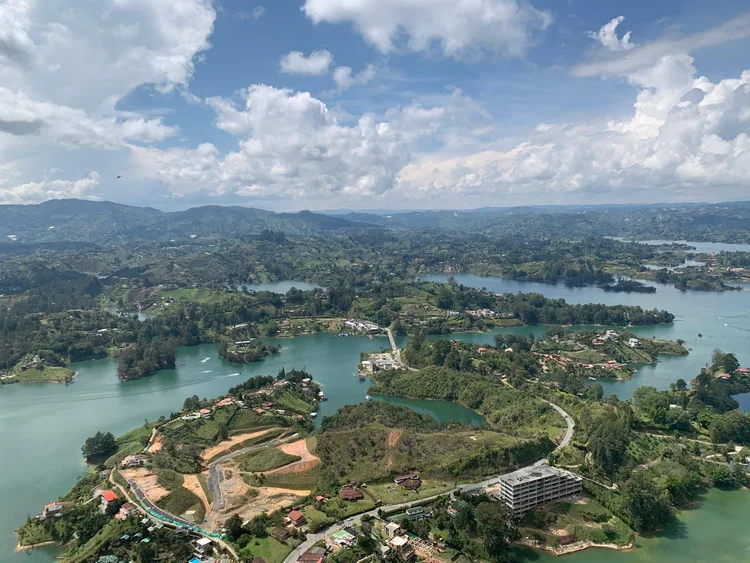
Guatapé, Colombia, photographed by Soraya Shakibi |
|
|
|
|
|
|
|
|
|