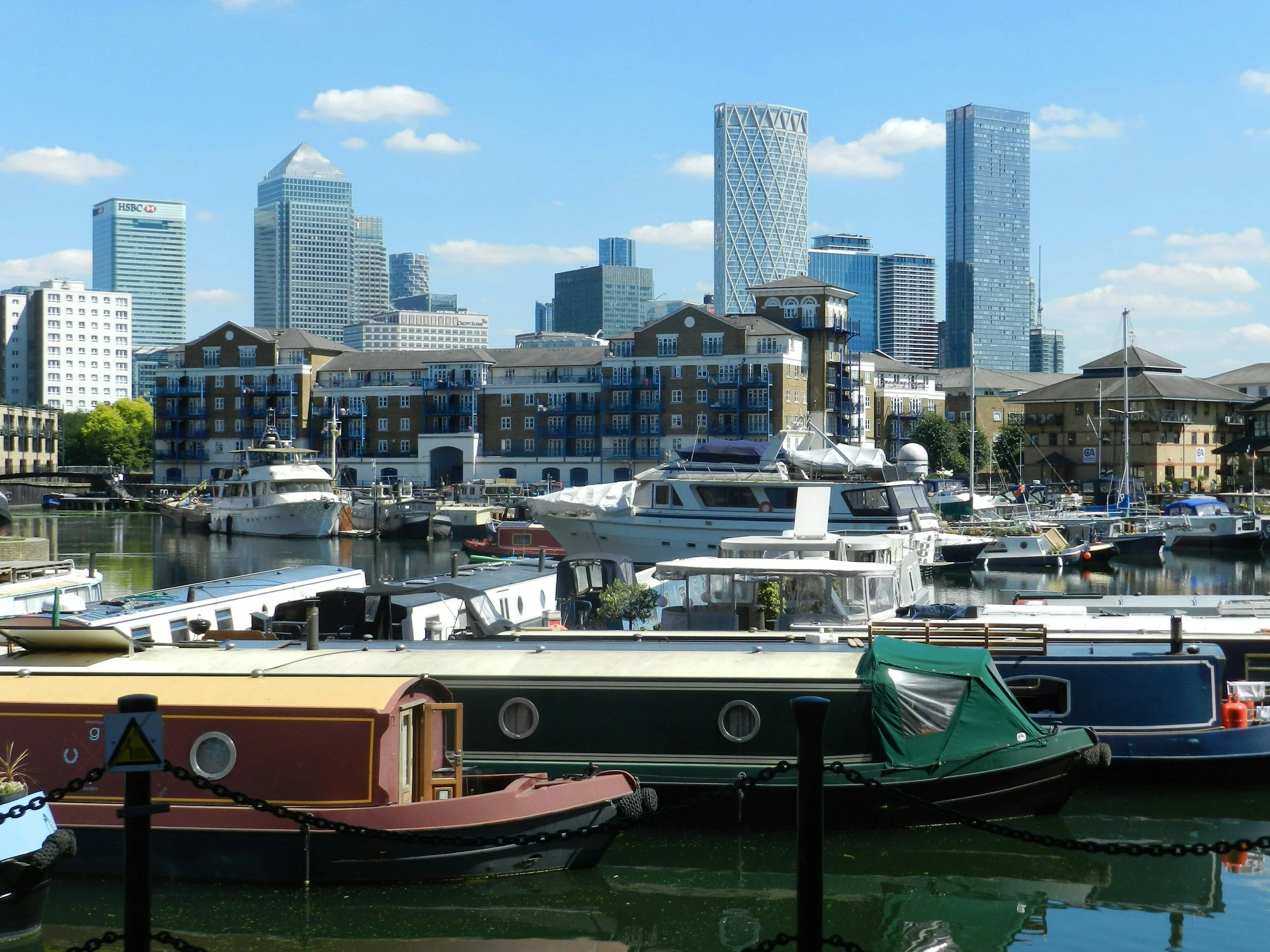
Credit: Jeffery Ashitey / Unsplash
A passer-by walking through Limehouse, in the borough of Tower Hamlets, may notice the seemingly out-of-place street names ‘Ming Street’, ‘Canton Street’ or ‘Pekin Street’, and wonder how these streets in the residential neighbourhood north of Canary Wharf came to have Chinese names. Most are likely unaware that, prior to the establishment of Soho’s well-loved ‘唐人街’, Limehouse was home to the first of such settlements in the United Kingdom.
In the mid-19th century, the Chinese community in this area grew with the settlement of Chinese seamen, employed by the East India Company to load, and unload ships. The small population of several hundred Chinese labourers, mainly men, opened Chinese teahouses, or ‘茶楼’, lodging houses and grocery stores, creating an area characterised by ‘warm community spirit’, as Connie Hoe describes in a BBC interview about her childhood in what was one of the poorest neighbourhoods in London.
Nevertheless, the history of this Chinatown, as well as Chinatowns around the world, is one of exclusion, discrimination, and segregation. The Chinese men carrying out labour for the East India Company are known to have been paid half that of the average British worker, and while the United Kingdom did not have formal racial segregation laws, Chinese residents were refused accommodation elsewhere, and often depended on the community networks of the neighbourhood as a safe space. Verbal harassment and xenophobic attitudes were common, and Chinese men as well as other foreign workers were often excluded by trade unions, leaving the majority of the Chinese population with fewer opportunities.
Literary sources provide us an insight into the vilifying, sensationalist portrayals of Limehouse, exemplified by Thomas Burke’s short story collection ‘Limehouse Nights’, explored by Anne Witchard. Witchard discusses social anxiety surrounding the demonised ‘inscrutable Chinamen’, describing these individuals as the ‘scapegoats of British social ambivalence’, represented as a breakdown of social order and a sexual and racial threat through marrying British women. Writers such as Charles Dickens equipped symbols like the opium den to exoticize Chinese culture in an intensely racist attempt to dehumanise the neighbourhood’s inhabitants.
Bombing during the Second World War and industrial change resulted in the decline of the neighbourhood in the mid-20th century, to be followed by a separate wave of Chinese and East Asian immigration, particularly from Hong Kong, seeing the creation of Soho’s Chinatown. The bustling streets of London’s Chinatown today, lined with lanterns and towering gates, are vibrant, consumerist, and exciting, and create a beautiful space in which residents and tourists enjoy Chinese and other East Asian cultures and cuisines. Rather wonderfully close to Soho’s ‘LGBT+’ district, comparable to the vicinity of Birmingham’s Chinatown and Gay Village, London’s Chinatown when I first started the visiting the city by train from my small coastal town seemed to offer a sense of safety and comfort, even as someone with absolutely no familial connection to China or East Asia.
To take a perhaps predictable political turn and broaden the discussion beyond the past and present of Chinese culture in Britain, while researching the inaccurate and xenophobic portrayals of Limehouse, I pondered upon current anti-migrant sentiment throughout media in the United Kingdom. Connections can perhaps be made between the prevalent inaccuracy and xenophobia of information currently circulating online, and the written narratives surrounding London’s first Chinatown.
Chinatowns in London and cities beyond represent the kind of space that, to me, represent the country I was born and raised in. Just as other neighbourhoods such as Southall, Little Italy, Peckham or Bricklane symbolise diasporas in the United Kingdom and hold fundamental places in our national identity, the history of Chinatown in London is as much a part of the British story, as it is of that of the story of the Chinese and East Asian diaspora that shape these neighbourhoods.
Alexis, the editor of this wonderful section, taught me a new 诗句, a Chinese idiom, when discussing how to incorporate the Chinese language into my article, that I thought resonated strongly with the theme. If translated literally, it means ‘close friend in a distant land, far-flung realms as next door’, but may rather mean that with understanding and solidarity, distance, origin, and geography cease to divide us.
‘’海内存知己,天涯若比邻”
Hǎi néi cún zhī jǐ, tiān yá ruò bì lín
唐人街 tángrénjiē – Chinatown
茶楼 cháloú – Chinese teahouse
诗句 shījù – line, verse
Bibliography
https://www.londonmuseum.org.uk/collections/london-stories/limehouse-londons-first-chinatown/
https://towerhamletsslice.co.uk/poplar/limehouse-chinatown-history/
https://www.bbc.co.uk/teach/class-clips-video/articles/z4jg92p
https://www.literarylondon.org/the-literary-london-journal/archive-of-the-literary-london-journal/issue-2-2/aspects-of-literary-limehouse-thomas-burke-and-the-glamorous-shame-of-chinatown/