New wave of lockdowns sweeps across Europe
Will Kirby, News Editor
Figures and statistics accurate at the time of writing.
As the second wave of Covid-19 infections tightens its grip, the world’s gaze is once again fixed on the European continent as it becomes, for the second time, the epicentre of the pandemic. The leaders of several major European countries, cities and regions took to the airwaves this week to announce a range of stricter measures, in an attempt to slow the threatening pace at which infection rates are growing.
Among their number were French President Emmanuel Macron, Acting Vice President of Catalonia Pere Aragonès, German Chancellor Angela Merkel and, of course, Boris Johnson. Wednesday 14 October was highly anticipated by millions across the continent, with several leaders making announcements that day.
Some of the most drastic measures announced so far came from the Élysée on Wednesday evening. President Emmanuel Macron sat down in a socially-distanced interview format to discuss a new curfew from 9pm until 6am effective in nine major cities and agglomerations, including Paris and Île-de-France, Toulouse and Aix-Marseille-Provence.
You can read more about the French curfew in our Weekly Round-up.
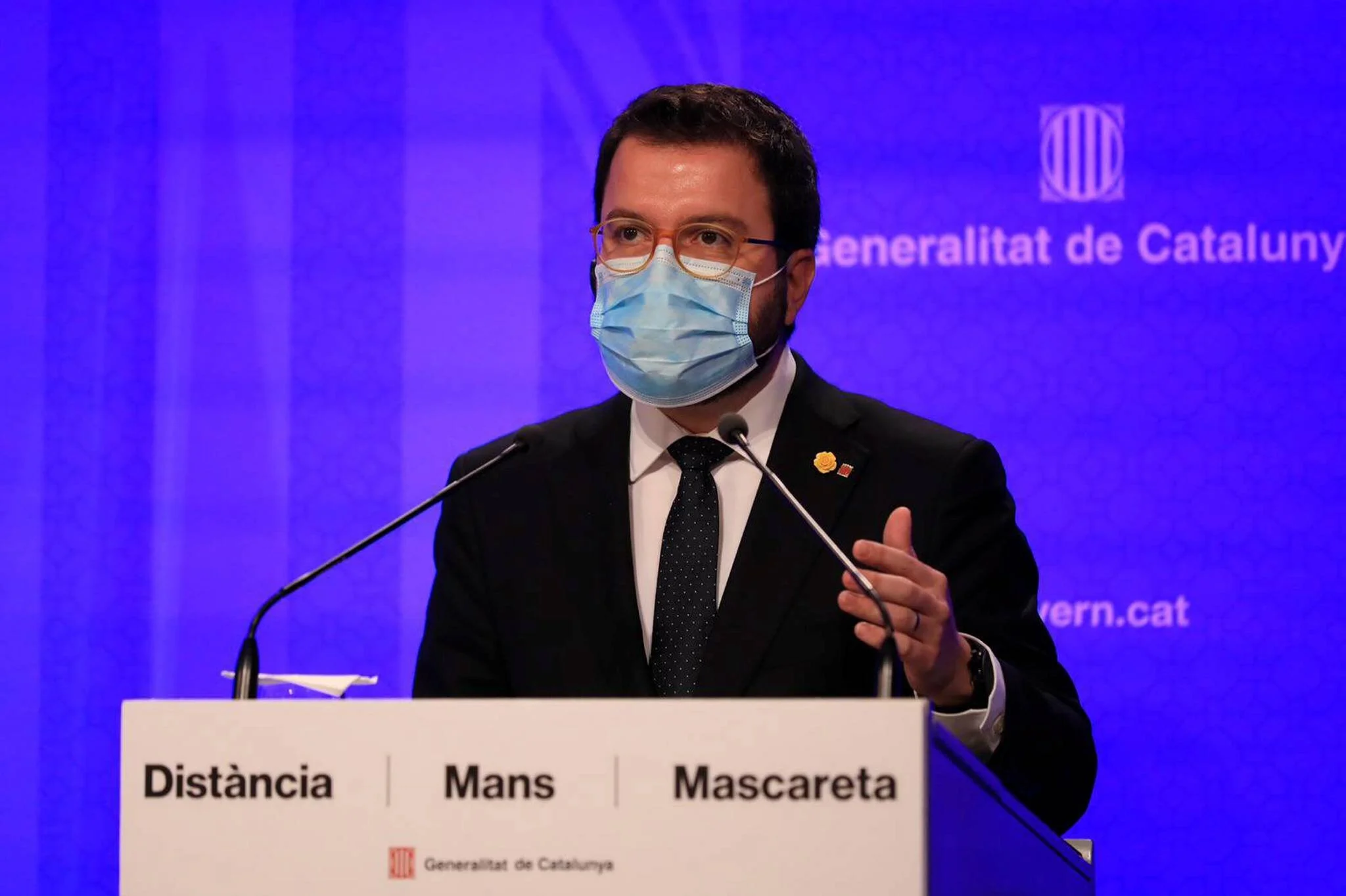
Catalan Vice President Aragonès during the press conference (Photo: Jordi Bedmar)
Around midday that same day, the Catalan authorities announced a string of new measures aimed at halting the growing spread of the virus in an attempt to avoid stricter stay-at-home orders. Despite a court challenge, on Thursday night, bars and restaurants shut their doors for a fortnight.
University teaching in Catalonia has also been moved entirely online for two weeks, and businesses have been asked to have their employees work from home. Schools do, however, remain open.
The Catalan government was contemplating the reopening of nightclubs only one week prior. However, case numbers took a sharp turn for the worse in Catalonia, with an average of 273 cases per 100,000 people and hospital admissions on the steady increase.
The newspaper Ara reports that these measures are designed to stop the situation reaching the same level as Madrid, where there are around 463 cases per 100,000 people.
There, the imposition of new restrictions has been fraught with difficulties. Political differences between the ruling left-wing coalition, led by the Socialists (PSOE) in the central government and the opposition Partido Popular (PP), who control the regional parliament in Madrid, came to the fore.
Restrictions were finally imposed on 1 October for fourteen days in the Madrid region. The major restriction is on movement which is not ‘adequately justified’ between municipalities. A rule of six is also in force, along with reductions to maximum capacities in shops, bars and restaurants.
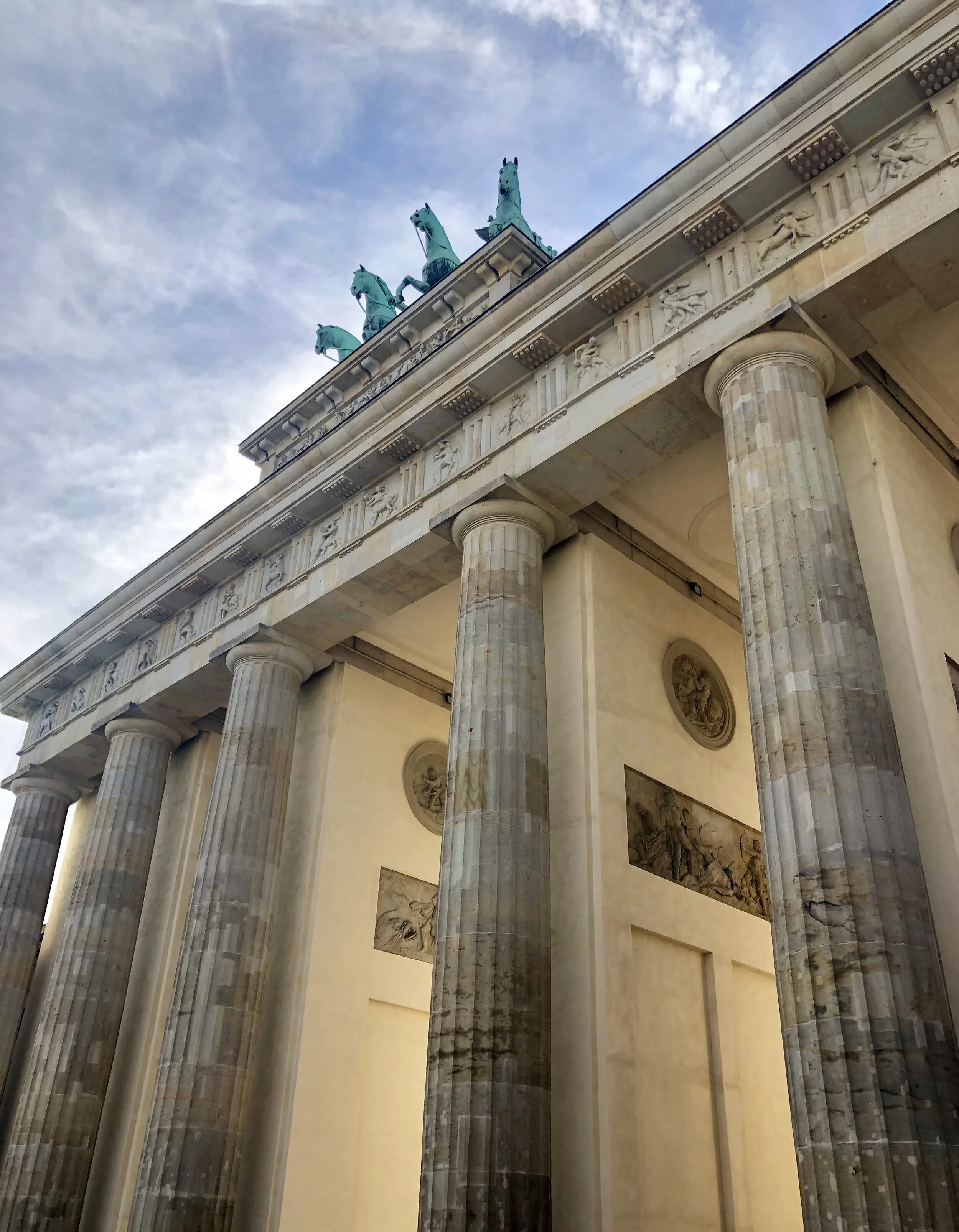
Brandenburger Tor (Photo: Will Kirby)
Angela Merkel also held a press conference on Wednesday night. After meeting with leaders of the regional governments earlier that day, the Chancellor detailed the latest restrictions aimed at reducing social contact and keeping the virus under control.
They are only to be applied to hotspots where there are particularly high rates of infection, but the exact restrictions have been uniformly agreed across the regions. They include requiring the wearing of masks and limits on group sizes. In Berlin, groups are already limited to five people between the hours of 11pm and 6am. Similarly, Munich has also limited groups to five people and has banned the sale and consumption of alcohol after certain times in particular ‘hotspots’.
The situation in The Netherlands has also worried the government there. Dutch Prime Minister Mark Rutte announced a string of new nationwide restrictions to accompany the local restrictions applied according to the infection rates in particular areas. Restrictions include a maximum of three visitors to your house a day, a ban on alcohol sales after 8pm and the recommendation to reduce travel to the minimum.
The latest data from the Dutch National Institute for Public Health and the Environment (RIVM) places the number of cases per 100,000 people in Amsterdam at 710.2 for the past fortnight.
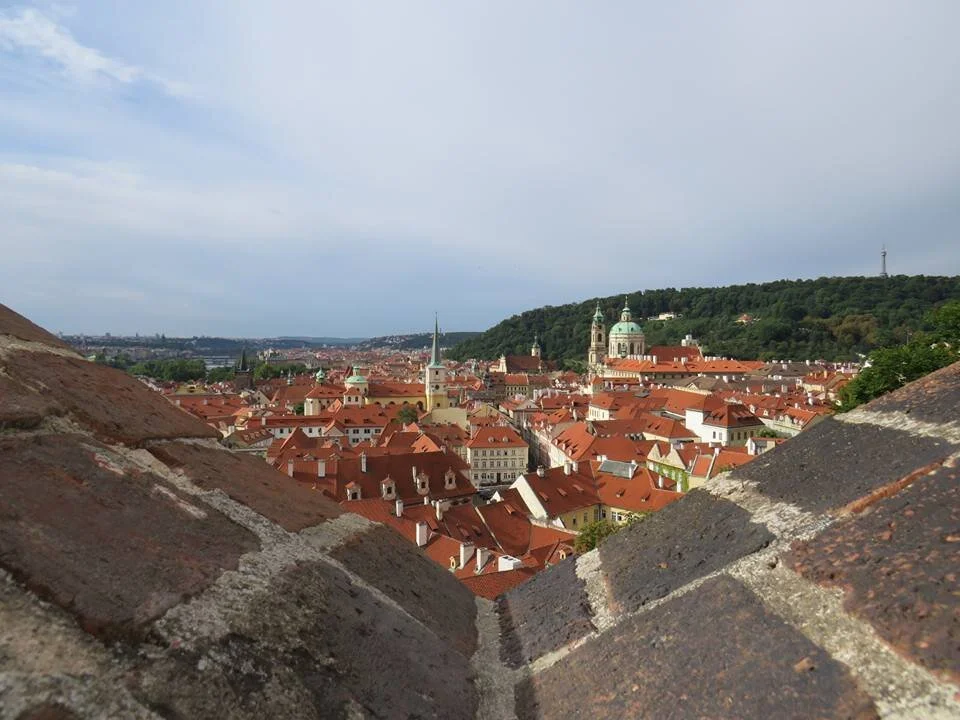
View over Prague (Photo: Olivia Bonsall)
The Czech Republic also finds itself on the brink of a second lockdown. The country was praised for its initial response to the pandemic, but now has more cases per capita than any other European country, with 701.9 cumulative cases per 100 000 over 14 days. Measures announced recently include the closure of schools, bars and clubs until 3 November. Situations in which mask wearing is obligatory has been extended and group sizes have also been capped at six.
Back in March, the Czech Republic quickly brought in a strict lockdown, shutting its borders and bringing in obligatory mask-wearing. These measures were lifted, but the country is now facing a second strict lockdown.
These measures all stand to be compared with the three-tier system in the United Kingdom. The government has come under fire from a number of sides criticising these new measures. Labour's Keir Starmer is instead calling for a ‘circuit break’ with a short, total lockdown to attempt to reverse the current trend of infections. It is, however, worth noting that nowhere in Europe is yet to take this approach, all opting for somewhat less drastic measures for the time being.
If there is one thing the past few months have taught is it that impositions on personal liberties are not always readily accepted. There is often opposition to new measures from the people they affect, as well as from opposition parties and the courts.
The success of these new sets of restrictions is far from assured – they rely on a certain degree of compliance and faith in the competence of authorities. On that front, the UK may well struggle and the picture is fairly split elsewhere too – in Spain, for example, opinions on the government’s handling of the crisis are divided fairly reliably along existing political battle lines.