News Round-up Archive
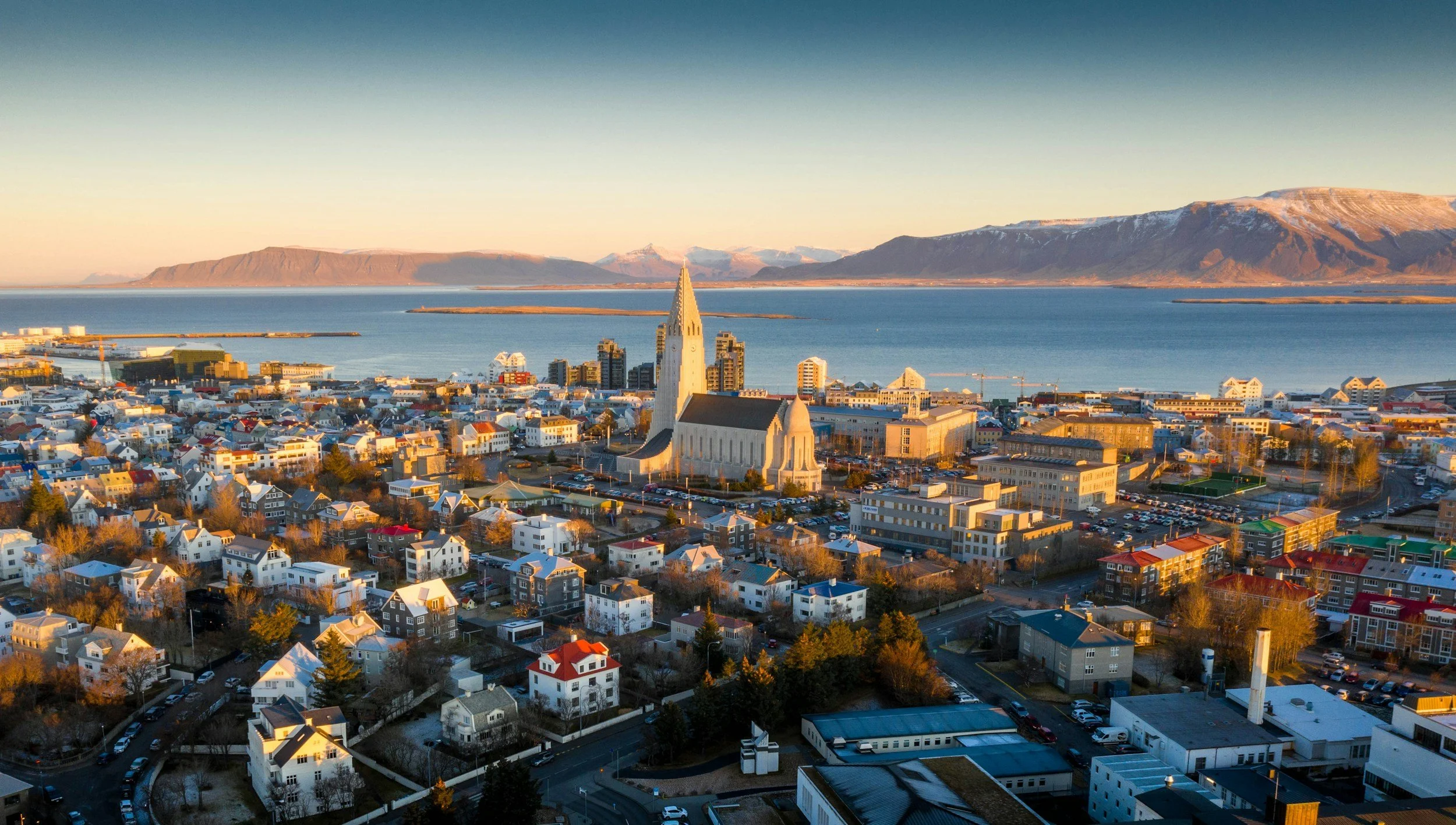
Reykjavik Iceland
Week of 9 November 2020
AUSTRALIA: Australia Post to encourage optional use of Aboriginal place names – following a grassroots campaign, Australia Post has announced that they will support the optional inclusion of Aboriginal place names in addresses. Rachael McPhail is the woman behind the campaign – she is of Gomeroi heritage and has been encouraging the wider acceptance of First Nations place names in addresses across Australian institutions and businesses that operate in the country, such as Uber. It is a step in the right direction with regards to decolonising important aspects of Australian society, such as the recognition and awareness of the First Nation Country in which Australians themselves live, or likewise the Country to which they’re sending their post.
CENTRAL AMERICA: Second storm on track to batter the region – following in the path of Hurricane Eta, which killed 200 people earlier this month (read the CLC News Round-up from week commencing 2/11 for more), Hurricane Iota is expected to make landfall in Honduras and Nicaragua on Monday. Forecasters have said the storm is growing rapidly stronger and the National Hurricane Center has warned that the recent effects of Hurricane Eta could worsen any flooding and mudslides. People in the region have been told to expect ‘life-threatening’ flooding. This would be the thirtieth storm to sweep across the region this year, a record-breaking figure. The Guatemalan president has accused industrialised nations of being ultimately responsible for the increased number and intensity of hurricanes. He highlighted that the effects of climate change are felt strongly in his country’s region, among the most impoverished in the world, and that industrialised nations provide very little in the way of aid and support.
GERMANY AND UNITED STATES: Covid vaccine found to be highly effective – one of the only good-news stories of the past months has been Pfizer and BioNTech’s announcement this week of a Covid-19 vaccine with astounding 90% efficacy. However, the big name of the American multinational pharmaceutical company which has made it to the headlines, in fact, overshadows the other half of the story. The vaccine has actually been produced through a collaboration of Pfizer and a lesser-known German biotech company, BioNTech, which had been working on a mRNA-based flu vaccine before the arrival of the Coronavirus pandemic, but noted its potential with regards to providing immunity from Covid-19. The company is based in Mainz and was founded by a Turkish German husband-wife duo; BioNTech is leading the breakthrough scientific research and development of the vaccine, whereas Pfizer is lending its weight as a huge multinational to run trials, clear the relevant regulatory hurdles and, in the process, garner much of the immediate media attention. Although, BBC News is reporting, as one of its leading stories this weekend, that BioNTech CEO Prof Ugur Sahin affirms normal life will be back by next winter. Reading deeper into the story of BioNTech, however, helps us to understand just how pioneering this new technology is and the exciting future it may have ahead of it.
UNITED STATES: Election drama drags on as Trump refuses to concede – Election Day may feel a somewhat distant memory in a world of ephemeral news cycles. However, the aftermath – despite a now clear Biden win – is, as predicted, still only beginning to play out. Legal challenges have been launched by the Trump campaign across the US, although few, if any, are expected to see much success in the courts. Thousands also descended on Washington DC this Saturday 14 in support of Donald Trump at the Million MAGA March. Nevertheless, Trump’s long game is beginning to become clear: maintain support among his base, potentially for another presidential run in 2024. No doubt, however, that the sowing of doubt surrounding the integrity of democratic processes will serve to only weaken the foundations of American democracy, which, after four years of a Trump White House, already finds itself on increasingly unstable ground.
Week of 26 October 2020
ARMENIA AND AZERBAIJAN: On Friday, representatives from the two warring countries arrived in Geneva for a round of peace talks. Representatives from France, Russia and the U.S. will also participate in this latest attempt to solve the largest military confrontation in the area since the Nagorno-Karabakh War of 1991–94. In a potential breakthrough, Russian President Vladimir Putin said on Thursday that Russia would accept a return of the disputed Nagorno-Karabakh region (currently occupied by Armenia) to Azerbaijan, recognising that ‘there are no simple solutions’ in sight.
FRANCE: It’s been quite a difficult week for France. On Wednesday, French President Emmanuel Macron announced a new nationwide lockdown to last at least until the end of November, hoping to curb the rapid spread of COVID-19 in the country. Under the new rules, all non-essential businesses will close but factories and schools will remain open. This is in addition to the curfews which have already been in force in most French cities since last week. Then, on Thursday, a man killed three people with a knife in the city of Nice in what has been described as a terrorist incident, prompting Mr Macron to raise the terror alert level to ‘maximum’.
GERMANY: On Saturday, Berlin’s long-awaited new international airport will finally open its doors to travellers. The delays and ballooning costs of the project have caused ample debate in Germany over the years: the airport was first scheduled to open in 2011 and construction costs have exceeded initial estimates by over €4bn. It is believed that the decrease in traffic due to the pandemic will make the opening easier: when fully operative, the airport will be able to handle 58 million passengers per year, but currently Berlin’s other two airports are serving as few as 2,500 passengers per day.
NIGERIA: The Financial Times has published a detailed special report to celebrate the sixtieth anniversary of Nigeria’s independence. Nigeria became an independent state on 1 October 1960, as had been agreed with the British government two years prior, and underwent long periods of ethnic tension and military rule in the following decades before emerging as a stable (if flawed) democracy. Its booming economy is Africa’s biggest, having overtaken South Africa in recent years, and its growing population – now exceeding 200 million – is the seventh-largest in the world. The Financial Times’s report sheds an interesting light on the African superpower’s strengths and challenges going forward.
USA: Hopefully, by the time you’ll read our next weekly digest, we’ll know the name of the winner of the U.S. presidential election. President Donald Trump currently trails former Vice President Joe Biden by about nine points and might become the first sitting president to lose re-election since 1992. At the time of writing, more than 82 million early votes had already been cast in what is on track to become the highest-turnout U.S. election in a century.