News Round-up Archive
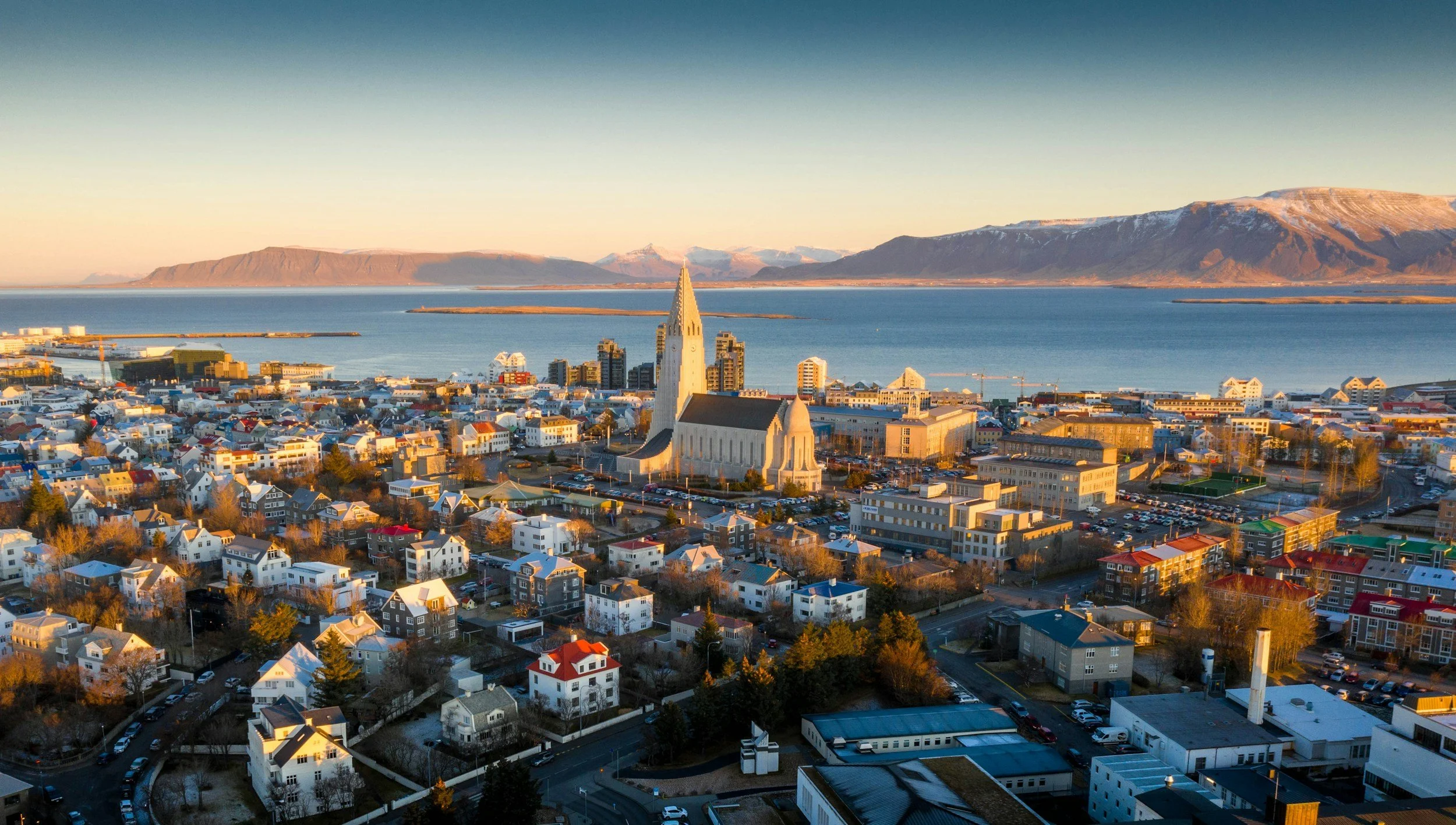
Reykjavik Iceland
Week of 8 February 2021
GREECE: The Covid-19 situation is becoming more serious in Attica, Greece’s wealthiest and most populous region, which includes Athens. Active infections in the region are estimated at 5,100, for a nationwide total of around 10,000; most concerningly, the ICU occupancy rate in the region is currently at 83 percent. On Thursday, the Greek government imposed a two-week ‘hard’ lockdown on Attica, which includes a night curfew and extensive use of click-and-collect services for shopping; nevertheless, cases are expected to continue to rise in the short term.
ITALY: On Saturday Mario Draghi, the widely respected former director of the European Central Bank from 2011 to 2019, was sworn in as Italy’s new PM. Mr Draghi was asked to form a new government by the Italian head of state, President Sergio Mattarella, following the collapse of the coalition supporting Giuseppe Conte’s government back in January. Draghi seems to command the support of most of Italy’s parliamentary groups (left-wing LeU, centre-left Partito Democratico, liberal Italia Viva, centre-right Forza Italia, right-wing Lega, populist M5S) which has complicated the negotiations to form his new government. The main challenge he is expected to face is managing Italy’s post-pandemic recovery, which includes a €200bn recovery fund from the EU.
NETHERLANDS: According to reports published this week, Amsterdam has overtaken the City of London as Europe’s largest share trading hub. In 2020, €17.6bn worth of shares were traded every day in London, compared with just €2.6bn in Amsterdam (then Europe’s sixth-largest trading hub). This year, the situation has changed dramatically, with just €7.8bn traded in London every day and €8.7bn in Amsterdam. This dramatic weakening of London’s position is closely linked to Brexit, as under EU law shares traded in euros must be traded either in the EU or in ‘equivalent’ markets, and the EU–UK deal struck last December did not grant ‘equivalence’ status to the UK. It remains an open question whether these developments are a short-term crisis or signal the end of London’s status as Europe’s financial capital.
NIGERIA: Ngozi Okonjo-Iweala is expected to become the new director-general of the World Trade Organization (WTO) after the White House announced its support for her candidacy. The succession at the head of the WTO was a thorny issue in the final period of the Trump administration, as the former U.S. president had thrown his support behind South Korean trade minister Yoo Myung-hee; the impasse came to an end when President Joe Biden announced he would support Okonjo-Iweala, paving the way for Yoo Myung-Hee’s decision to drop out of the race. Okonjo-Iweala, who served two stints as Nigeria’s finance minister after a 25-year career at the World Bank, will be the first WTO director-general from Africa. She is expected to build her post-pandemic strategy upon the raising of living standards worldwide.
Week of 16 November 2020
BULGARIA: On Tuesday, Bulgaria vetoed the start of the EU–North Macedonia accession talks. Bulgaria was the only state to vote against the accession and its decision was widely described as surprising, given the long history of relatively friendly relations between the two countries. The Bulgarian government said that it did not believe North Macedonia was ‘ready’ to join the EU, but did not elaborate further. This setback will certainly cause further delays in an accession process that was already predicted to be long and difficult – North Macedonia even had to change its own name in order to apply for membership – and will frustrate the EU’s intention to strengthen its influence in the Western Balkans.
ETHIOPIA: Ethiopia is edging closer and closer to civil war. The clashes between Ethiopia’s government, led by PM Abiy Ahmed, and the Tigray People’s Liberation Front (TPLF) have already caused hundreds of civilian casualties. Most concerningly, the hostilities appear to have spilled beyond the border with Eritrea, with the TPLF firing rockets into Eritrean territory. Several international observers and foreign governments have called for an immediate truce, but the ethnic tensions within Ethiopia continue to escalate.
GREECE: On Sunday, Greek authorities announced the remarkable discovery of a bust of the god Hermes in central Athens, near the church of Agia Irini. The bust (of which the head is the only extant part) is datable to c.300 BC and was likely first used as a street marker, but was built into the wall of a drainage duct later in antiquity. The finding potentially sheds new light on how ancient statues were reused as construction material in ancient times.
MEXICO: On Thursday, the Mexican Senate has approved a bill to legalise recreational marijuana in a landslide 82–18 vote. The bill will now be considered by the Congress’s lower House. Under the new law, Mexicans would be able to carry up to 28 grams of marijuana and grow four plants. The new legislation aims to curb drug trafficking; in fact, it would make Mexico not only the world’s third country to legalise marijuana (after Uruguay and Canada), but also the first with a vast ‘underworld’ relying on drug trade.
Week of 5 October 2020
FRANCE: Macron announces plan to outlaw ‘virginity tests’ – French President Emmanuel Macron is looking to introduce legislation which would impose jail terms and heavy fines on doctors who issue ‘virginity certificates’ for traditional religious marriages. The legislation forms part of Macron’s attempt to strengthen France’s secular values and his recent round of swipes at what he calls ‘Islamist separatism’, having controversially described Islam as being ‘in crisis all over the world’. The WHO deems the practice of virginity tests a human rights violation. However, ANCIC, a French organisation which provides support on contraception and abortions, while supporting the government’s intentions, has called for a different approach – namely, ensuring an educational provision. The fear is that the practice will continue within communities, although it’s existence will be denied, and this poses a real risk to certain women, the organisation explains.
GREECE: Courts convict leaders of neo-Nazi party Golden Dawn – the Appeals Court in Athens convicted members of the neo-Nazi political party Golden Dawn of heading up a criminal organisation in an important ruling which provoked intense protests in the capital. The case centred on the murder of anti-fascist rapper Pavlos Fyssas, who was chased down and killed by thugs in 2013, as well as other violent attacks on migrants and left-wingers. The Greek president called the day an important one for democracy.
ITALY: Outdoor mask law announced – Italy joins various other regions around the world, including Paris and a number of Spanish autonomous communities, in mandating the wearing of face masks in all public spaces, indoors or out. This new law comes as case numbers have been steadily on the rise for several weeks in the country. Although, the WHO does not currently recommend the mandated wearing of face coverings outdoors. Italy stands apart from most other places, as the outdoor mask law is effective nationwide; unlike in Spain, for example, where it is up to the regional governments to mandate the measure (although, only one autonomous community out of 17, Canarias, has not imposed this rule). In Italy, the fine for not wearing a face mask stands between €400 and €1000.
MIDDLE EAST: Growing numbers in the region want out – the recently conducted Arab Youth Survey 2020 shows that just under half of young Arabs want to emigrate from the region, with the sentiment most strongly felt in the Levant. A lack of economic opportunities – exacerbated by the Covid-19 pandemic – has prompted many to consider routes to emigrate. Also, the BBC are reporting that a number of expats in the UAE are leaving, or are considering leaving, because of the effects of Coronavirus. Many young people in the region are feeling exasperated with the widespread corruption and ineffectiveness of their governments to provide security and opportunities. Most would, however, struggle to emigrate, given the visa requirements in many destination countries.
USA: Coronavirus blazes through the White House – after announcing that he and the First Lady had tested positive for Coronavirus earlier in the week, The Guardian has reported that as many as 22 of President Trump’s close associates and advisers in the administration and the GOP have also come down with the virus. The president has been criticised for his recklessness since testing positive, including a trip out to wave to supporting onlookers and the risk his infection posed to White House staff upon his return. Trump has this week tweeted: ‘Don’t be afraid of Covid. Don’t let it dominate your life.’ This prompted a backlash from public health officials.
I will be leaving the great Walter Reed Medical Center today at 6:30 P.M. Feeling really good! Don’t be afraid of Covid. Don’t let it dominate your life. We have developed, under the Trump Administration, some really great drugs & knowledge. I feel better than I did 20 years ago!
— Donald J. Trump (@realDonaldTrump) October 5, 2020
Source: Twitter
Week of 28 September 2020
ARMENIA and AZERBAIJAN: Fighting has erupted between Armenia and Azerbaijan for control over the mountainous region of Nagorno-Karabakh. The region, largely Christian and ethnically Armenian, has been internationally recognised as part of Muslim-majority Azerbaijan since 1994, but is de facto autonomous and closely allied with Armenia. The conflict could potentially escalate due to Turkey’s alleged intervention on the Azerbaijani side on Monday, which has reportedly attracted Russian attention.
GREECE: U.S. Secretary of State Mike Pompeo has visited Greece in an attempt to ease the tensions between Greece and Turkey that have marked the past few months. Relations between the two countries have been historically fraught and reached a new low point over the summer, when the Turkish research vessel Oruç Reis undertook energy resource explorations in a maritime area which Greece claims as its own. Both Greece and Turkey are NATO members.
SOUTH SUDAN: The Government of South Sudan began rolling out an e-government programme on Tuesday, making services such as passport and visa applications accessible online. South Sudanese officials claim that the move will enhance transparency and help fight corruption while also delivering public services in a contactless, Covid-secure way. This project marks a new step in the process of normalisation in the fledgling state of South Sudan, which obtained independence from Sudan in 2011 but soon fell into a bloody civil war until a deal was struck last February.
UNITED STATES: Several political commentators have called Tuesday’s first U.S. presidential debate between President Trump and Democratic nominee Joe Biden ‘the worst presidential debate ever’. Trump interrupted Biden virtually every time he spoke and ‘demonstrated a willingness to lie, exaggerate and mislead’ according to The New York Times fact-checkers, prompting Biden to call him ‘the worst president America has ever had’. Trump is trailing Biden by about 7 points in the nationwide polling average, with the election scheduled for 3 November. The next debate (8 October) will see Vice President Pence facing Biden’s running mate Kamala Harris.
URUGUAY: The Economist has reported on the Uruguayan government’s recent attempts to make it easier for foreigners to take up residence in the country. The value of property a prospective citizen must buy has decreased from $1.7m to $380,000, and the minimum investment for business owners has been reduced from $5.5m to $1.7m. The move attempts to address the chronic demographic crisis of Uruguay, whose ageing population has stagnated for decades. The reform has proved particularly popular among Argentine citizens, who according to the Economist consider it a way to escape their country’s political instability and high taxation.