News Round-up Archive
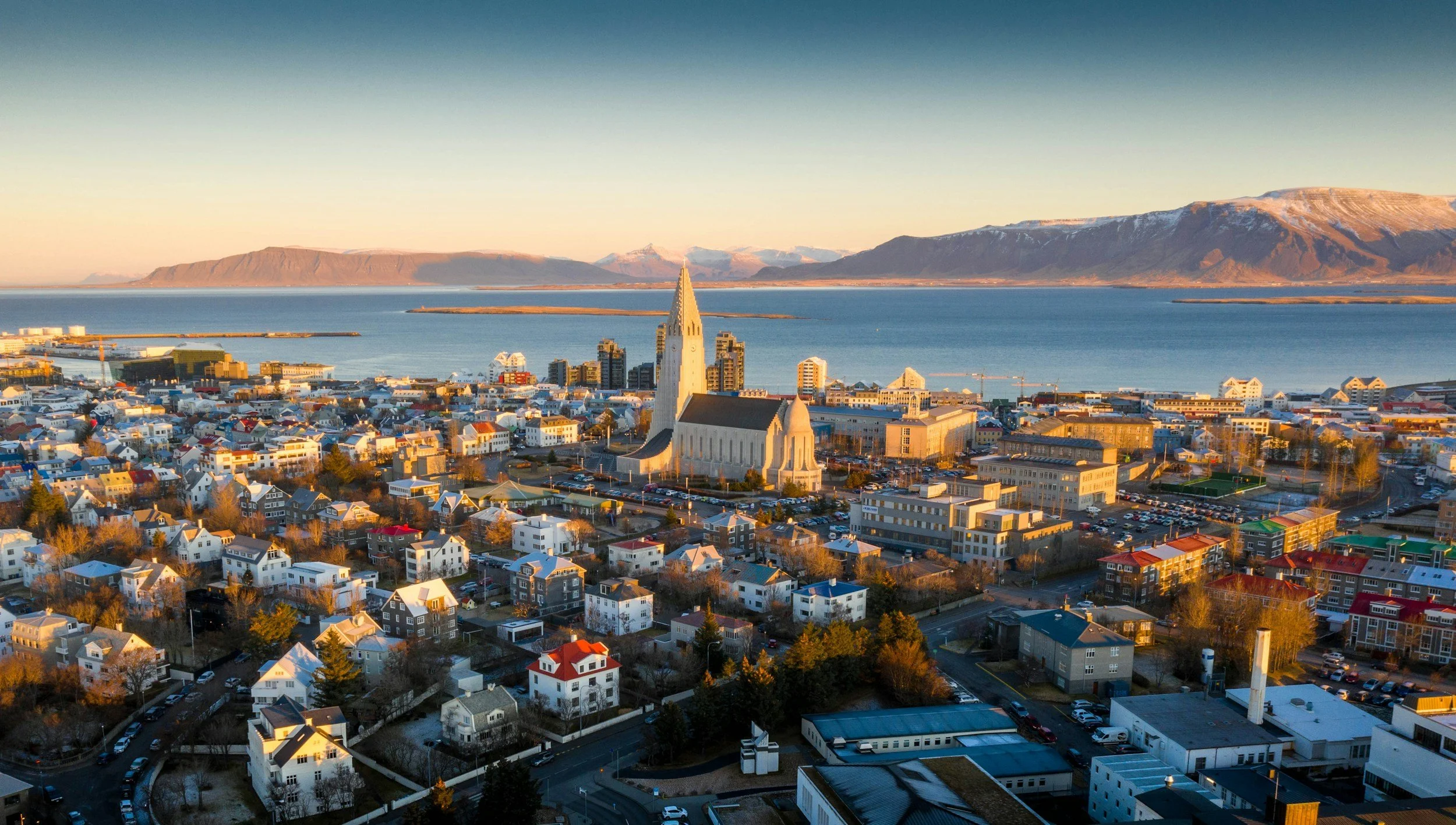
Reykjavik Iceland
Week of 8 February 2021
GREECE: The Covid-19 situation is becoming more serious in Attica, Greece’s wealthiest and most populous region, which includes Athens. Active infections in the region are estimated at 5,100, for a nationwide total of around 10,000; most concerningly, the ICU occupancy rate in the region is currently at 83 percent. On Thursday, the Greek government imposed a two-week ‘hard’ lockdown on Attica, which includes a night curfew and extensive use of click-and-collect services for shopping; nevertheless, cases are expected to continue to rise in the short term.
ITALY: On Saturday Mario Draghi, the widely respected former director of the European Central Bank from 2011 to 2019, was sworn in as Italy’s new PM. Mr Draghi was asked to form a new government by the Italian head of state, President Sergio Mattarella, following the collapse of the coalition supporting Giuseppe Conte’s government back in January. Draghi seems to command the support of most of Italy’s parliamentary groups (left-wing LeU, centre-left Partito Democratico, liberal Italia Viva, centre-right Forza Italia, right-wing Lega, populist M5S) which has complicated the negotiations to form his new government. The main challenge he is expected to face is managing Italy’s post-pandemic recovery, which includes a €200bn recovery fund from the EU.
NETHERLANDS: According to reports published this week, Amsterdam has overtaken the City of London as Europe’s largest share trading hub. In 2020, €17.6bn worth of shares were traded every day in London, compared with just €2.6bn in Amsterdam (then Europe’s sixth-largest trading hub). This year, the situation has changed dramatically, with just €7.8bn traded in London every day and €8.7bn in Amsterdam. This dramatic weakening of London’s position is closely linked to Brexit, as under EU law shares traded in euros must be traded either in the EU or in ‘equivalent’ markets, and the EU–UK deal struck last December did not grant ‘equivalence’ status to the UK. It remains an open question whether these developments are a short-term crisis or signal the end of London’s status as Europe’s financial capital.
NIGERIA: Ngozi Okonjo-Iweala is expected to become the new director-general of the World Trade Organization (WTO) after the White House announced its support for her candidacy. The succession at the head of the WTO was a thorny issue in the final period of the Trump administration, as the former U.S. president had thrown his support behind South Korean trade minister Yoo Myung-hee; the impasse came to an end when President Joe Biden announced he would support Okonjo-Iweala, paving the way for Yoo Myung-Hee’s decision to drop out of the race. Okonjo-Iweala, who served two stints as Nigeria’s finance minister after a 25-year career at the World Bank, will be the first WTO director-general from Africa. She is expected to build her post-pandemic strategy upon the raising of living standards worldwide.
Week of 26 October 2020
ARMENIA AND AZERBAIJAN: On Friday, representatives from the two warring countries arrived in Geneva for a round of peace talks. Representatives from France, Russia and the U.S. will also participate in this latest attempt to solve the largest military confrontation in the area since the Nagorno-Karabakh War of 1991–94. In a potential breakthrough, Russian President Vladimir Putin said on Thursday that Russia would accept a return of the disputed Nagorno-Karabakh region (currently occupied by Armenia) to Azerbaijan, recognising that ‘there are no simple solutions’ in sight.
FRANCE: It’s been quite a difficult week for France. On Wednesday, French President Emmanuel Macron announced a new nationwide lockdown to last at least until the end of November, hoping to curb the rapid spread of COVID-19 in the country. Under the new rules, all non-essential businesses will close but factories and schools will remain open. This is in addition to the curfews which have already been in force in most French cities since last week. Then, on Thursday, a man killed three people with a knife in the city of Nice in what has been described as a terrorist incident, prompting Mr Macron to raise the terror alert level to ‘maximum’.
GERMANY: On Saturday, Berlin’s long-awaited new international airport will finally open its doors to travellers. The delays and ballooning costs of the project have caused ample debate in Germany over the years: the airport was first scheduled to open in 2011 and construction costs have exceeded initial estimates by over €4bn. It is believed that the decrease in traffic due to the pandemic will make the opening easier: when fully operative, the airport will be able to handle 58 million passengers per year, but currently Berlin’s other two airports are serving as few as 2,500 passengers per day.
NIGERIA: The Financial Times has published a detailed special report to celebrate the sixtieth anniversary of Nigeria’s independence. Nigeria became an independent state on 1 October 1960, as had been agreed with the British government two years prior, and underwent long periods of ethnic tension and military rule in the following decades before emerging as a stable (if flawed) democracy. Its booming economy is Africa’s biggest, having overtaken South Africa in recent years, and its growing population – now exceeding 200 million – is the seventh-largest in the world. The Financial Times’s report sheds an interesting light on the African superpower’s strengths and challenges going forward.
USA: Hopefully, by the time you’ll read our next weekly digest, we’ll know the name of the winner of the U.S. presidential election. President Donald Trump currently trails former Vice President Joe Biden by about nine points and might become the first sitting president to lose re-election since 1992. At the time of writing, more than 82 million early votes had already been cast in what is on track to become the highest-turnout U.S. election in a century.
Week of 19 October 2020
CYPRUS: On Sunday, Ersin Tatar won the second round of the presidential election in Northern Cyprus against incumbent Mustafa Akıncı. Cyprus has been divided since 1974, when Turkey invaded the island and occupied its northern third in response to a Greece-backed coup; in 1983, the Turkish-occupied area declared independence as the Turkish Republic of Northern Cyprus. The Turkish Republic is recognised only by Turkey: according to the rest of the world its territory legitimately belongs to Cyprus, which is a member of the EU. The election attracted wide attention because while the constitutional powers of the Northern Cypriot president are relatively limited, he is customarily in charge of the negotiations regarding the Cyprus dispute. Mr Akıncı was generally seen as a moderate in favour of a federal solution and a gradual reunification process, whereas Mr Tatar – a right-wing, pro-Turkey nationalist – has repeatedly declared his support for a two-state solution.
FRANCE: Seven charged after teacher is killed near Paris – last Friday, Samuel Paty, a teacher in a school near Paris, was beheaded in an attack after teaching a class in which he showed caricatures of the Prophet Muhammad as part of a discussion on freedom of speech. The killer, 18 year-old Abdullakh Anzorov, who has been linked to a jihadist in Syria, was shot dead following the attack. Subsequently, seven people, including a parent of one of Samuel Paty’s students and two pupils, have been charged with conspiracy in a terrorist murder. The attack shocked France, with Emmanuel Macron calling Paty a ‘quiet hero’ at a memorial event this week. The images he showed were the controversial caricatures published by the magazine Charlie Hebdo that led to the 2015 terrorist attack on their offices. The circumstances surrounding the killing have exacerbated an already heated debate in French society about Islamic extremism in the country.
LEBANON: Saad Hariri chosen as PM once again, a year after quitting – after resigning as prime minister a year ago, Saad Hariri has been chosen by other parties to lead the Lebanese government once again. Lebanon’s complex confessional system complicated the process of voting in Mustapha Adib and his non-partisan, technocratic cabinet, which ended up not receiving sufficient support. Hariri now has the difficult task of enacting profound economic and political reform in Lebanon ahead of him. Following the devastating explosion in the Beirut port area in August, French President Emmanuel Macron promised billions of euros in aid on the condition that serious changes are brought in to curtail corruption and political inertia in the country.
NIGERIA: Protests intensify after police open fire on protesters – recent protests against police brutality in Nigeria turned deadly on Tuesday, when security forces opened fire on demonstrators, killing six, according to Amnesty International. The army denies killing protestors. Those campaigning for an end to police brutality under the hashtag #EndSars achieved the abolishment of the Special Anti-Robbery Squad (Sars) earlier this month, but protests have continued. Demonstrators have since been calling for wider reforms and the movement has garnered support internationally on social media, including from celebrities.
POLAND: Majority of abortions banned, prompting protests – Poland’s top court has passed a ruling which limits the cases in which an abortion is allowed according to law. The country already has some of the strictest rules surrounding abortions in Europe, but it is now only possible in cases of rape or incest, or if the mother’s health is in danger. Various rights groups and other organisations, including the Council of Europe, have spoken out against restricting access to abortions and the effects on women’s rights and wellbeing. The court has a majority of judges appointed by the ruling, right-wing Law and Justice (Prawo i Sprawiedliwość) party. On Thursday night, police used pepper spray against protestors outside the Deputy Prime Minister’s residence who were aiming to make their objection to the ruling heard.