News Round-up Archive
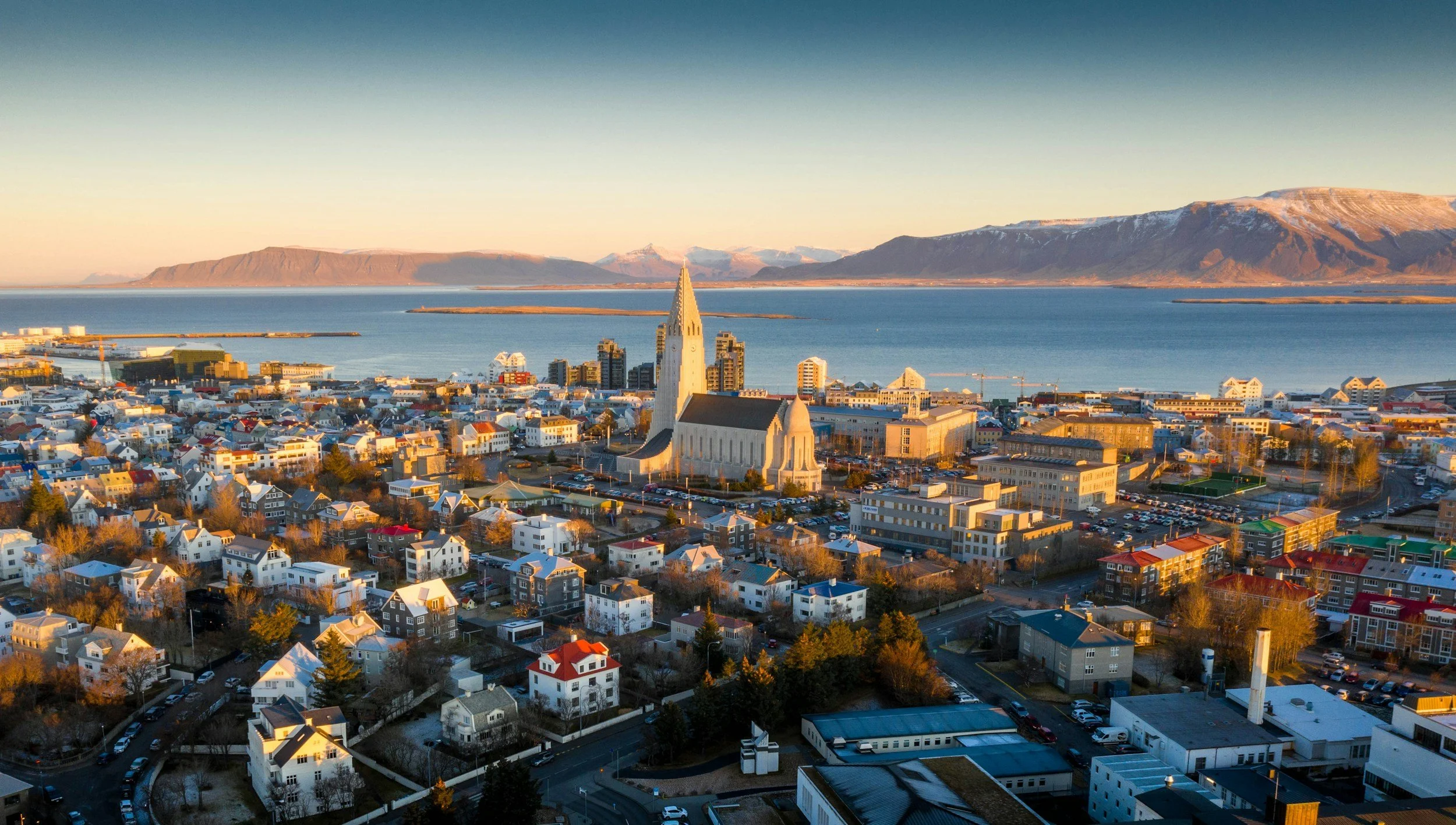
Reykjavik Iceland
Week of 23 November 2020
CANADA: Last weekend, Canadian PM Justin Trudeau and UK PM Boris Johnson announced that the two countries had agreed on a ‘rollover’ trade deal to come into force on 1 January, after the end of the UK’s post-Brexit transition period. Following London’s withdrawal from the EU (31 January 2020), the UK has still enjoyed fixed-term access to the EU’s own numerous trade deals with third countries – but that will come to an end on New Year’s Eve. Therefore, Britain has had to negotiate its own bilateral ‘rollover’ deals in order to continue trading with certain non-EU countries on existing terms. Rollover deals have already been signed between the UK and more than 50 countries, but many of these deals are dwarfed by the importance of a yet-unsigned UK–EU trade deal (in 2019, 52% of all UK imports and 43% of all UK exports were from/to the EU). However, the UK–Canada deal has been welcomed as a step in the right direction, and arguably represents – together with the UK–Japan rollover deal agreed in September – Liz Truss’s biggest achievement to date as Secretary of State for International Trade.
HUNGARY AND POLAND: The governments of Poland and Hungary have reiterated their intention to veto an EU proposal linking the distribution of EU funds with the respect of the rule of law and the independence of the judiciary. Both countries, led by populist governments widely accused of illiberal tendencies, have argued that the concept of ‘rule of law’ and its connection to the allocation of funds has no place in EU treaties. They also argue that the ‘rule of law’ as a concept is ‘arbitrary’ and could pave the way for ‘politically motivated decisions’. Although Poland and Hungary’s opposition is quite a headache for the EU authorities scrambling to pass a colossal budget (€1.8tn), there have been some suggestions as to how to circumvent their veto – such as negotiating a deal between 25 member states rather than all 27.
NORTH KOREA: South Korea’s spy agency has reported that the North executed a currency trader amid leader Kim Jong-un’s renewed attempts to strengthen his control over his country’s foreign exchange market. According to Seoul-based North Korea expert Andrei Lankov, the execution may aim to dissuade the North Korean public from trading in foreign currencies, which have gradually become more widely used in North Korea since 2009; the crackdown may be a symptom of economic and financial difficulties.
SUDAN: Russia is going to build its first naval base in Africa on Sudan’s Red Sea coast. The Kremlin’s statement authorises the creation of a base for 300 personnel and four warships. Several commentators have seen this project as a new step in a long process of consolidation of Russia’s presence in Africa; in recent years, China has also been acquiring a growing influence in the continent and geopolitical competition has been getting more and more fierce.
Week of 19 October 2020
CYPRUS: On Sunday, Ersin Tatar won the second round of the presidential election in Northern Cyprus against incumbent Mustafa Akıncı. Cyprus has been divided since 1974, when Turkey invaded the island and occupied its northern third in response to a Greece-backed coup; in 1983, the Turkish-occupied area declared independence as the Turkish Republic of Northern Cyprus. The Turkish Republic is recognised only by Turkey: according to the rest of the world its territory legitimately belongs to Cyprus, which is a member of the EU. The election attracted wide attention because while the constitutional powers of the Northern Cypriot president are relatively limited, he is customarily in charge of the negotiations regarding the Cyprus dispute. Mr Akıncı was generally seen as a moderate in favour of a federal solution and a gradual reunification process, whereas Mr Tatar – a right-wing, pro-Turkey nationalist – has repeatedly declared his support for a two-state solution.
FRANCE: Seven charged after teacher is killed near Paris – last Friday, Samuel Paty, a teacher in a school near Paris, was beheaded in an attack after teaching a class in which he showed caricatures of the Prophet Muhammad as part of a discussion on freedom of speech. The killer, 18 year-old Abdullakh Anzorov, who has been linked to a jihadist in Syria, was shot dead following the attack. Subsequently, seven people, including a parent of one of Samuel Paty’s students and two pupils, have been charged with conspiracy in a terrorist murder. The attack shocked France, with Emmanuel Macron calling Paty a ‘quiet hero’ at a memorial event this week. The images he showed were the controversial caricatures published by the magazine Charlie Hebdo that led to the 2015 terrorist attack on their offices. The circumstances surrounding the killing have exacerbated an already heated debate in French society about Islamic extremism in the country.
LEBANON: Saad Hariri chosen as PM once again, a year after quitting – after resigning as prime minister a year ago, Saad Hariri has been chosen by other parties to lead the Lebanese government once again. Lebanon’s complex confessional system complicated the process of voting in Mustapha Adib and his non-partisan, technocratic cabinet, which ended up not receiving sufficient support. Hariri now has the difficult task of enacting profound economic and political reform in Lebanon ahead of him. Following the devastating explosion in the Beirut port area in August, French President Emmanuel Macron promised billions of euros in aid on the condition that serious changes are brought in to curtail corruption and political inertia in the country.
NIGERIA: Protests intensify after police open fire on protesters – recent protests against police brutality in Nigeria turned deadly on Tuesday, when security forces opened fire on demonstrators, killing six, according to Amnesty International. The army denies killing protestors. Those campaigning for an end to police brutality under the hashtag #EndSars achieved the abolishment of the Special Anti-Robbery Squad (Sars) earlier this month, but protests have continued. Demonstrators have since been calling for wider reforms and the movement has garnered support internationally on social media, including from celebrities.
POLAND: Majority of abortions banned, prompting protests – Poland’s top court has passed a ruling which limits the cases in which an abortion is allowed according to law. The country already has some of the strictest rules surrounding abortions in Europe, but it is now only possible in cases of rape or incest, or if the mother’s health is in danger. Various rights groups and other organisations, including the Council of Europe, have spoken out against restricting access to abortions and the effects on women’s rights and wellbeing. The court has a majority of judges appointed by the ruling, right-wing Law and Justice (Prawo i Sprawiedliwość) party. On Thursday night, police used pepper spray against protestors outside the Deputy Prime Minister’s residence who were aiming to make their objection to the ruling heard.