(Photo: Millie Gordon)
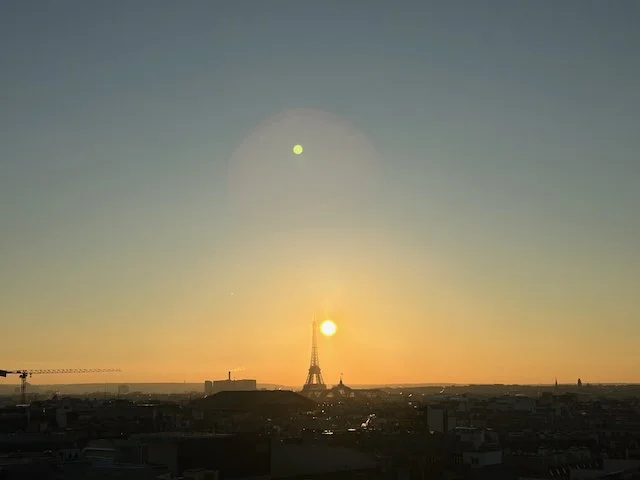
Hemingway wrote that if you are lucky enough to live in Paris as a young man, then wherever you go for the rest of your life, it will stay with you, for Paris is a moveable feast. As the weather warms in Cambridge, and the promise of free time draws ever closer with the end of exams, I’m beginning to feel that this might be true. I read A Moveable Feast on my year abroad, where I lived, worked, and drank in the same streets and bars as Hemingway describes in his book. I didn’t, much to my dismay, have a perfect year abroad or even an easy one (if such a thing exists), but a year later, writing this as I should be revising for my final exams, I can confidently say that Paris has stayed with me.
Paris taught me how to be alone, brought me back in touch with my hobbies, and was the perfect backdrop to all the daydreaming I would have done anyway. Paris is where I remembered I love to read, where I enjoyed going to a museum for the first time, where I became une pompom for the year (aka an ENS cheerleader), and where I used a daily €1orangina from the vending machine to track the exchange rate. Paris is where I lost Murray.
Grieving alone in a foreign country is something I hope I never have to relive, but if I do, I can only hope to grieve in a city like Paris. As lonely as it may have felt those first few months, the perpetual sense of awe that the city inspires – shared by tourist and local alike – makes you feel like part of some implicit, anonymous community. Grieving in Paris felt like it had a purpose, like my sadness fit in with the poetic legacy of the city. It didn’t lessen my grief (not by a long shot) but it did welcome it. Back in Cambridge, and over a year later, I can now say that I am starting to feel okay again.
You might think the pain of loss would ruin the city where you experienced it, but that wasn’t the case with Paris. Sure, by the end of my year abroad I was itching to leave, but that wasn’t (just) because of the city. When I walked through Market Square this morning and smelt the punnets of strawberries waiting to be sold under the hot sun, I was reminded of Paris, of Rue Mouffetard, where both Hemingway and I would buy our fruit. At the same time, I was reminded of Murray. I wasn’t reminded of how lost I felt or how sad I was but instead felt a peaceful nostalgia for him and the city where I lost him.
As I write his name for this article, or when I talk about him with my friends, his memory is irrevocably intertwined with my time in Paris. When I think of Murray, I’m no longer that gap-toothed child that loved him, blissfully unaware that all good things must come to an end. Nor am I that newly adult étrangère, drowning in sorrow. Now, Murray lives in the streets of Paris. A city of nostalgia where, for the first time, I was faced with myself, and the bittersweet and final end of childhood. When I think of him, I think of fresh baguettes and suncream and torrential rain and metro line 7 and crying in le Jardin du Luxembourg and buying strawberries from the same stall as Hemingway.
The city doesn’t so much change you as bring you face to face with yourself. Paris inspires a level of introspection unparalleled by any other city I’ve been to. Muse to so many great writers and artists, Paris is an emotional force. The architecture, and the cultural history it holds, contextualises, romanticises, and catastrophises any feeling which comes to fore.
Like Murray, Paris stays with me, for it is a moveable feast.
(Photo: Millie Gordon)