What Does Chile’s New-Left Mean for Latin America?
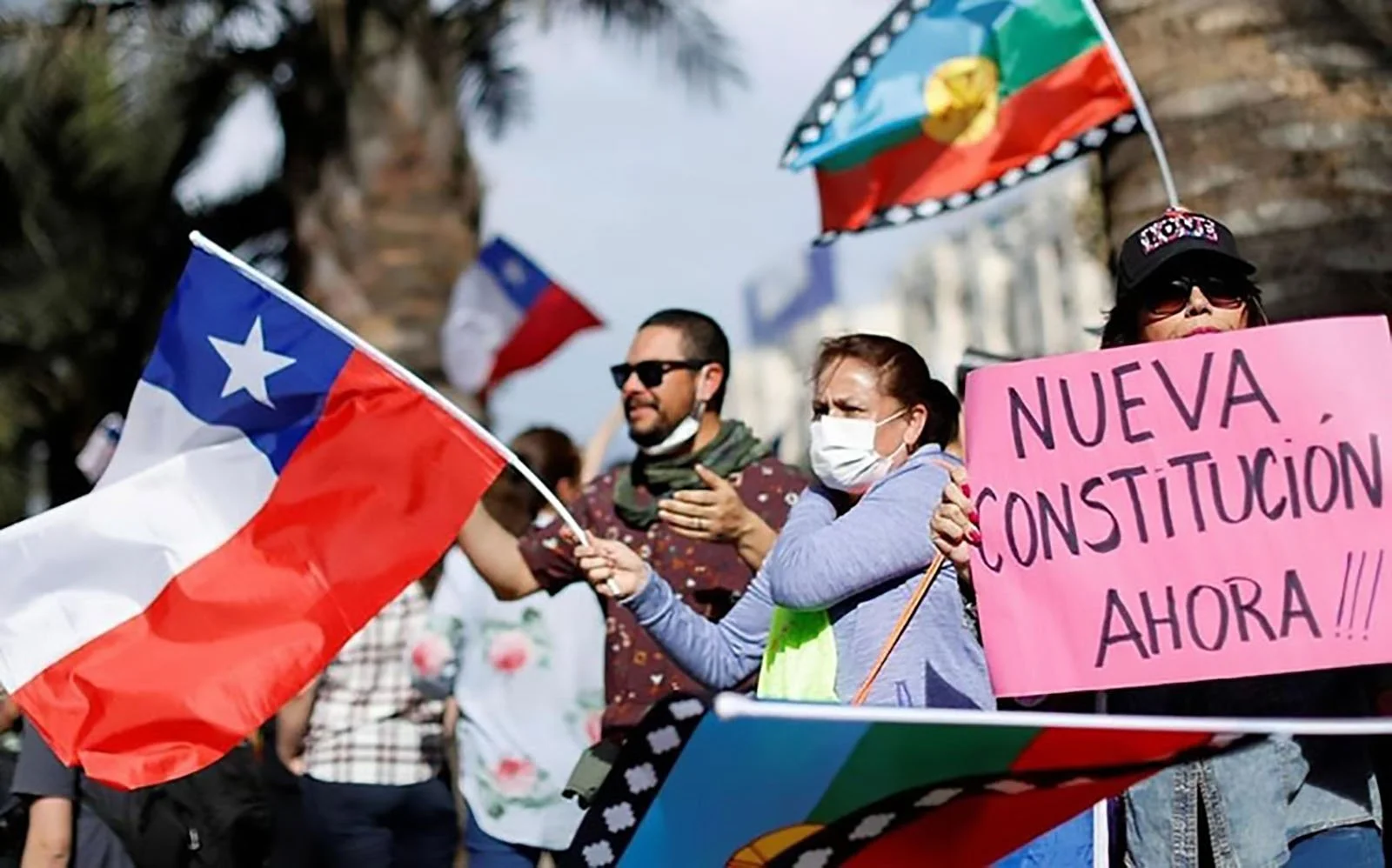
Leftist Gabriel Boric plans to enact revolutionary reforms in Chile, a country riddled with inequality. (Image Credits: Jose Pereira via Creative Commons)
Chile’s youngest ever President, Gabriel Boric, will be sworn in in March this year after dealing a crushing victory to his far-right rival in 2021’s Presidential elections. Representing a new generation in Chilean politics and with revolutionary plans to enact the most profound transformation of Chilean society in decades, the popularity of the 35-year old former student protest leader and member of the socialist party, Frente Amplio, signals a resurgence of the Left in Latin America.
A new Chile?
Boric ran the most progressive campaign Chile has seen since the 1970s. He promised a nationalised pension system, an erasure of student debt, more investment in education and health services, restoration of indigenous territory, dramatic tax increases on the rich and a full legalisation of abortion. He considers himself to be a feminist and environmentalist and he speaks openly about his struggles with mental health and his OCD. Despite his progressiveness in a country currently ruled by a billionaire conservative businessman, Boric received more votes than any other candidate in Chilean history.
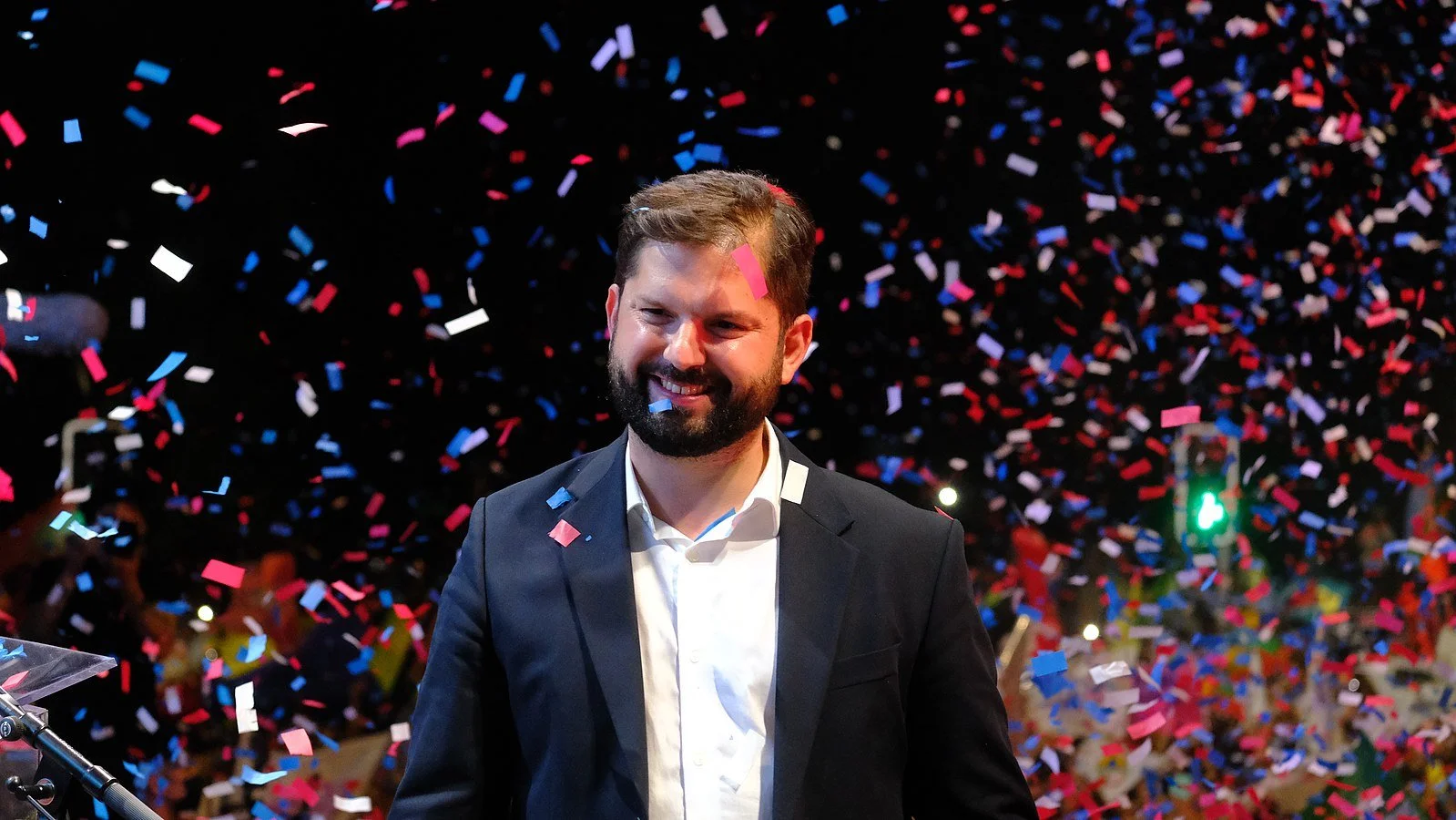
Gabriel Boric will be inaugurated in March of this year after winning the most votes in Chilean history. (Image Credits: Fotografoencompana via Creative Commons)
This sudden surge in popularity for left-leaning candidates is not unique to Chile with pollsters predicting that candidates somewhat politically aligned with Boric will win in Presidential elections in Brazil and Colombia later this year. Currently, Latin America is divided along ideological lines with both right and left-wing governments in power. With Chile now joining countries such as Mexico, Argentina and Bolivia, all eyes move to Brazil and Colombia which could tip the scales in favour of the Left later this year.
However, Boric is still quite unlike any other leftist leader on the continent. He represents a new and democratic Left with wide-ranging and ambitious plans that go beyond the recycled ‘anti-corruption’ platform that is mimicked each time an election comes around. Yet, if Boric fails to govern, a likely possibility without a majority in Congress, his ‘new-Left’ may disappear as quickly as it was created. He faces enormous expectations and challenges that have sunk countless leaders before him.
The resurgence of the Latin American Left
But his movement does signal an ideological shift on the continent. In Brazil, the right-wing and individualist politics of Bolsonaro are becoming increasingly unpopular. The former leftist President, Luiz Inácio Lula da Silva, is now predicted to be re-elected with an 11 point lead in polls. When Lula, a former union leader like Boric, was first in power from 2003-2010, he introduced sweeping social reforms aimed at combatting poverty and social inequality. Yet his credibility was soiled after he was dealt a custodial sentence for money laundering and corruption in 2017. Following countless re-trials, Lula was acquitted and pardoned in 2021 and is now preparing to take back the presidency. Lula has promised to reinstate high taxes on the rich, expand the role of government by reversing privatisation of industries and boost public spending.
Similarly, former mayor of Bogotá, Gustavo Petro, is poised to be the first president of Colombia from a left-wing coalition made up of socialist, feminist and environmentalist associations. Petro, a former member of the revolutionary guerrilla group M-19 and close ally of Lula, has said that creating peace for Colombia would be his top priority. From there, he promises to enforce the liberal Constitution of 1991 and tackle crime and remove Colombia’s reliance on oil extraction. However, he has been accused by many on the Left of abandoning the true socialist cause and centralising his views and alliances in order to win over middle-class voters.
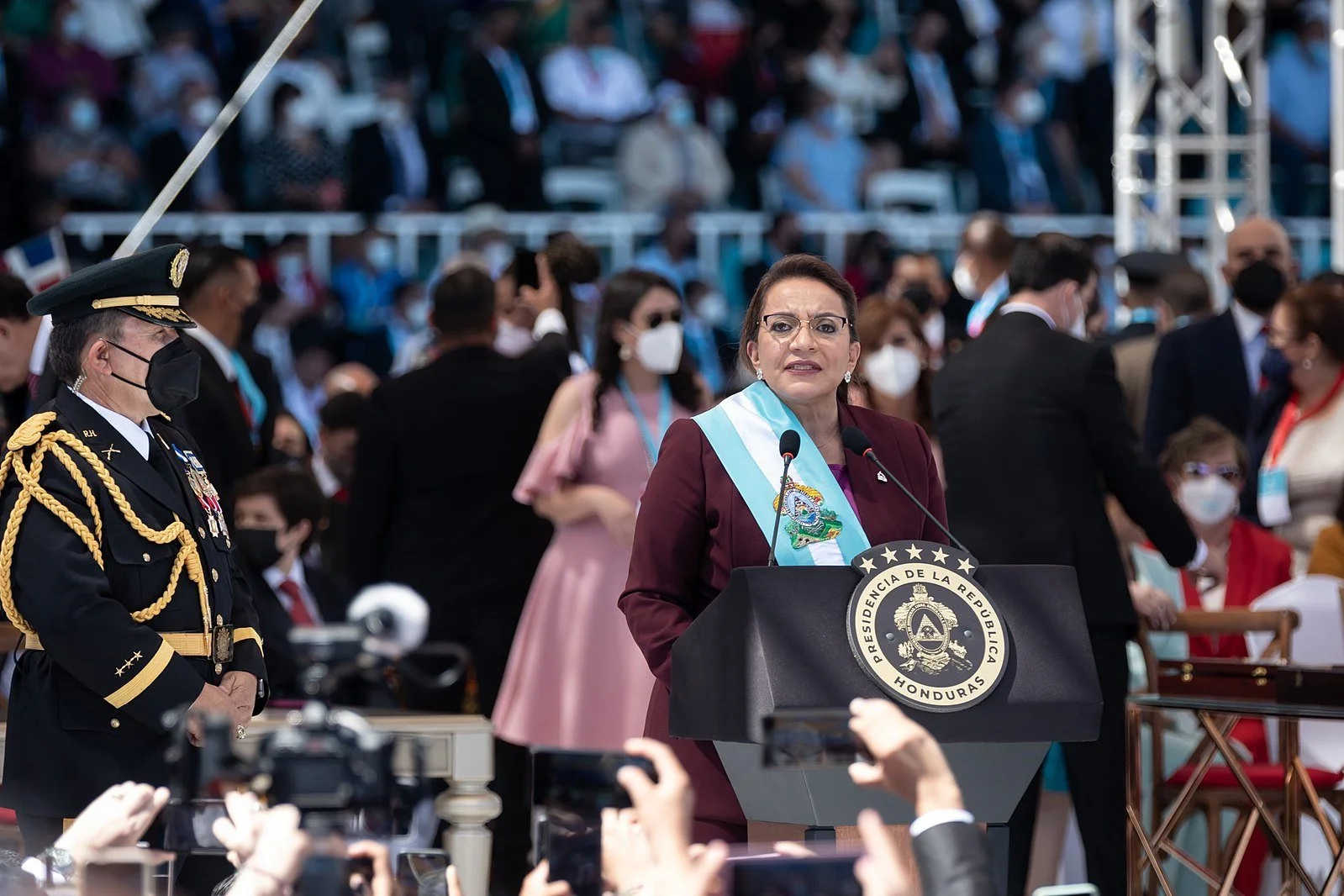
Xiomara Castro has been sworn is as the President of Honduras and has promised to re-establish the socialist state. (Image Credits: Shufu Liu via Creative Commons)
Just recently, Honduras inaugurated its first female President, former First Lady and leftist Xiomara Castro, who has promised to re-found the socialist state with a focus on delivering social justice and economic equality in a country mired by economic crisis. Yet many fear that she will fall into the traps of her husband who was overthrown in 2009 following allegations of embezzlement and violating Supreme Court rulings.
New Left or old ways?
The pre-election popularity of Lula and Petro and the so far positive approval ratings of Castro, show the rising popularity of the Left in Latin America. Yet, their programmes are certainly not as radical as Boric’s. Both Lula and Petro have extensive political experience, are from older generations and have alleged links to corrupt activity. They represent the more traditional Left of Latin America, the Left of Mexico’s Andrés Manuel López Obrador that promises sweeping change yet continuously fails to deliver and ultimately is no less corrupt than the right-wing opposition.
Boric still stands out from the crowd and his leftist ambition has not yet swept across the continent. Even if left-wing leaders are elected in Colombia and Brazil, their programmes will not mirror the ambition of Boric’s and risk feeding into the repetitive cycle of inactivity as power transfers between two opposing political ideologies. Only time will tell if Boric will deliver on his promises or fall into the traps of inactivity and unfulfilled policies. If he does succeed, perhaps his ideologies will revolutionise the politics of Chile and eventually the rest of the continent. If he fails, his new political model will likely fall into oblivion.