Mexico and the Power of Narco-Philanthropy
CW: This article deals with COVID-19 and briefly mentions violence
Louis Brettkelly, News Editor
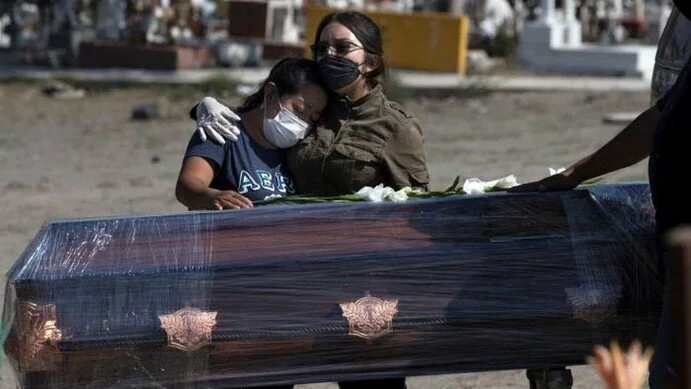
Mexico has experienced one of the highest death tolls in the world and it is largely expected that their overall figure is highly underreported. (Image Credit: Financial Times via Creative Commons License)
With the third highest death toll in the world and one of the highest rates of infection, Mexico has been one of the worst affected countries by the coronavirus pandemic. Yet it is not the surplus death toll, currently at a recently revised figure of 330,000, or the meagre vaccination statistics that are worrying Mexican President Andrés Manuel López Obrador (AMLO). Instead, it is the growing influence of cartels.
Throughout the pandemic, the Mexican government has been hesitant to install any form of restrictions, and neither mask-wearing nor social distancing has been encouraged. The leadership has been more than reluctant to spend money on testing, adequate PPE or social-benefit packages, and the World Health Organisation (WHO) has accused AMLO of prioritising the economy over his citizens’ lives, lambasting “a government communication campaign that prioritised keeping up appearances, partisan politics, before health”. To make matters worse, the government was pressurised by large business and conglomerate owners, as well as influential party donors, to prematurely re-open the retail and hospitality industries this February, when cases were at their peak and hospitals were overwhelmed. These reasons all contribute to the highly under-reported case figure of 2.38 million, an unusually high mortality rate in those under 65 and figures that make Mexico City the worst affected city in the world.
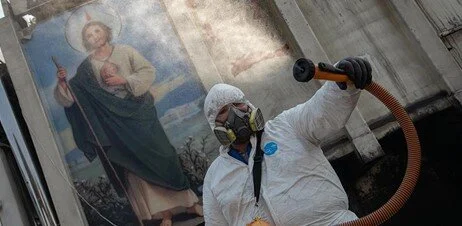
The Mexican government has been consistently stubborn in introducing restrictions, refraining from ever entering a period of national lockdown. (Image Credit: University of Cambridge)
Yet none of this phases AMLO; he has even publicly bragged about how he has saved the economy from collapse by refusing to enter national lockdowns. What does scare the President, who was elected on a programme of anti-corruption, is the increasing influence and activity of cartels who are using the pandemic as a way to broaden their network of sympathetic supporters and resorting to violent and drastic means to do so.
Cartels, with collapsing drug markets and disrupted trade, at first struggled during the pandemic. The coca leaf market shrunk by 73% and with more frequent boarder checks, more shipments from central and southern America to the USA were intercepted. Imports from Europe of synthetic chemicals have virtually ceased, hiking prices in Southern America astronomically. Many smaller organised crime groups (OCGs) have collapsed and subsequently been absorbed into larger organisations which are vying to increase their influence.
But the cartels have found ways to adapt and have been venturing into new markets. In April, thousands of counterfeit Pfizer vaccines were seized in Mexico after they were advertised on social media platforms and selling for $2,500 each. Around 80 people had used the vaccines, that although harmless, offered no defence against Covid-19. A black market has also grown around oxygen, something that Mexican hospitals have faced intense shortages of. Armed thieves linked to cartels have broken into hospitals and stolen oxygen tanks on numerous occasions, and a large OCG intercepted a shipment of canisters in a roadside highjack earlier this year. The stolen oxygen is then sold on online black markets for hefty prices.
Yet the cartels have not only been resorting to new forms of crime; they have also been offering humanitarian support to smaller rural villages across the country. It this humanitarian aid that frightens AMLO and his government the most. Famous for their prolific heroin and fentanyl trade, the Sinaloa cartel, one of the largest and most violent drug trafficking organisations in the world, has swapped drugs and weapons for tuna, rice and toilet paper, distributing aid to the poorest families in rural Mexico. Many citizens are now solely reliant on the support they receive from cartels, which is far more than anything they have ever received from their government. This so-called narco-philanthropy is not unique to Sinaloa; other cartels have adopted similar practices, often in a bid to one-up each other, assert dominance and undercut the government thereby winning greater legitimacy among the people. Many cartels have also enacted authoritative and makeshift lockdown measures in order to curb the spread of infection whilst cementing their local authority and autonomy, proving their credibility above the government’s. Citizens thought to be breaking periods of isolation were even attacked with baseball bats with “COVID” written on them by cartel members in Southern Mexico.
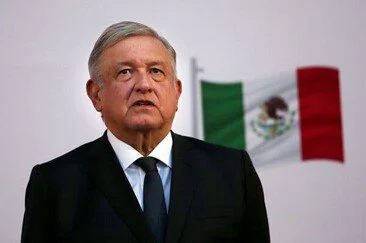
Mexican President, Andrés Manuel López Obrador, has been accused of prioritise economic security over the health of his people. (Image Credit: The New York Times)
Talking to the BBC, members of the Sinaloa Cartel say that they feel it is their responsibility to help the people of Mexico, people that have been abandoned by the government. And for those who do not receive any form of official support, the cartels have acted as a lifeline during the pandemic. This practice of funding relief during times of hardship is not a new activity and has received copious amounts of criticism from many Mexicans (for the most part from those in positions of economic privilege, however). For their critics, the cartels are merely abusing the situation to create a dependency complex, bolstering their scope of influence and supporters on a grass-roots level. If the cartels increase their support now, in the future, it is almost certain that they will have a greater number of supporters, members and those to groom into trafficking.
Yet it is not just those that are receiving help that are supporting the cartels. Many cartels have been running extensive social media campaigns to emphasise the levels of support they are providing. In reality, only a few thousand families are thought to have received ongoing aid, yet through the cartels’ social media presence, it is easy to think that they have helped millions. It is via social media that they are boosting their network, outreach and support by astronomical figures, reaching new heights that have previously been unattainable.
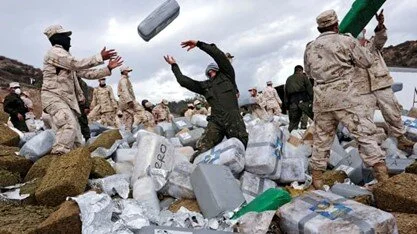
Cartels have resorted to new means to make profit and to boost their influence across Mexico. (Image Credit: CNBC)
This newly found influence could not be better timed for cartels. Before the pandemic began, Mexico’s so-called “Drug War” had claimed the lives of 250,000 in the space of 15 years and during the pandemic, deaths have only increased, averaging at 3,000 per month. It is thought that with extra time on their hands, cartels are using the pandemic as a way to settle old scores. In June 2020, a prolific Mexican judge was assassinated in Colima and in July, 26 people were massacred in a rehab centre shooting. Both incidents are considered as acts of revenge. As the cartels get more aggressive, they need wider support bases in order to stay ‘legitimate’. They do this by focusing their aid on small communities where they can win intense pockets of support: a perfect pool for recruitment in the future and centres of security in times of conflict.
Some see the support as purely philanthropic, others see it as a corrupt façade used to widen networks and bolster predatory crime. Organised crime is becoming increasingly political in Mexico, more about winning influence and control than making profit and cartels have indeed been able to expand both their physical land boundaries and their spheres of influence, now discrediting the government on larger platforms. Mass condemnation from the President has done little to stop this movement, instead only spurring it on. The cartels are quickly becoming political forces to be reckoned with, something that AMLO is only too aware of. In the majority of cases, it is the government that is accused of corruption, not the cartels.
The future role cartels will play in Mexico, as both social and political forces, is unknown, but it can be said with confidence that neither their newfound influence nor their growing network of supporters will disappear anytime soon.
Links for further reading:
https://www.unodc.org/documents/data-and-analysis/covid/Covid-19-and-drug-supply-chain-Mai2020.pdf - United Nations Office on Drugs and Crime, “COVID-19 and the drug supply chain: from production and trafficking to use”
https://www.bakerinstitute.org/media/files/files/f22f8c30/bi-brief-070820-usmx-organizedcrime.pdf - Baker Institute for Public Policy, “Organized Crime and the Coronavirus in Mexico”
https://www.bbc.co.uk/news/av/world-latin-america-53343599 - BBC, “Coronavirus: How Mexican cartels are taking advantage of pandemic”
https://www.nytimes.com/2020/07/07/opinion/sunday/mexico-drug-cartels-coronavirus.html - The New York Times, “How Mexico’s Drug Cartels Are Profiting From the Pandemic”
https://www.theguardian.com/world/2021/apr/14/mexicos-high-covid-death-toll-blamed-on-government-penny-pinching - The Guardian, “Mexico’s high Covid death toll blamed on populist government”