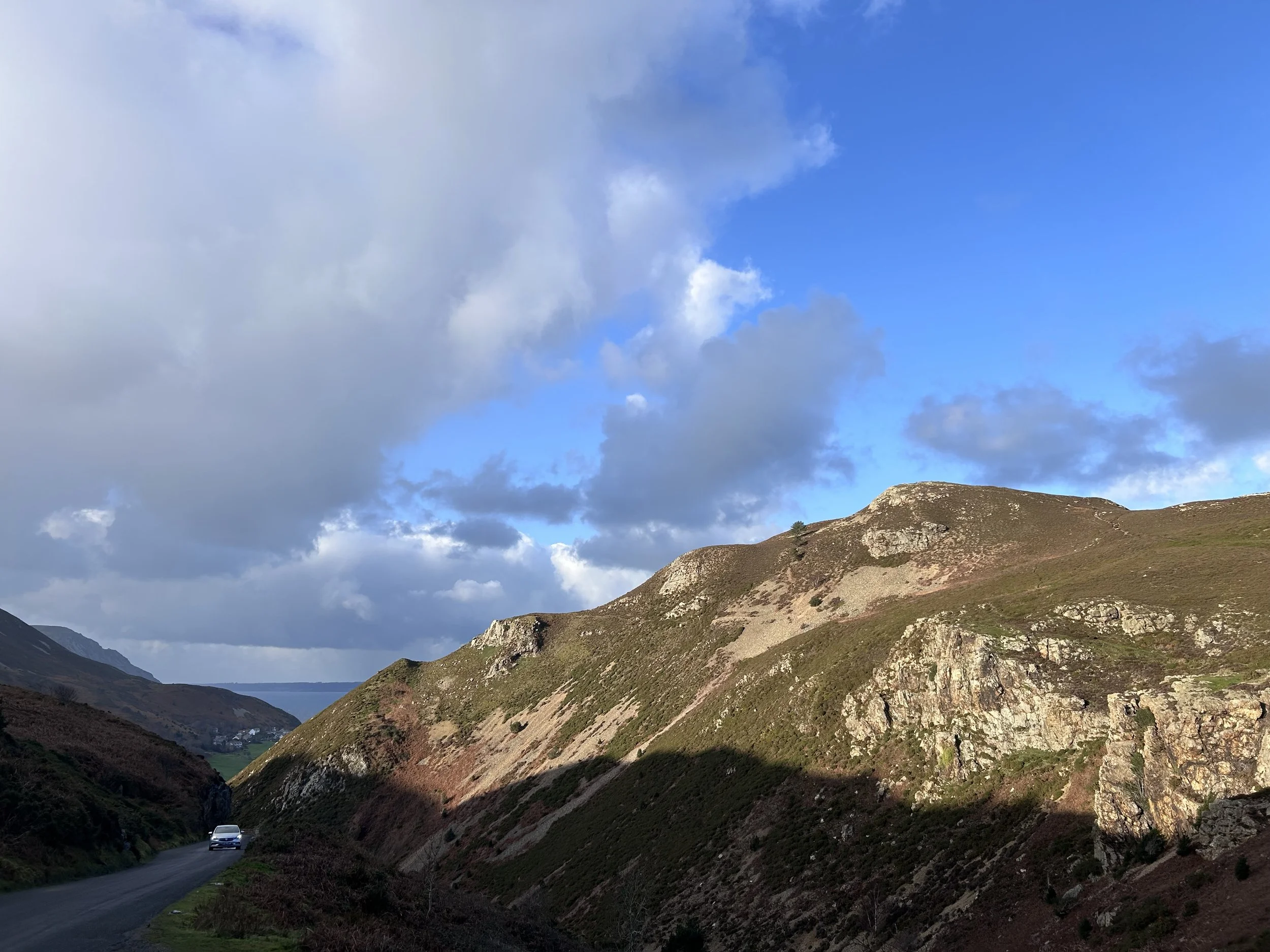
A coastal road in Gywnedd, a county in the north-west of Wales - all images are the author’s own unless otherwise stated
In August 2025, I moved from Buckinghamshire, England, to a small village in Snowdonia; incidentally, in the most Welsh-speaking county in Wales. I do not speak Welsh, and in Gwynedd, I feel positively foreign. My next-door neighbour pauses carefully mid-sentence when she speaks to us in English, mentally translating her native Welsh, and I often find myself nodding and smiling politely when a friendly dog-walker mumbles a Welsh pleasantry I don’t quite catch as I wander through the village or the surrounding countryside.
Many anglophones experience Wales briefly: perhaps a short camping holiday, visiting family, or driving through to catch a ferry to Ireland. They pass road signs that they half-read and half-ignore. Many will comment on the “unnecessary” presence of Welsh alongside English, squinting at the Welsh, some will laugh at the abundance of consonants and unfamiliar spelling, jokingly attempt a pronunciation and move on.
These fleeting encounters cement Welsh, in broader British culture, as a language which is seen and rarely heard. But having spent some time amongst a truly Welsh community, I hear it constantly. In Gwynedd, Welsh is not a fragile artefact of cultural heritage that needs careful nurture, but an active and living language, spoken without ceremony. And yet, the question remains: do bilingual road signs actually do anything? And if so, who are they helping?
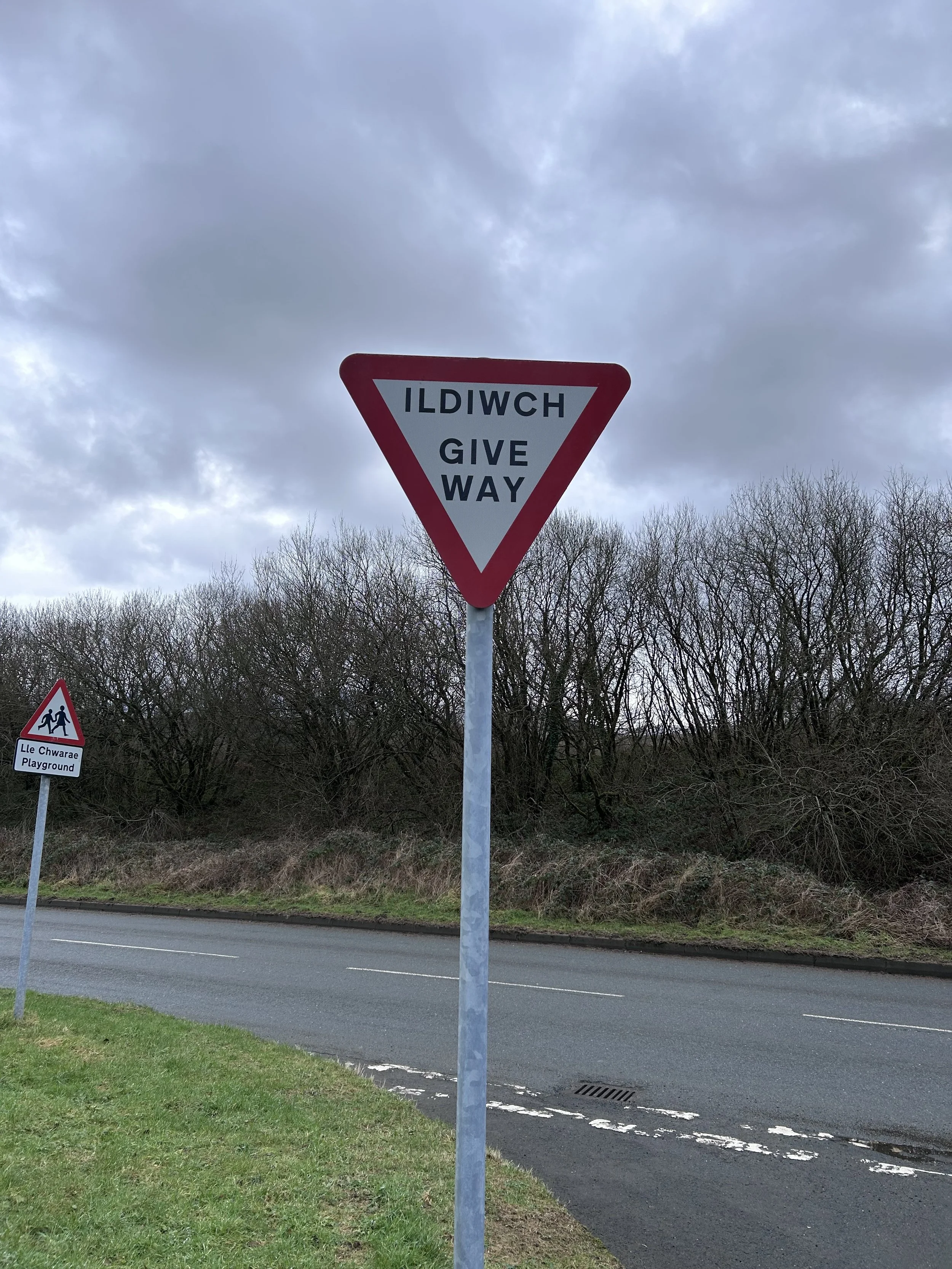
An example of a Welsh-English bilingual road sign in Gwynedd
Various MPs, a professor at the University of Wrexham, Dr. Nigel Hunt, and countless social media dissenters have publicly opposed the presence of Welsh on road signs. From each of them, two frequent, well-rehearsed objections to bilingual road signs are presented. One is psychological; there is plenty of evidence to suggest that bilingual road signs have the capacity to distract due to the human brain’s predisposition to focus on the unknown and ignore the familiar. There is potential for bilingual road signs to confuse drivers and leave them literally lost in translation. However, there is absolutely no evidence to suggest that bilingual road signs have ever been enough of a distraction to cause an accident.
The second objection is financial. Bilingual signs cost more due to the requirement for translation, additional space, and more printing or painting. Especially in cases where signs are painted onto the road itself, in which markings are paid for by the letter. Simply put, more letters require more money. Critics often point to this as an unjustifiable excuse, and to simply say that the presence of Welsh on the road signs is important for the preservation of the language is laughable when comparing the investment made to both causes. The Welsh government spends £200,000 annually on Welsh language learning and campaigning, while £43 million is spent on road signs (even if that constitutes just 0.23% of the Welsh government resource). With the Welsh government aiming for a population of 1 million Welsh speakers by 2050, it doesn’t take an expert to extrapolate that at least some of this money could be better placed in the name of language enrichment.
What both of these arguments share is an assumption that the English version is the neutral and the original, and the Welsh is an addition, and to some, an intrusion. This assumption only holds if English is taken as the default language of the landscape.
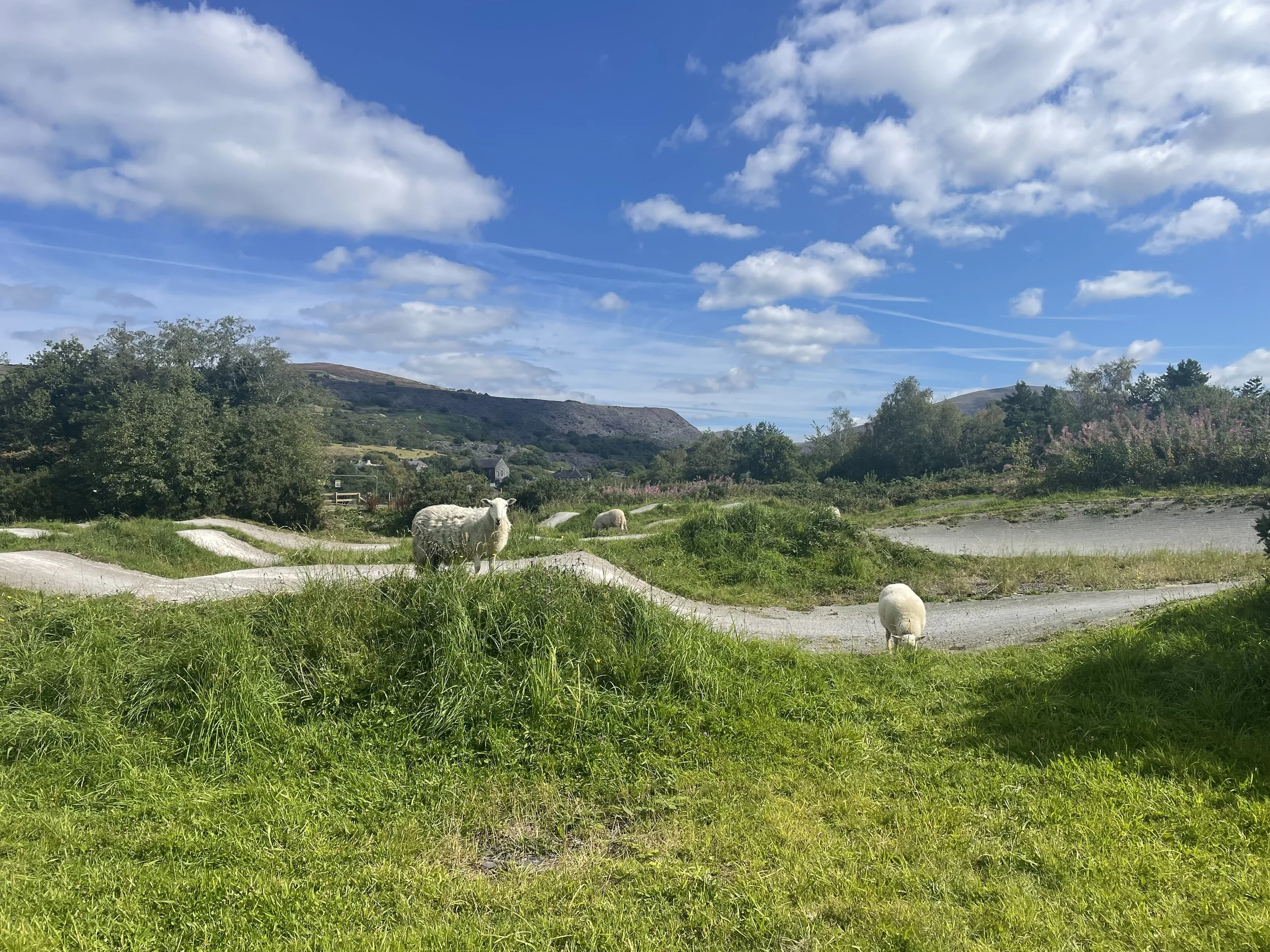
Sheep, the default animal of the Welsh landscape
Elsewhere in Europe, this default is less secure. In Belgium, for example, neither French nor Flemish can comfortably claim neutrality. Dutch/Flemish is spoken by roughly 60% of the population while French is spoken by around 40%. In this context, bilingual road signs feel practical rather than symbolic. At first glance, this might make Wales seem different, with a seemingly meek 17.8% of the Welsh population speaking Welsh per the 2021 Census. But in Gwynedd, around 64% of the population speaks Welsh. The linguistic divide here is not equal but it is real… and it favours Welsh. The presence of English on road signs is not a neutral baseline but a colonial inheritance. These signs don’t introduce Welsh but insist on the visibility of English alongside it.
In Gwynedd, I feel increasingly as though the existence of English on the signs feels the most out of place. I often hear people jokingly refer to Welsh as “not a real language” or state that “no one actually speaks Welsh”, but having witnessed it myself, I couldn’t agree less. Bilingual road signs seem like an ineffective gimmick to many. But now, the perceived “unnecessary” nature of the bilingual road sign occurs to me not as an unwanted imposition of the Welsh language, but an unfortunate maintenance of English in a country whose native language is regaining its strength at a startling rate. While the 2021 census counted just 538,000 Welsh speakers, this was estimated to have grown to 828,000 by 2024.
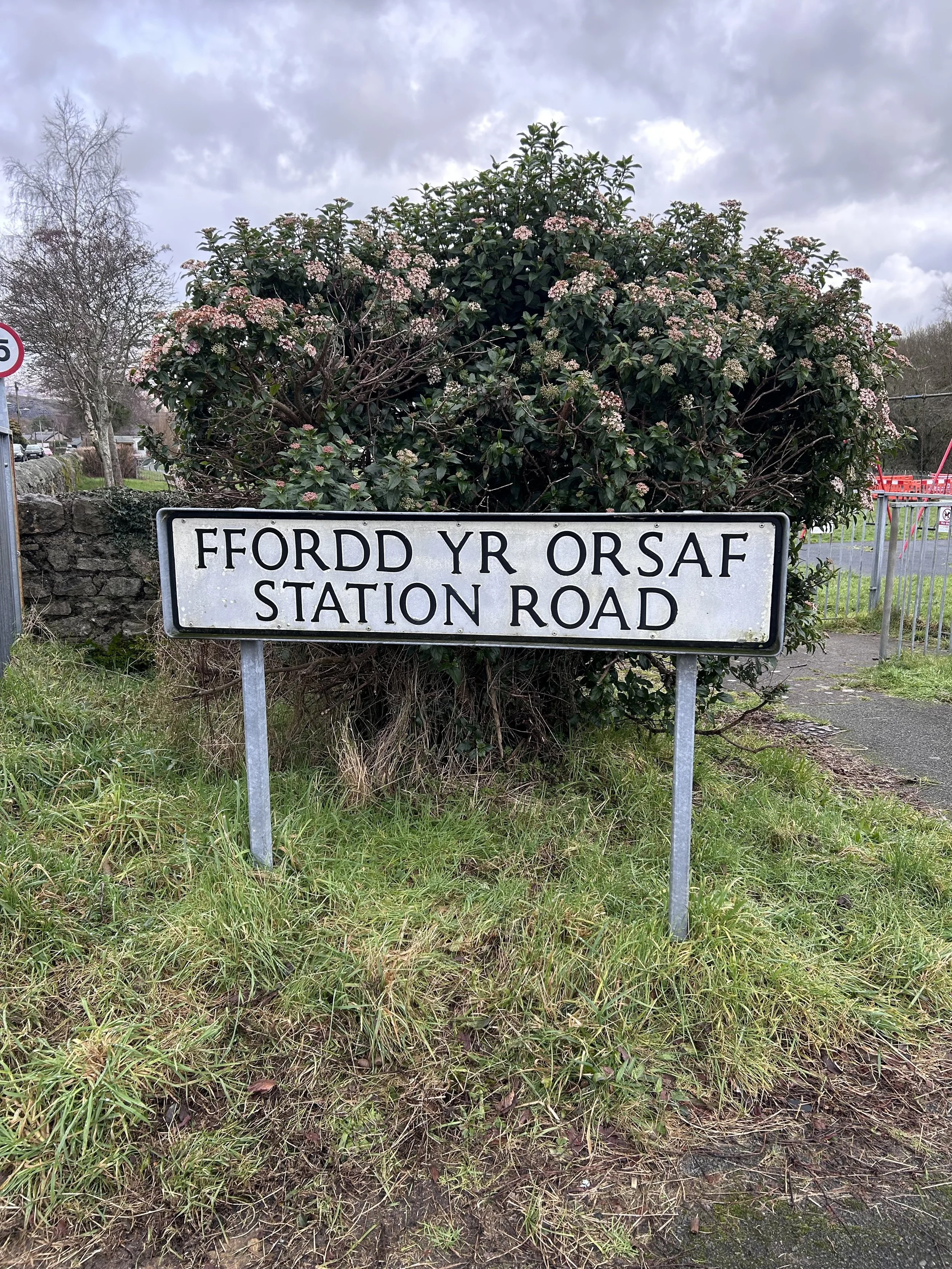
If the real concerns are distraction, expense, and the encouragement of Welsh language learning, then perhaps the answer is not fewer Welsh words, but fewer English ones. Those opposed to bilingual signage might consider the prospect of monolingual, Welsh road signs. While this proposition may be met with outrage, in the name of true decolonialisation, perhaps we might try quelling our imperial indignation at the thought of respecting the culture of our neighbours and fellow Brits, rather than oppressing their native language. Anyone who has driven abroad has learnt, without fuss, what autobahn or sortie mean. I posit that it is well within the human, and the British capability, to learn and remember a few set phrases, when it is deemed important enough. My lack of Welsh did not make it remotely difficult to navigate this country, once I’d learnt some key terms. Familiarity comes quickly when there is no alternative. The problem that befalls the Welsh language is that it has been made optional. Its presence alongside English allows it to be treated as a novelty, a “funny spelling” of a place name they may already recognise. By returning place names to their originals, in the native language of the land, this option disappears. If Welsh is to be appreciated, it must be made essential to recognise and impossible to ignore. Respect is what the Welsh language loses in translation.