All images are author’s own
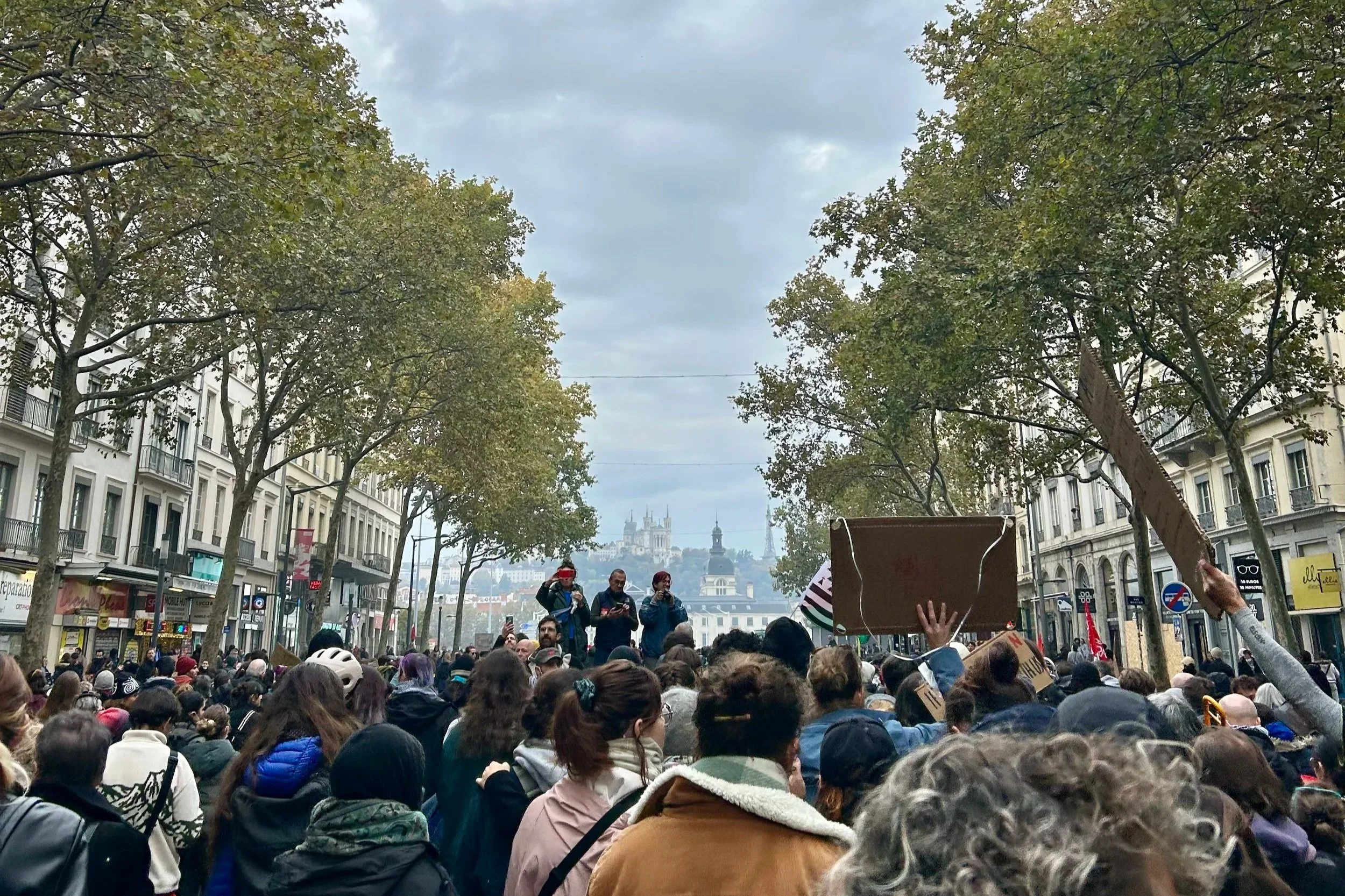
On the 5th of November, with no less momentum than the previous four weeks, students and workers alike gather in Lyon for another protest. Protests have spread across France since the start of the academic year, and while the rest of the world starts to ask how long this can possibly go on for, the students around me show absolutely no intention of letting up until their demands are met.
On this particular day, the usual protesting lyceens and supportive university students are joined by a large number of other workers, taking part in a general strike both to protest in support of the students, as well as to protest other issues including but not limited to the rising cost of living and concerns over the destination of public spending.
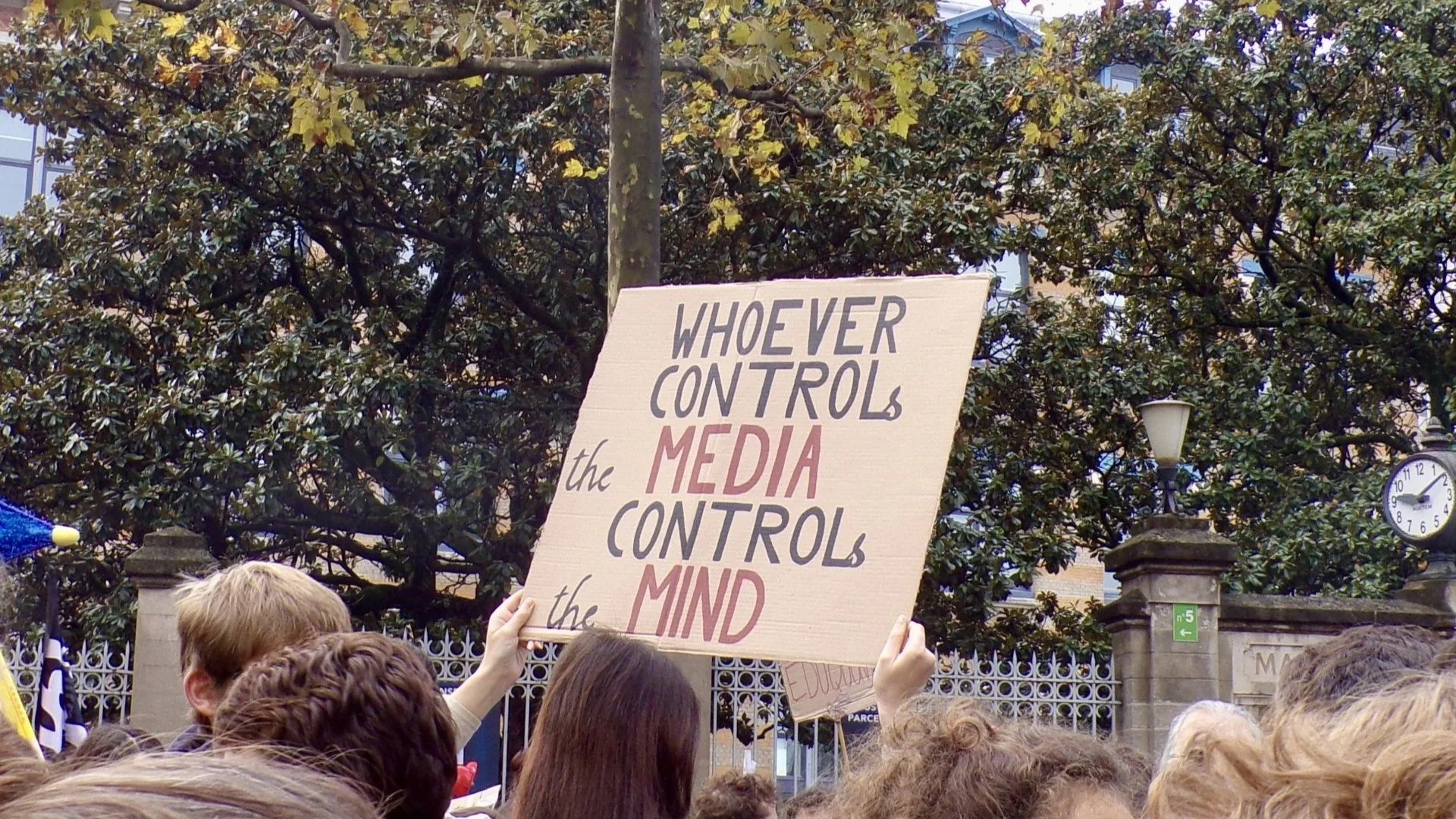
Outside the Manufacture des Tabacs, the campus of one of the Lyon universities, groups of young people, union representatives, and even families gather, with cardboard placards sporting witty lines about their discontent with the current government. An entire orchestra, inspired by the movement begun in Paris by the Orchestre du Nouveau Monde, has set up outside the campus gates, prepared to lead the crowd in their protest songs and chants. While the national and international press have been unable to tear themselves away from the violence and antagonism of some of these demonstrations, I can attest to the joyful, welcoming and hopeful atmosphere that is contained within them too. Having witnessed some of these protests, and taken part in one, I was curious to hear what those outside of my own university thought of what was going on. Comforted by the kindness of the crowd, I conducted a few interviews with some manifestants, and I now bring their voices to you.
The first person I approached was Lou, a 21-year-old master's student in sciences. She says, ‘We can see that high school students are getting, like, they don't get any funds. The buildings are falling apart,’ but Lou’s view of the protests' purpose is broader than classrooms; she says, ‘Right now, we are fighting for public services. We have seen in the last years that all the funds are going to private corporations, like TotalEnergies, like all those big oil companies and tech companies, and they are sabotaging the public services.” It is clear that many, including Lou, think that the high school issue is only a symptom of a more serious sickness in the French government. For Lou, companies such as TotalEnergies have come to represent something much bigger than corporate wealth. They are symbolic of what many protesters see as a fundamental imbalance in France’s economic priorities: an economy in which large private corporations continue to prosper, while the public services on which ordinary citizens depend are increasingly stretched

At the heart of the issue, Lou believes “we should tax the rich”; “they say excuses and excuses, and they say, there is no more money, but go take it, it’s in Vincent Bolloré’s wallet, you know?”. Vincent Bolloré is one of France’s weathiest businessmen, and has become a controversial figure not only because of his enormous fortune, but also because of his media interests and the political influence associated with them. For protesters like Lou, he represents the concentration of wealth and power in the hands of a small number of individuals, at a time when ordinary citizens are being asked to accept cuts and constraints in their everyday lives.
This frustration is hardly unique to France. From debates surrounding billionaire influence in American politics to growing concerns about wealth inequality across Europe, the question of how much economic and political power should rest in private hands has become increasingly prominent internationally. What is unique to France however, is the distinct sense among the people that there is something they can do about this, a feeling of agency and therefore hope in their political disgruntlement.
By this point, it is clear that the demonstrations have grown far beyond the issue of education. While students remain at the heart of the movement, the grievances being voiced are increasingly shared by people with no direct connection to the problems facing French schools. For many, this is no longer simply about the conditions in which young people are educated, but about the country they are growing up in. This was particularly evident in the next people I approached: a family spanning three generations. Julien, 42, had brought his young son along, accompanied by his own parents. Their presence was a striking illustration of the inter-generational nature of the movement.
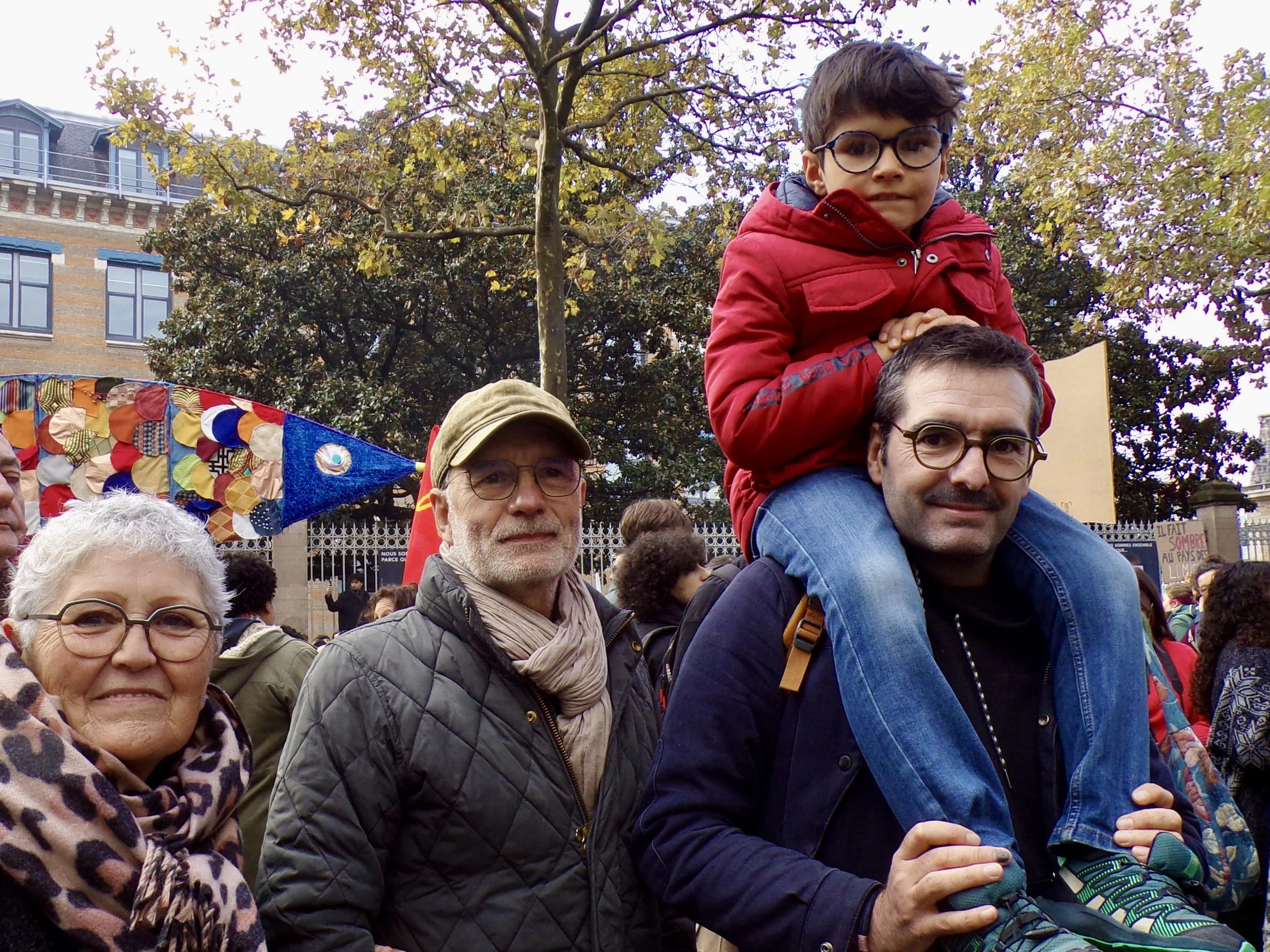
Julien and his family
Speaking to Julien, it was clear that among the protesters there is a shared belief that what affects some French citizens affects them all. When asked what had brought him there today, he said, “It's for my son. I'd like him to be able to live in a country where he has a future, where he can have decent conditions when he goes to school.” This is a touching insight into the true concern that many French people have for the conditions their young people face today, and potentially in the future. Julien’s son looked very young to be at a protest, and while many who have only read news coverage about these demonstrations might look on in horror, concerned for his safety, his attendance there with his dad and grandparents is a testament to the other side of the story; the good nature of the protests and the importance of their cause.
Julien, like Lou, has broader concerns about public spending in France. While his attendance at the demonstration was “more for the younger generation than for me. I'm a bit older myself,” he did express that he had concerns for himself too: “Thinking about the future, I'm also a little worried about my retirement. What will I have when I retire in 20 years? I don't know yet”. These concerns reflect a broader anxiety about the sustainability of France’s social model. For Julien, the future of public education and the future of retirement provision are not separate political questions, but part of the same conversation about what the state owes its citizens.
Whether the demands of these demonstrations will be met remains to be seen, though many of those I’ve spoken to seem less concerned with whether their demands will be met than with how long it will take. While the world looks on, waiting for the movement to lose momentum, the protests continue to grow, and there is something inspiring about the atmosphere of determination in a situation that could warrant hopelessness.
Perhaps the most striking thing about these demonstrations is not the scale of a crowd, but the breadth of people who have come together to show their support. Students worried about their education, parents concerned about their children’s futures, older generations who believe young people should have the same opportunities they once had. The manifestants are still going strong, and they have plenty left to say.