Europe
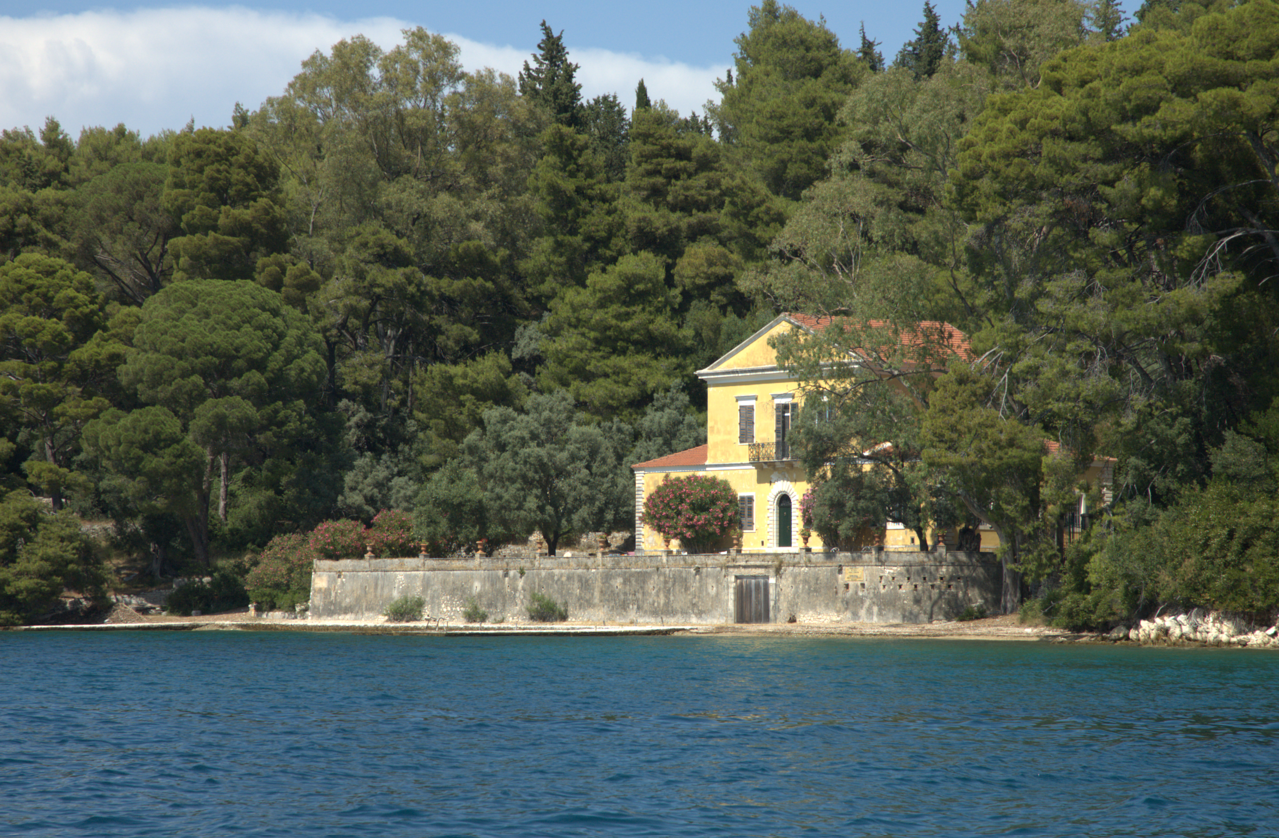
Greece, photographed by Isaac Ohringer
Layers of History: Photographing Paris
In a series of striking photographs, Léa Girard explores the confluence of the old and the new in the urban landscape of the French capital
Does Michel Houellebecq Still Matter? Part II: The H.P. Lovecraft biography
In this article, Geordie Cheetham looks at Houellebecq’s first published work, a biography of the American author H. P. Lovecraft. How does disgust with the modern world become a fitting object of literary study, when Houellebecq approvingly cites Lovecraft’s disdain for all forms of realism? And what does a corpse surrounded by shopping trolleys Nouvelles Galeries have to do with it?
Where Love Lies I: The West’s Affair with the Exotic.
We are told that love is a primal force: innate, ahistorical, transcendental and above society. But how can something be truly innate if it is a concept that exists within the act of telling? CLC Columnist Mila Edensor explores such intriguing questions in this excellent analysis of early modern Portuguese poetry. From the unrequited love of men in the late 1500s, to the ‘passport bro’ of today, Edensor skilfully explores what this obscure poetry can mean for us today.
Don’t Dismiss the Kitsch: The Evolution of Turbofolk
In this probing article, CLC staff writer Faith Martin delivers an insightful commentary on the hidden background of Yugoslav Turbofolk. She explores the historical, political and societal facets of this genre and, in doing so, uncovers the secrets of this unique musical movement.
Bas(qu)ing in Difference: the Beauty of the Basque Identity I: The Enigma of Euskera
In the first instalment of her column, European columnist Freya John explores the mystery of Euskera, the language of the Basque Country. From its linguistic background, to its sociopolitical significance, John offers an insightful overview of this minor language.
Stumbling Stones in Holocaust Memory: Gunther Demnig’s Stolpersteine
German editor Freya Swinburne takes us on a tour of the German memorial landscape as she traces forgotten pasts through Gunther Deming’s Stolpersteine.
Jan Matejko’s Skarga’s Sermon: A Flawed Masterpiece Misunderstood?
Marcelina Palamar introduces us to the complicated work of Jan Matejko, one of Poland’s most famous artists, revealing that despite Matejko’s grand intentions, a failure to consider his spectator’s lack of contextual knowledge eventually betrays him.
Beyond Brave Little Blighty I: Occupation
In her first instalment of her column ‘Beyond Brave Little Blighty’, REECA editor Sofia Johanson considers filmic representations of Nazi occupation in Eastern and Western Europe, through the lens of Dutch and Polish examples.
The Queer Body of Christ
Drawing on a wealth of primary materials from the Middle Ages and an array of secondary literature, Staff Writer Jude Jones explores the how the body of Christ is fundamentally queer in an eloquent and sophisticated piece.
Strasbourg (or Straßburg): A German City in France?
Staff writer Ollie Merriman explores the intercultural dynamics that converge on Strasbourg. In his explorations of the culture, architecture and history of this French border city, Ollie not only considers the identity of Strasbourg itself, but, rather, Europe as a whole.
Legacy on Display: The Museum of Soviet Occupation in Tbilisi
Rosa Hollier Phelps takes us around the Museum of Soviet Occupation in Tbilisi, Georgia, exploring the legacy of Communism in her new home.
‘The ‘Aestheticisation of Politics’ - Oskar Kokoschka, a Degenerate Artist
Following a personal visit to a Kokoschka exhibition, Einav Grushka examines the context behind ‘degenerate art’ and how Viennese artist, Oskar Kokoschka, came to be associated with the term.
Putin’s View of History
In this fascinating article, Jack Seery investigates President Putin’s relationship with history, and the influence it has on the present.
La Ley de Memoria Democrática: Spain between ‘olvido’ and remembrance
Cameron White explores the ways in which Spain’s New Democratic Memory Law has revealed the tensions underlying the pursuit of justice for Francoism’s victims, which are tied up with questions of narrative and memory.
What does Germany’s response to the Ukrainian crisis show about Europe’s ability to learn from the past?
Wiktoria Mól discusses Germany’s response to the conflict in Ukraine and explores its cautiousness to avoid repeating history.
Germany’s Underappreciated Art Scene: Artistic masters and their significance in European Art History
Rebecca Nolten writes about Germany’s artists and how their work has lacked appreciation in art history.
Bella, ciao! Festeggiamo il 77º anniversario?
Through a historical lens and a deep-dive into symbolism, Anja Gogo unravels the musical gomitolo that is Bella Ciao, a resistance anthem per eccellenza.
Cordiality out the window? Franco-British tensions and France’s difficult position laid bare by the AUKUS crisis
Sophie Williams-Dunning explores the latest rift in France and Britain’s historically fraught relationship, but argues that ultimately the two countries would do well to put their differences to one side.