A Palestinian Pint
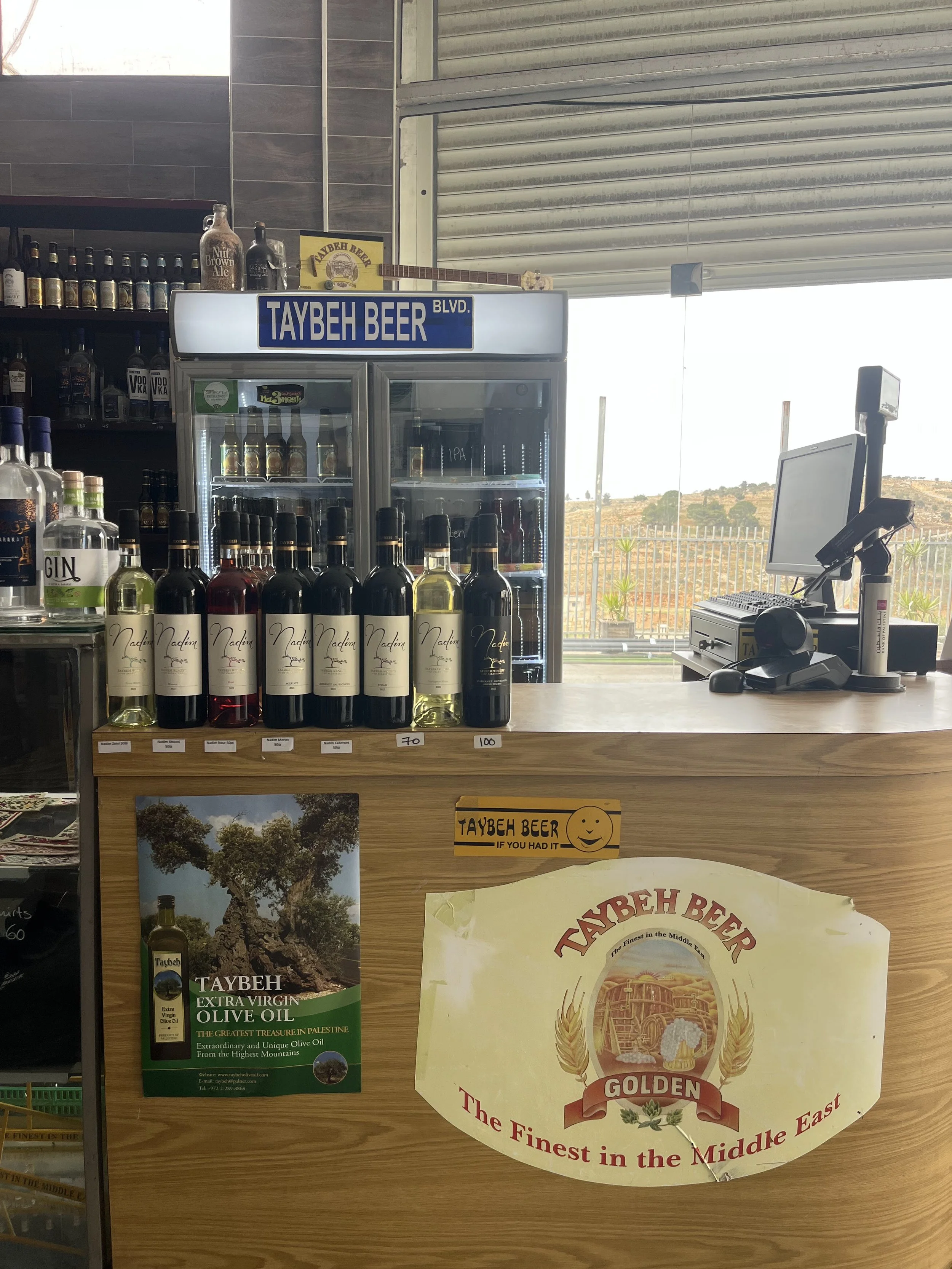
Taybeh Brewery, Image Belongs to Author
The February day’s sky, replete with ripening clouds, casts an ugly light on the Qalandia checkpoint as we drive into the West Bank from Jerusalem. The dull palette of dust, graffiti, rubbish and poverty is interrupted only with the striking red of the large warning sign, forbidding Israelis to cross into “Area A” of the occupied West Bank. As we continue, the Waze satnav repeatedly pings, advising us to turn back and avoid the “danger” ahead. We silence its distress as a cross shaped radio mast appears in the distance, clearly indicating that we are approaching our destination of Taybeh.
The village of Taybeh lies just east of Ramallah. It is home to around 1500 Palestinian Christians, a religious minority representing 1-3% of the Palestinian population. As the West Bank’s only Christian village, Taybeh is unsurprisingly proud of its three Church parishes: Latin, Orthodox and Greek-Catholic, alongside the ruins of a Byzantine Church. Regarded as the modern-day site of Biblical Ephraim, a site visited by Jesus, Taybeh would certainly feature in a West Bank Baedeker.
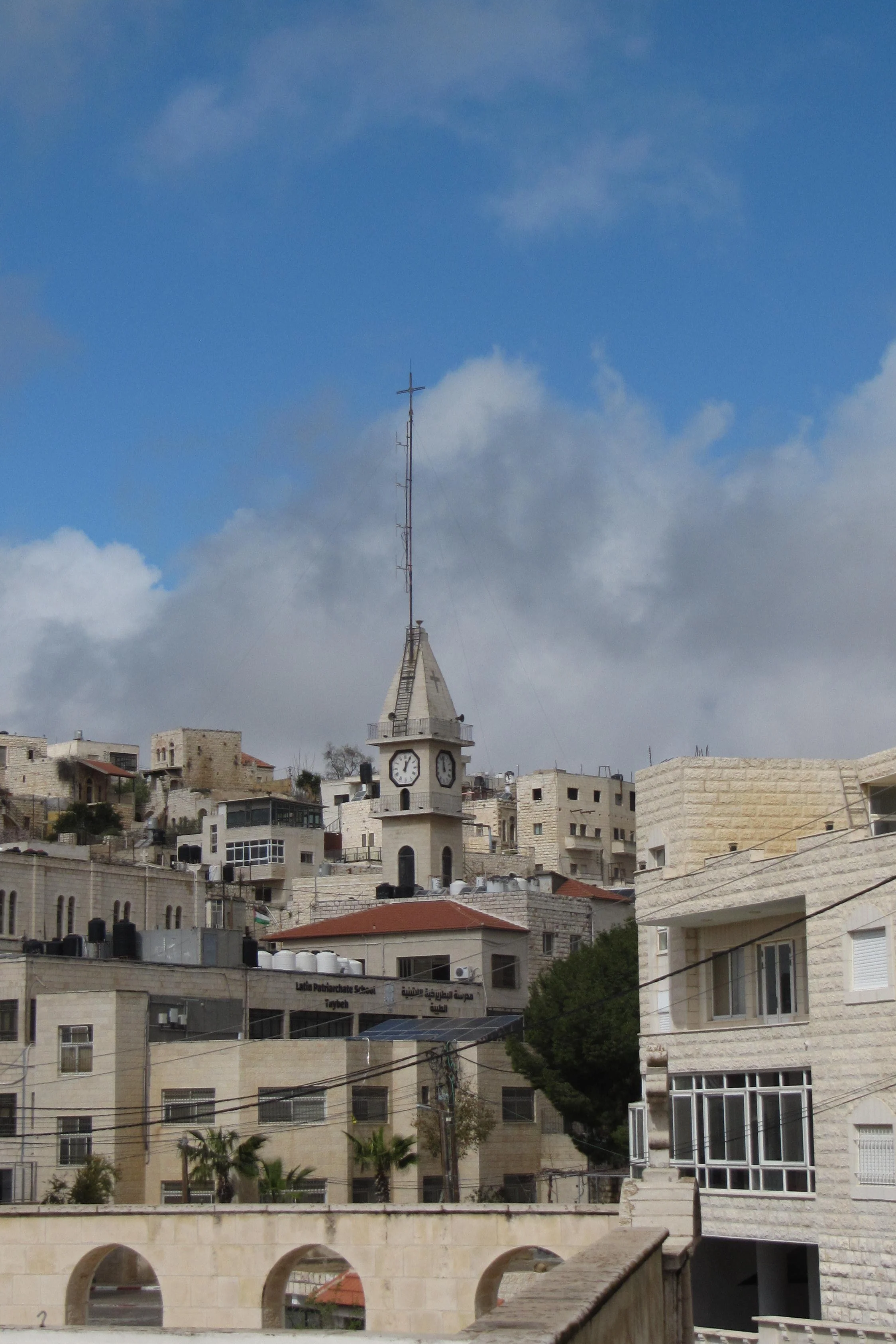
Image belongs to Author.
As such a fruitful destination for Christian tourists, it was sad to see the dusty, peeling signs, neglected renovation projects and a general impression of abandonment. Sadly, all are features I have begun to associate with West Bank towns. Encountering an open corner shop stirs an irregular, sad excitement, purely for the sign of life and somewhat kinetic economy.
Many have emigrated in search of opportunity. Remaining businesses struggle under tight military control. Years of occupation have destroyed the market within the West Bank and prevented expansion outside of it. Since 1967, we have witnessed a strangling of the economy and general prosperity under Israeli governmental bureaucracy, military control and settler mayhem. Post October 7th, Palestinians have borne blows like never before from these three oppressors.
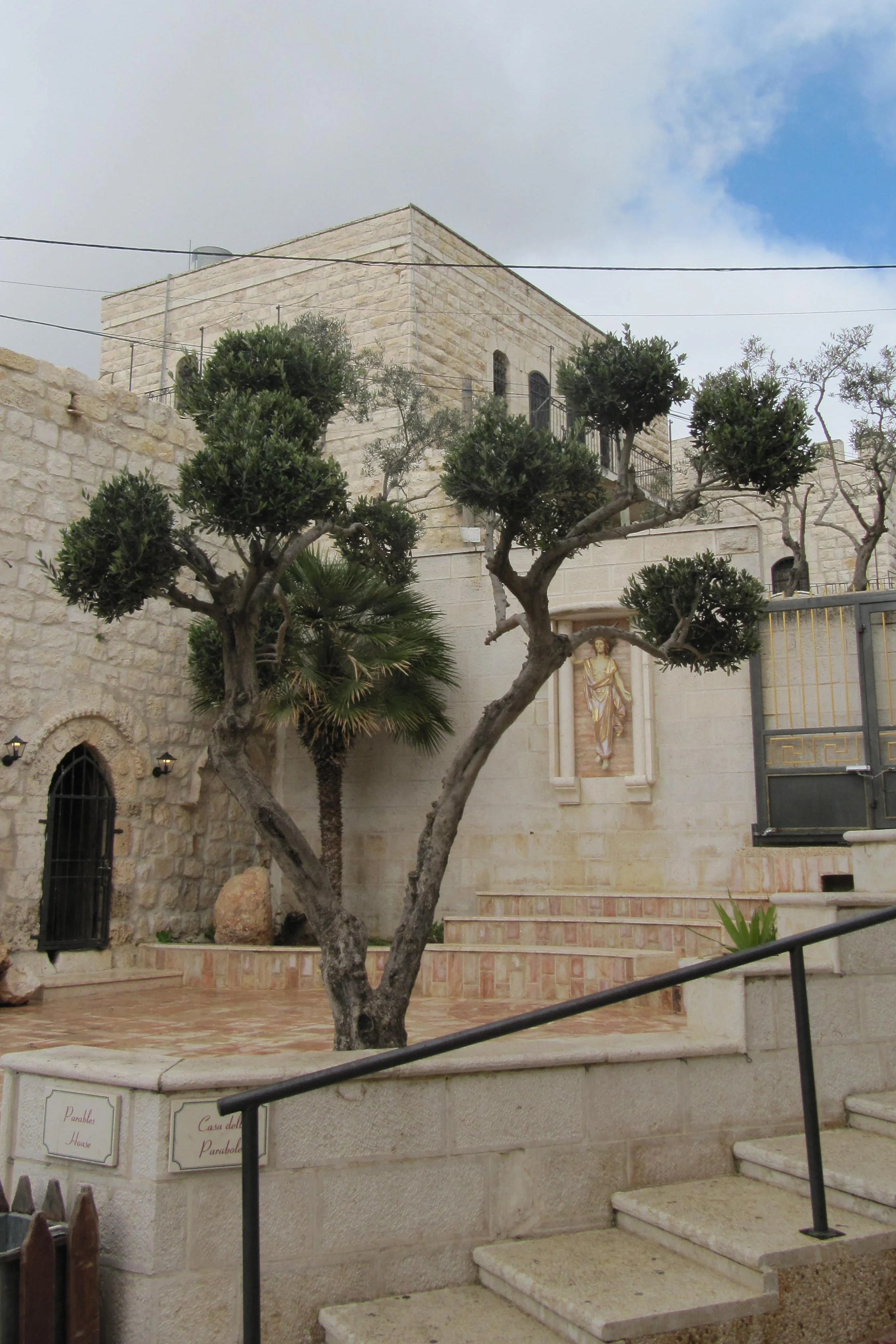
Image belongs to Author.
Thus, the Khoury brothers’ return to Palestine to found Taybeh Brewery was an impressive endeavour. The optimism of the 90s, the Oslo years, emboldened Nadim to bring his passion for beer back to his hometown from where he attended university in Boston. Though considered insane by many in the early years, he received the blessing of the then-President of Palestine Yasser Arafat and, at such a time, gained an exporting licence.
Since 1994, the Khoury family has transformed their passion for beer into a peaceful defiance of occupation, an enabler of discussion, an interruption to widely held perceptions of Palestine and a pillar of local economy. The business has since been inherited by the family’s second generation; Nadim’s daughter Madees is the only female brewer of the Middle East. Quite a feat.
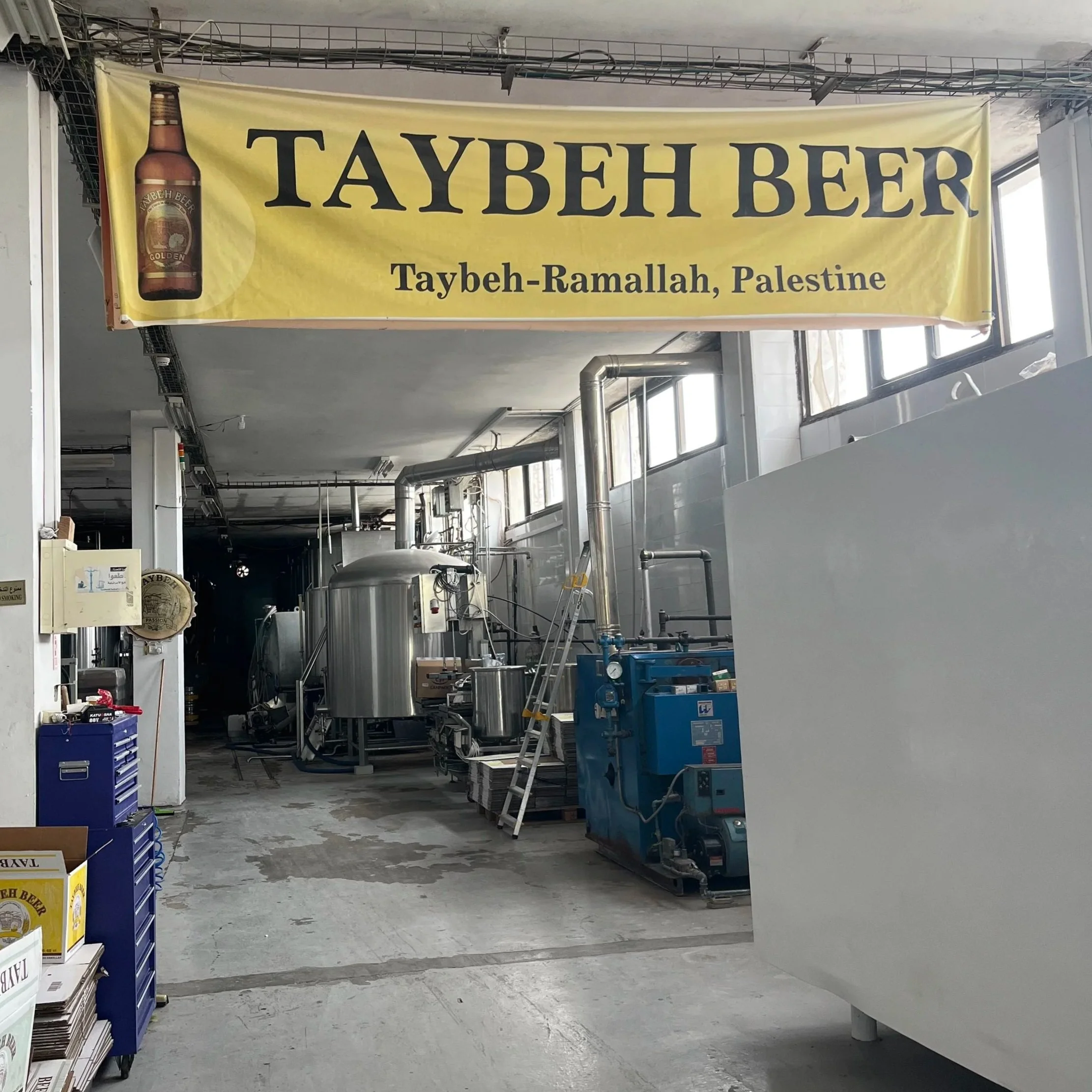
Image belongs to Author.
Regardless of where you are, sustaining a small business is challenging. Yet the Brewery does not just tackle rising costs, keeping customers and cash flow concerns. They fight a separation barrier, no local port or borders, Israeli checkpoints, road closures, unreliable water access and bureaucratic complications. Even competing in foreign markets can be discouragingly political. Bottle labels exported to the US must read “Product of the West Bank” rather than “Product of Palestine”. Ironically, bottles sold within Israel print “Product of Palestine”.
The rain still holds off as we climb out of the car and greet Madees who is in the process of managing a delivery, destined for London of all places. She pours us all a taste of their flagship Golden beer then tours us through the site, so as we sip she explains the brewery’s processes and history.
Aside from the Golden beer, Taybeh brews Dark, Amber, White and IPAs. A signature Brewmaster Series incorporates local Palestinian flavours such as sage, sumac, thyme and za’atar. Local olive oil, soap and the products of Palestinian women’s businesses sit on display amidst Taybeh bottles and merchandise; a reflection of the brewery’s succour and solidarity in the village. As we speak of local enterprise, Madees regretfully informs me that today around 200,000 Palestinians in the West Bank are unemployed.
Posters on the walls honour Taybeh’s annual Oktoberfest of years now long past. The event attracted worldwide beer lovers, locals and Israelis. Aside from the social and political reach of such an iconic community event, it annually boosted the collapsed local economy. Unfortunately, the risk of hosting so many visitors under the current threat of settler violence renders the event impossible. Palestinians also lack incentive to celebrate when so many have been killed in Gaza.
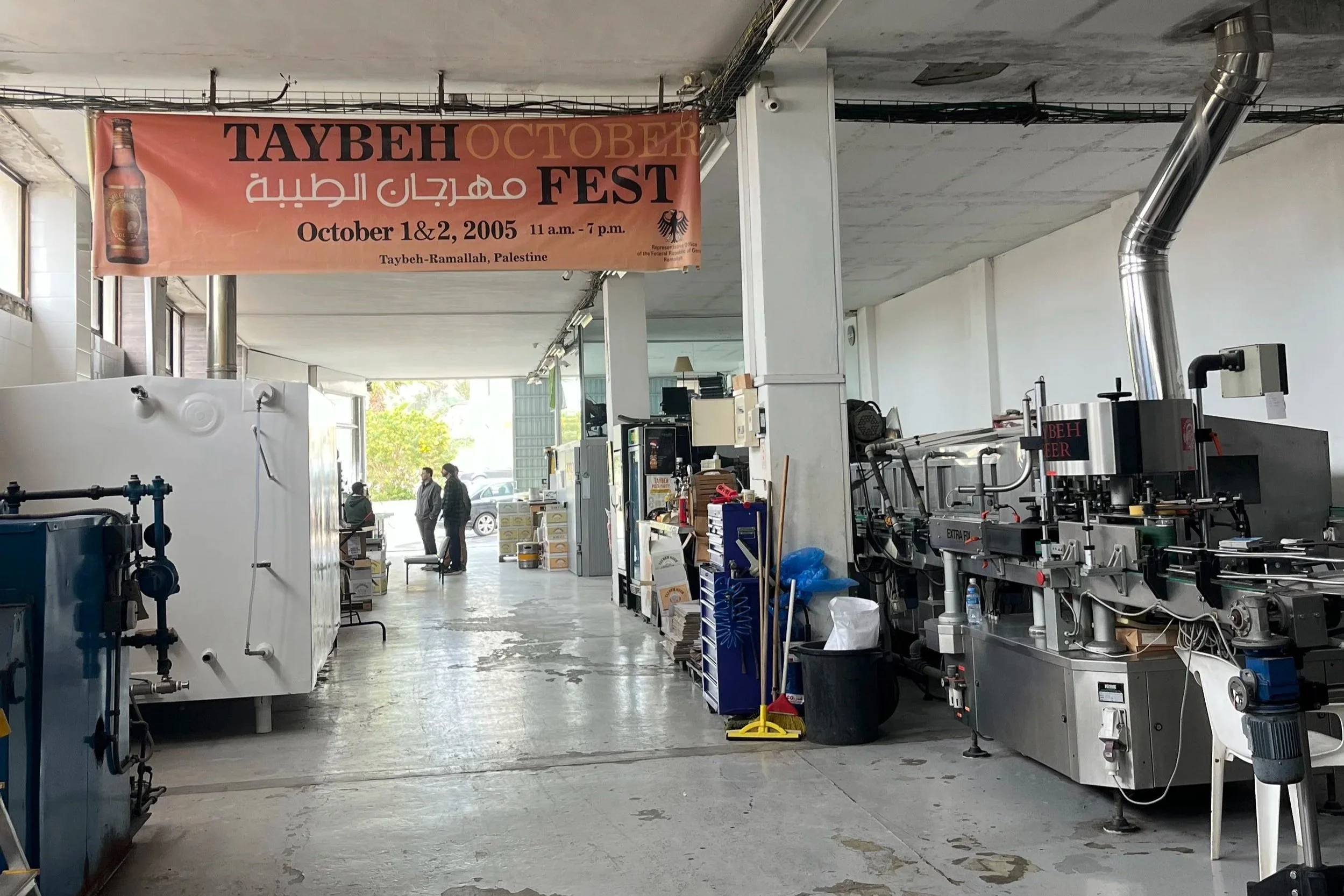
Image belongs to Author.
I ask Madees about the day's delivery to London. She explains that she is only informed of export time slots and checkpoint routes in the days before the shipping, leaving a nail-bitingly narrow window to get organised. Roads in the West Bank are often randomly closed, leaving delivery drivers in gridlock for hours. Since 2025, large yellow gates have been erected across the West Bank, isolating entire towns unexpectedly for undisclosed amounts of time. Often, if it makes it to the Israeli checkpoint, stock can be denied passage without reason. Madees sighs that now a successful business day is just one delivery, the uncertainty this throws at Taybeh renders any planning impossible.
Unpredictability is not only an export issue; it overshadows every aspect of business. Increasingly extreme political and legal changes compounded by spikes in settler aggression are serious concerns for Taybeh’s future. Expanding and investing, as they have recently done in the form of much larger vats, is a great risk. Such concerns do not only impact the Khoury’s business, but the community they support in Taybeh.
In the first three months of 2026, under the auspices of a world distracted by watching the regional war worsen, according to the OCHA, settler violence and access restrictions have displaced around 1700 Palestinians. This figure surpasses the entirety of 2025. Since the war erupted at the end of February, over 150 settler attacks resulted in casualties or property damage – averaging at more than six attacks per day.
The disparity between life as an Israeli and a Palestinian is exposed in wartime. Under relentless missile fire, all run to the 12,000 bomb shelters nationwide, of which only 37 are located in Palestinian localities. Eight of them are unusable. Last week, with international eyes on oil prices, the Israeli government passed a death penalty law, mandating Israeli military courts to impose the death sentence on anyone convicted of killing an Israeli citizen. An article published in 972+ Magazine warns that “with death at the top of a hierarchy of punishment, the entire (legal and political) system will re-orient; life imprisonment will no longer define the outer limit of state coercion”.
Rain eventually falls as we drive back to Jerusalem, inspired and saddened by Taybeh’s uphill battle, unaware then of the storm which would come just over a week later. Regional war is the harbinger of a fresh season of hardship for Palestinians. What were hills in February are now mountains. Our international support is essential to protecting Palestinian rights in the West Bank and to the survival of businesses like Taybeh. In the brewery’s case, partner companies such as Brewgooder in the UK and other collaborators around the world help to economically penetrate the Israeli barriers and checkpoints. Buying ethically and intentionally, even if infrequently, peacefully combats the Israeli efforts to turn West Bank towns into “open air prisons”. And all this aside, why not try the best beer in the Middle East?