Anti-Macron backlash rages across the Muslim world
Olivia Mustafa in Alexandria, Egypt
Muslims across the world have been protesting against President Macron after he controversially defended the right to display cartoons depicting the Prophet Mohammed. His comments come after a series of terrorist incidents which have recently unfolded in France.
Calls to avoid buying goods from French-owned corporations have been widespread across the Middle East and beyond, from TikTok users to heads of state. Former Malaysian Prime Minister Mahathir Mohamad claimed that Muslims now have the right to ‘kill millions of French’, meanwhile footage spread across social media of Kuwaiti supermarkets pulling French products from their shelves. Protests turned violent in Pakistan as police used tear gas against those marching towards the French embassy. In Alexandria, Egypt, posters of Macron with a footprint over his face have appeared on the floors of underpasses and foreigners face shouts of ‘No French!’ when wandering the bustling souks of Cairo.
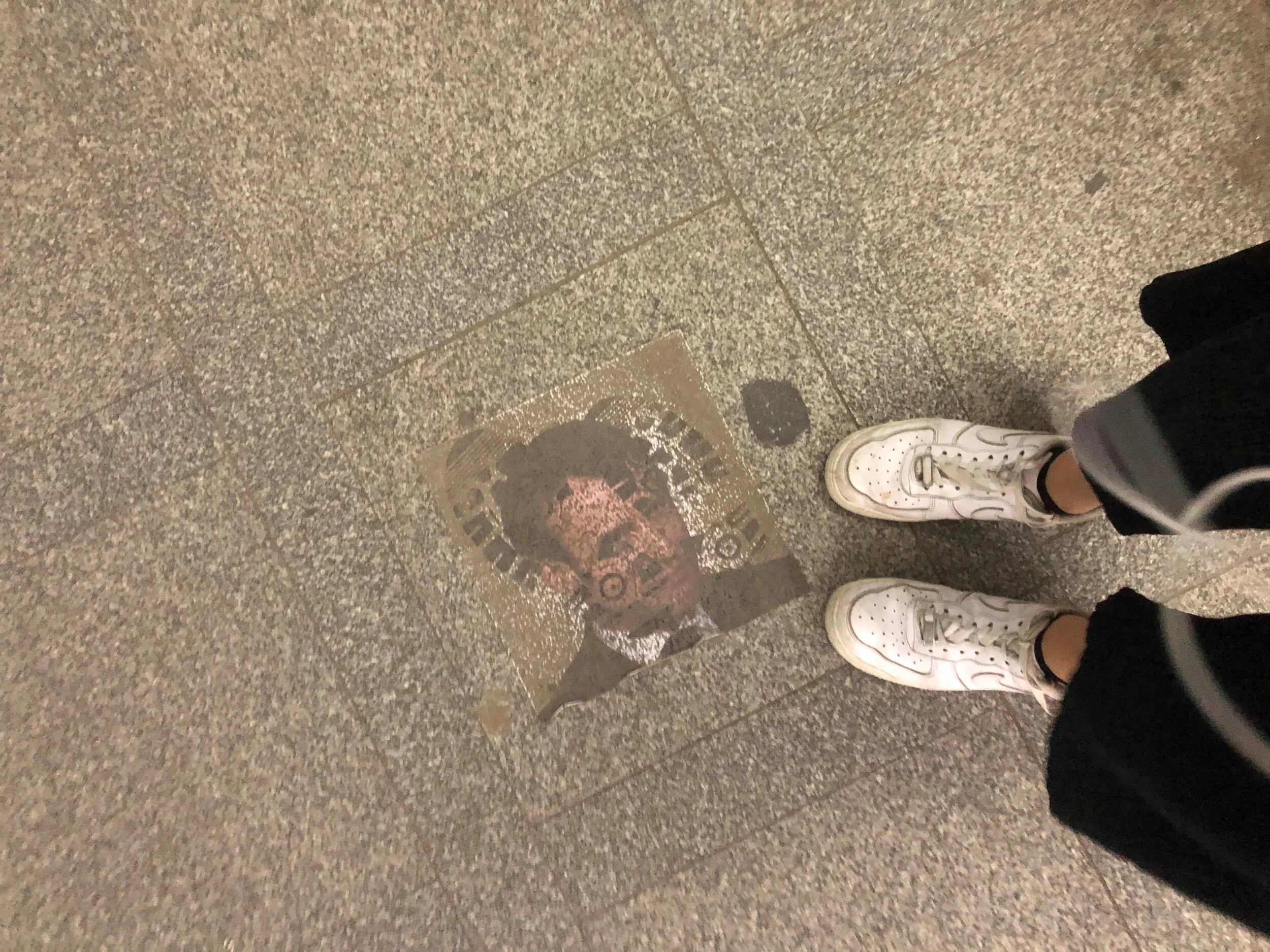
Anti-Macron street art in Alexandria, Egypt (Photo: Olivia Mustafa)
The backlash follows Macron’s response to the recent murder of Samuel Paty. The 47-year-old teacher was beheaded by Abdullakh Anzorov, a young man of Chechen origin, after he showed cartoons of the Prophet to his students during a lesson about free speech. Macron posthumously awarded Paty with France’s highest honour, the Légion d'honneur, commenting that ‘we will not give up cartoons, drawings, even if others back down’. Many Muslims have interpreted these comments as ignoring the sensitivities of France’s Muslim community, which makes up almost 9% of the population, the largest of all Western European countries.
The tension between Macron and Muslims in France and beyond has long been simmering. Since the brutal attacks on the offices of the satirical magazine Charlie Hebdo in 2015, questions of freedom of speech and Islam have remained in the spotlight. In a speech from early October 2020, he deemed Islam a ‘religion in crisis all over the world’, condemning so-called ‘Islamist separatism’ in French society, in which radical Muslims supposedly thrive. These comments have been heavily criticised for their insinuation that problems with radicalisation are inherent to Islam itself, rather than being rooted in socioeconomic issues as a result of a lack of government investment in marginalised communities.
The Macron administration has evidently been taken aback by the scale of the Muslim response. The president has since conducted interview with Al-Jazeera, and a phone call with the Palestinian leader Mahmoud Abbas, in an attempt to contextualise and justify his claims, and is now reportedly considering appointing a special envoy to Muslim-majority countries to clarify his stance. The pressure is certainly building on Macron to strike a delicate, and seemingly impossible, balance: pacifying the uproar which his comments have incited, and continuing to revere the concept of free speech in modern France.