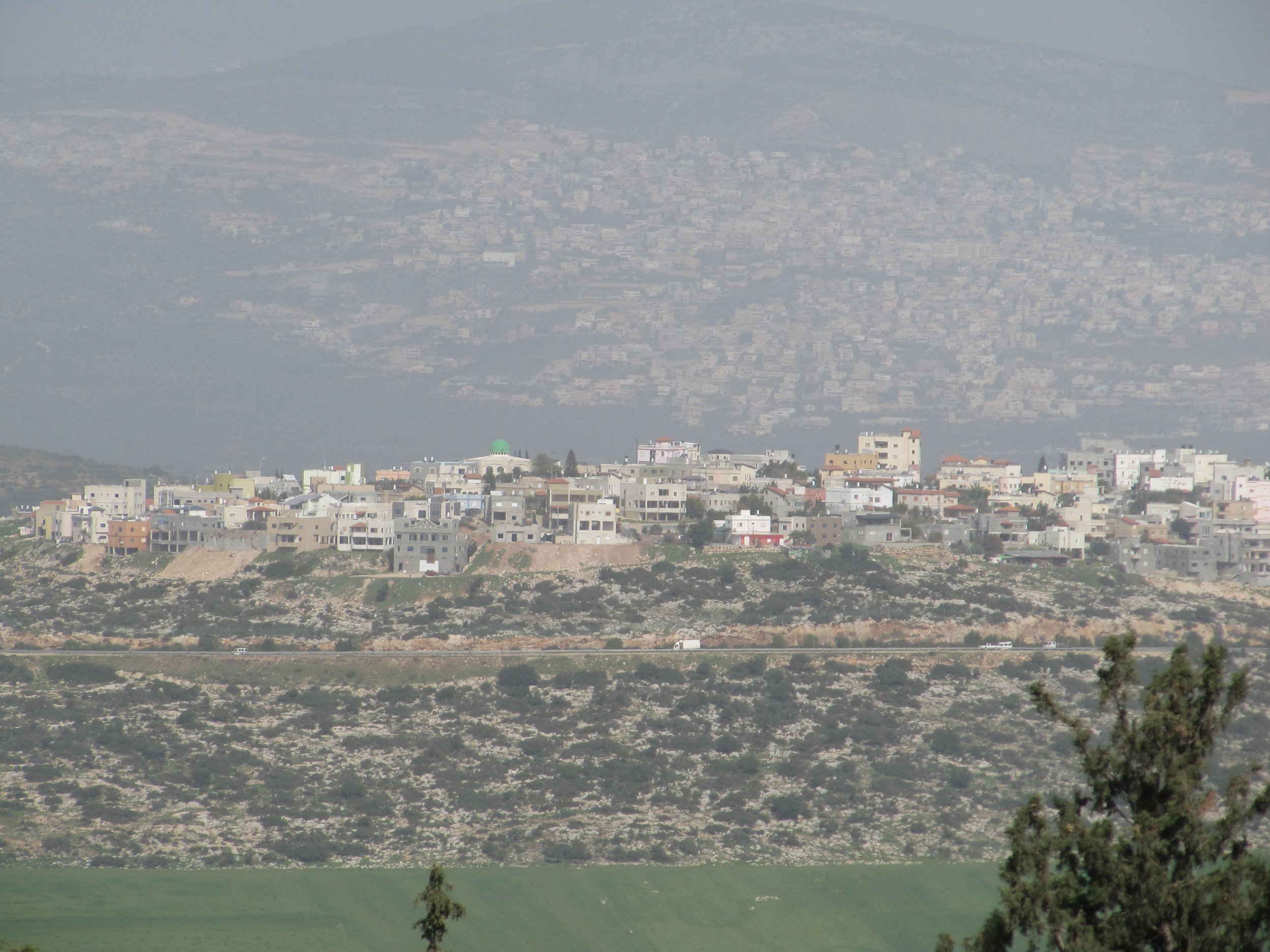
Credit: Hoshvilim via Wikimedia Commons, CC-BY-SA-4.0
I am not an interesting person. If I was, then I probably would not be aware of it. Interesting people are too busy being interested in the stuff that makes them interesting instead of using writing as a form of dignified, vainglorious naval-gazing.
The foregoing bit of covert narcissism is necessary because I want to share some memories. Anything resembling “memoir” always comes with the occupational hazard of coming off as a cover for a subtext which, if given voice, would shout “I am more interesting than anyone you know” with a zeal, conviction and fervour exceeding that of politics on TikTok. So, if any of the following emits some I-am-interesting vibes, I hope the reader can see past this to my real goal in sharing said memories: to try to convey how great a small village in northern Israel was during my childhood summer visits. Its greatness deserves to be conveyed and its beauty, described.
I was born in Mississippi to Israeli-Arab immigrants. Each summer, my mom would take me and my sister back to northern Israel, where our parents are from. We would spend what felt like a couple of months each visit (it could have been shorter; time moves slowly for children). Despite these trips’ relative brevity, they punctuated my years with exclamation points and positive-affect emojis. But they had no obvious reason to. If you were watching the whole thing from the outside, these trips had as much action and adventure as a Jane Austen novel. My cousins and I spent much of the summer bouncing around each other’s houses inhaling second-hand cigarette smoke and eating objectively the best food on the planet. None of this is “fun” in the ordinary sense of the word, yet it somehow gave me an impression that I have been chasing ever since – the impression that I was actually living life. Time there was somehow intrinsically meaningful, existentially pregnant and just freakin’ awesome.
We slept outside sometimes. Back in Mississippi, unless you wanted our exclusive beauty treatment, “sweaty and stung”, you would not hazard such a thing. But sleeping out on the veranda was one of the experiences I looked forward to the most at sīdī’s (grandfather’s) house. His veranda extended out from one particular side of the house enough so that it formed a large sitting area where we would often have meals and sahrāt (late evenings spent with village folk chatting, snacking, drinking and just existing in a state of bliss). The space was enclosed and one of the walls was lined with two beds. Not spending the night on those beds was more unthinkable. The air at night turned so crispy cool that it felt like your reward for bearing the hot summer’s day. I swear it had a sweet taste, too, as if the whole experience was so sublime that my senses were just looking for ways to tell me. The wind was not too heavy. It was just enough of a breeze to be audible. Your ears could also sense it stroke and shake the leaves of the garden’s flora. It would not simply help you sleep. It would lull you serene. On nights like that I can remember walking in and out of the house noting the stark temperature spike inside. I implicitly took it as an admonition to go back out. Inside I could sleep, but out there I could rest. I miss being able to rest.
Mornings smelled like mint. Sīdī’s garden was planted and cultivated in a sunken area just in front of a wide and heavy steel sliding-door that led into one of the house’s sitting rooms. The mint plants crawled up the wall and the parapet, which were contiguous with the part of the veranda just outside of the door. Every morning I could count on being greeted by their oblong, serrated leaves, which were easy to reach since they stood so tall. To my own shock and disbelief, I would pick the leaves to make tea. I hate tea. Every tea I have ever tried tastes like thumb tacks and wasps. I do not know why I started to make tea out of the mint. Maybe a relative let me have some and showed me how to make it. But that does not really matter. That is not why I remember it. I remember the smell being so strong that consuming it was the only obvious choice. I would pick it, toss it in a clear mug and pour boiling water over it. My favourite part was watching the water turn from gold to bright green. The taste lacked nothing and to add sugar and/or milk was not only pointless but, looking back, would have violated what afforded the experience its memorability and thus the reason I am doting on it now. The mint’s olfactory and gustatory perfection might as well come from another world – the real world. The phrase “the real world” has bad connotations. It is the place where you hate Mondays and pay taxes. But there is a realer world. We feel its peace and joy when experiencing the stillness of nature. It is that place Jesus talked about, where God feeds birds and adorns lilies. Somehow, that wonderful morning mint, in a small way, plugged me into that world, into something real.
Israel has given an ambivalent relationship towards cigarette smoke. I am a giant wimp and smoking anything would send me into an equally giant panic attack. But, to my shame, and against every last one of my overly health-conscious impulses, I reflexively stop and inspire around cigarette smoke. Sīdī had a tobacco farm. I do not know where the actual crops were grown, but I remember he did dry the leaves at the house. They would hang in various places around the property from summer to summer, but most often across a clothesline. The dried leaves would festoon much of the property like chain-smokers’ Christmas garlands. The fully dehydrated leaves would then be shredded and bagged. Then came the part when customers would come around to buy some fresh tobacco. Since he did most of his work in the mornings, this would happen on lazy afternoons. We would sit in the TV room and friendly strangers from around the village would start showing up for business. After the customary Arab greetings, involving 5-10 rounds of turn-taking, he would ask if they would like their tobacco ḥāmiy wala bārid (“hot or cold?”), referring to the two types he sold. (To this day, I have no clue what the difference is.) They would then sit down for a smoke and some coffee. The smell of fresh tobacco and cardamom would fill the room. I think my nose learned to enjoy these delectations because my eyes constantly saw genuine human connection accompany them. They would sit there and talk until the next buyer walked in, regardless if that took minutes or hours. Rapport like that was contagious. I would feel like I was a part of their conversations and in turn, I got to experience the concomitant sense of the present. Tobacco and cardamom still smell like the present, where there is no such thing as a past regret or a future anxiety.