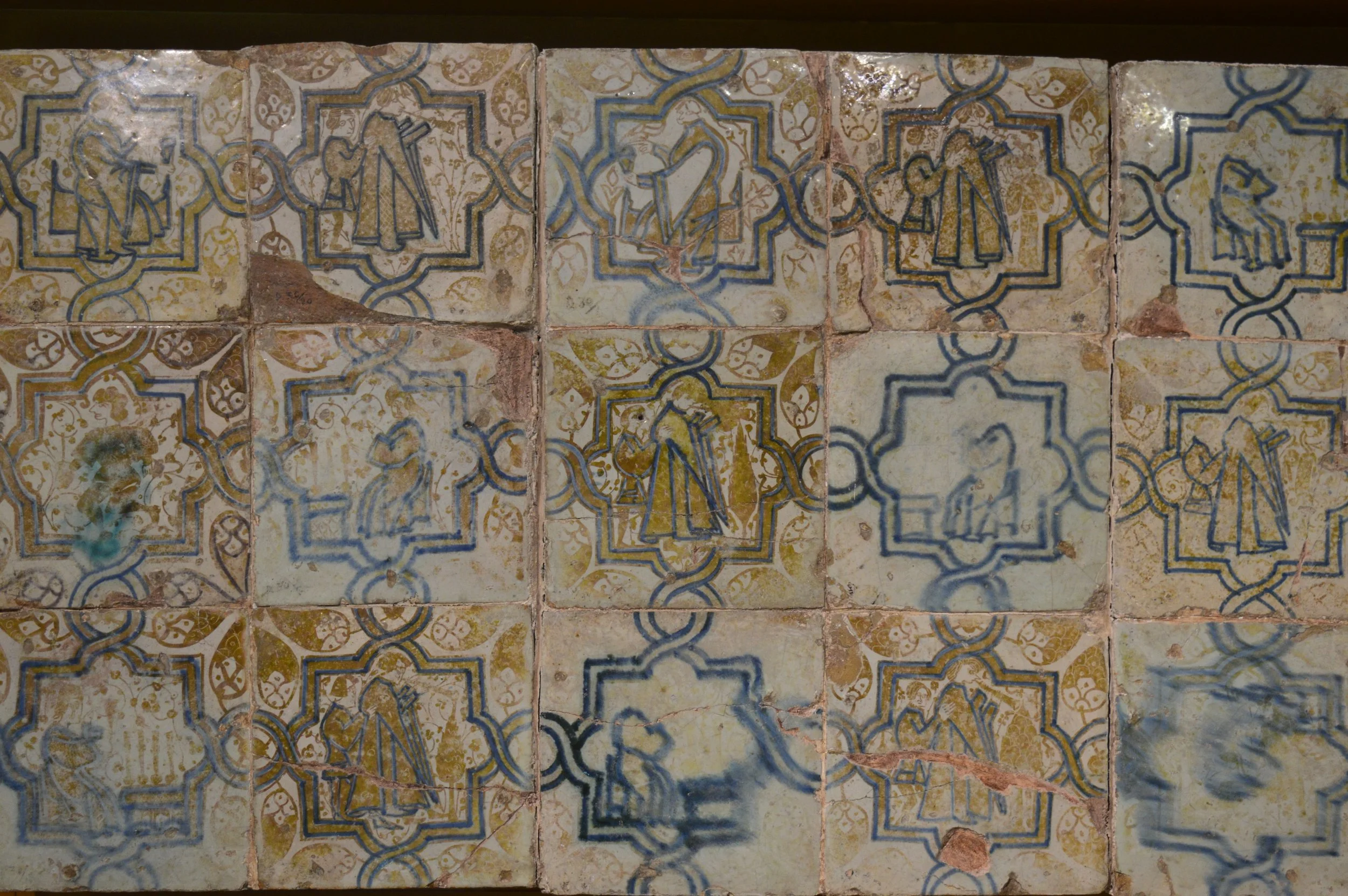
A medieval mosaic
“Nuevas navegaciones, pensó. Y así hasta el final.” – Isabel Allende, ‘Largo Pétalo del Mar’
January 16th, 929 AD, Córdoba. A fair skinned, blue-eyed man slowly ascends the winding stairs of the central minaret. His beard and hair are black, artificially dyed to appear more Arab. His name is Abd al-Rahman III, the descendent of Abd al-Rahman I, the sole survivor of the massacre of the Umayyad family, an ancient Arabian royal line who had once ruled the caliphate in Iraq. The first Abd al-Rahman had wandered for five years through the deserts of Arabia and North Africa, crossing the straits of Gibraltar, and settling in southern Spain. Our Abd al-Rahman had to live up to this great heritage of Muslim and Christian royalty. At the top of the tower, he finds respite from the smothering heat, and gazes outwards, across sun-baked courtyards of red, pink and yellow flowers, gatherings of philosophers and mathematicians, libraries, and the Roman bridge in the distance. The hammerings of stonemasons in the distance herald a new extension to his mosque, making it the largest in the world. Today was the day he would live up to his namesake, no more would Córdoba be a provincial backwater under the yoke of those who murdered his family. Across his territories, heralds would now declare him as Caliph, the new religious leader of Islam, with Córdoba as the new capital of the Muslim world.
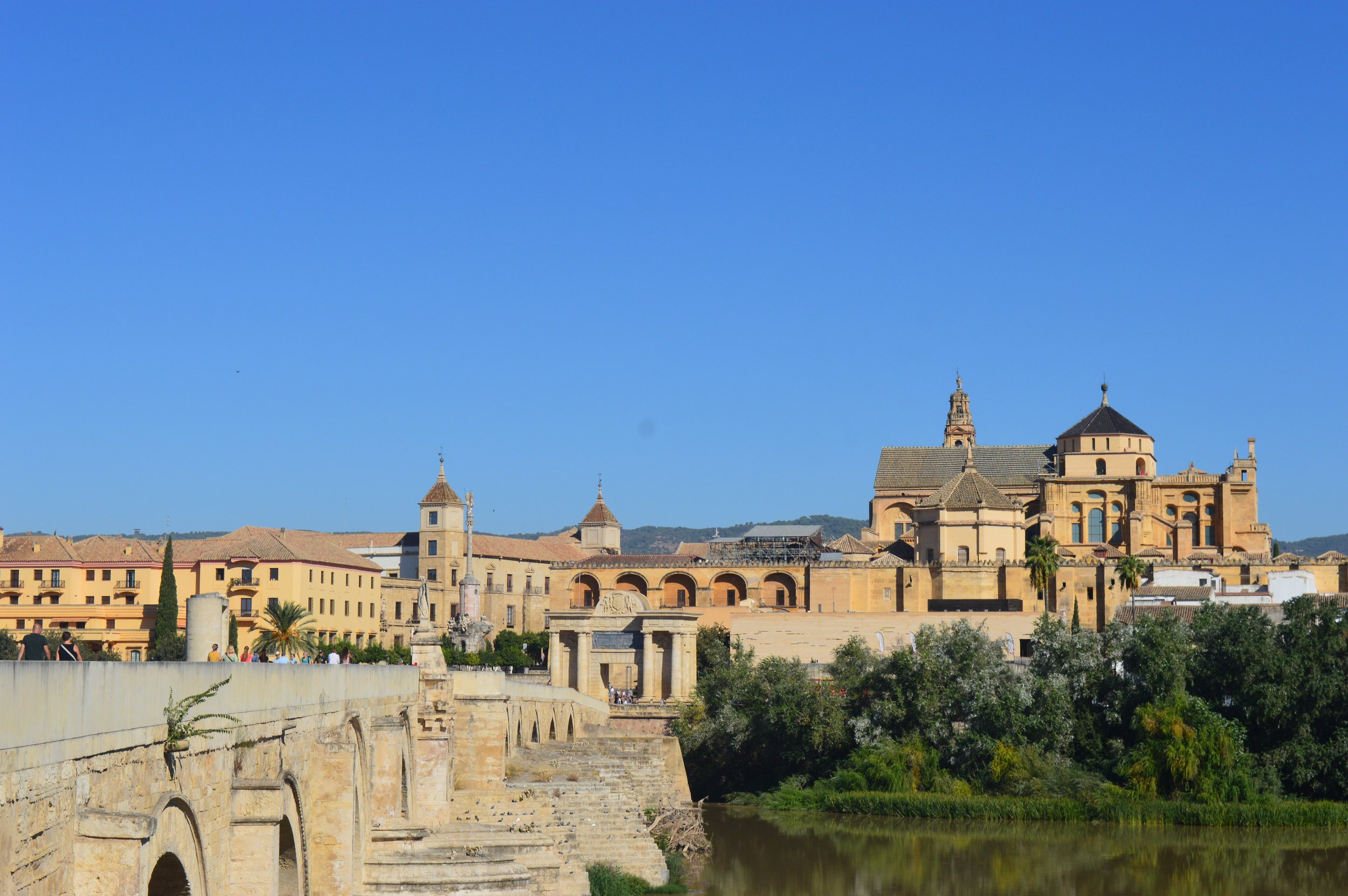
The Mézquita-Catedral viewed from across the Roman bridge
My plodding steps made slow progress through the residential outskirts of Córdoba when I arrived. Like most cities, the modern transport hubs are often on the outskirts, so my hostel in the casco histórico was a bit of a trek. Spirits high, however, and El Madrileño by C. Tangana sounding in my earphones, I began to appreciate Córdoba. It felt larger than my previous stops, more urbanized as I walked past Mercadona and a huge Corte Inglés, but still with that mystic charm of Southern Spain. The streets glowed white under the midday heat, peppered with clusters of orange trees, and single-file lines of people hugging the shadows of buildings on the sides of the pavements. Once through the shopping district, rows of white-walled Andalusian houses marked the start of the old centre, a sight which by now had begun to encapsulate southern Spain in my mind. Alleyways led in circles and spirals, maddeningly difficult to follow, but whose spell you were glad to fall under. Almost every wall of every street, house and corner was adorned by flowers of all colours and sizes: in baskets, poking out of cracks in the white clay, organised and disorganised. In fact, Córdoba is famous for its flowers and holds a competition yearly where the Córdobans compete to be awarded the prize of best courtyard, and their love for the city is evident.
My hostel was undeniably beautiful, a pretty little house around a central courtyard, with a small pool nestled at the side. Yet, I couldn’t shake an unnerving sensation. There was no receptionist, just an app to get in, and it was a ghost town almost anywhere you looked. I found my room and located my bed: one of seventeen in a shared room, but with only two other beds seemingly being used. I have to say I’d rather have slept with seventeen people than with the uncomfortable intimacy of just three of us, but no matter. No curtains on the beds, and no locks on the showers which opened straight into the main room. To’ lujo pa’ la casa. I drop my bags off and rot a while to an episode of Anthony Bourdain, then head out to catch my evening tour of the city.
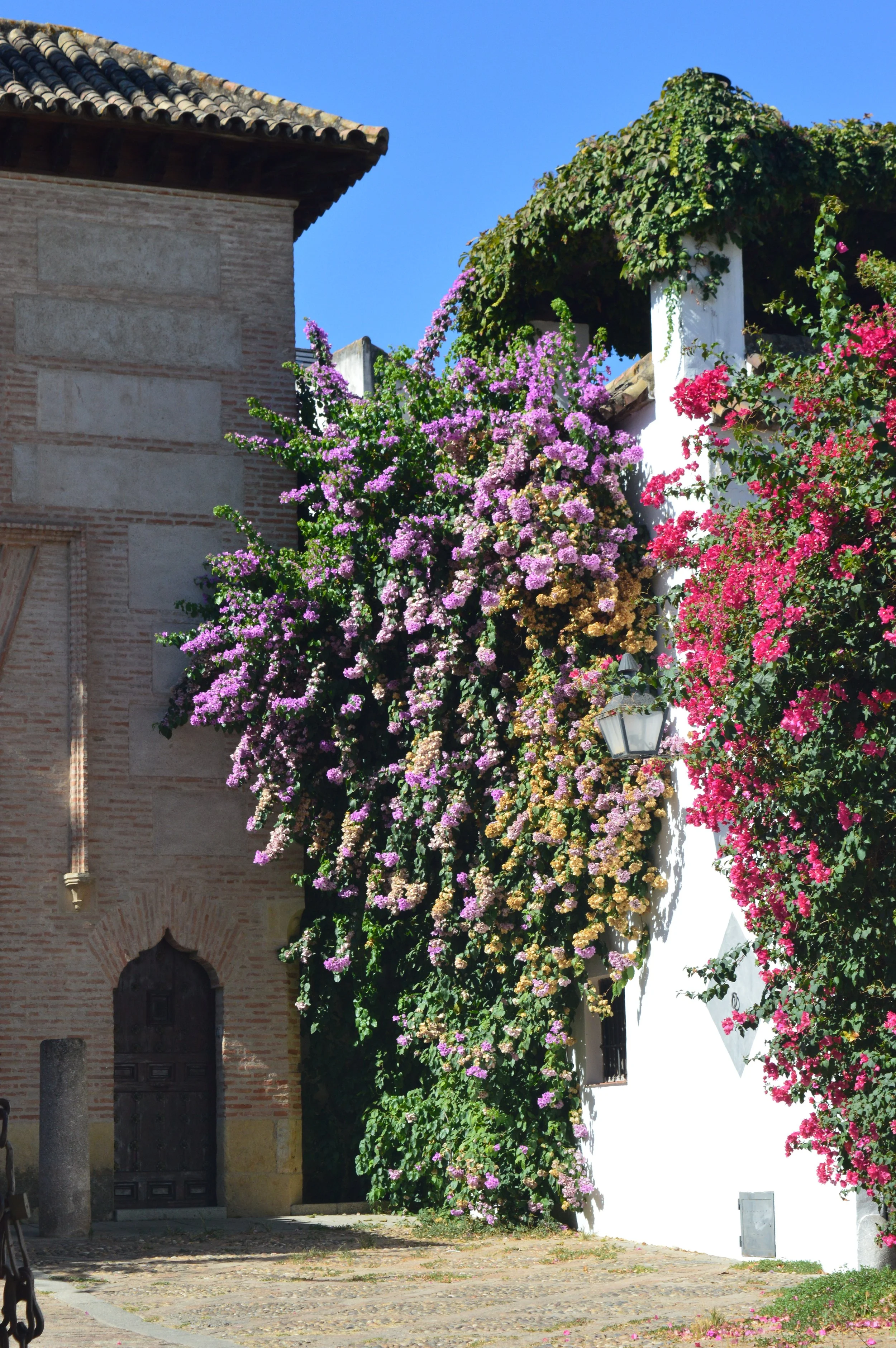
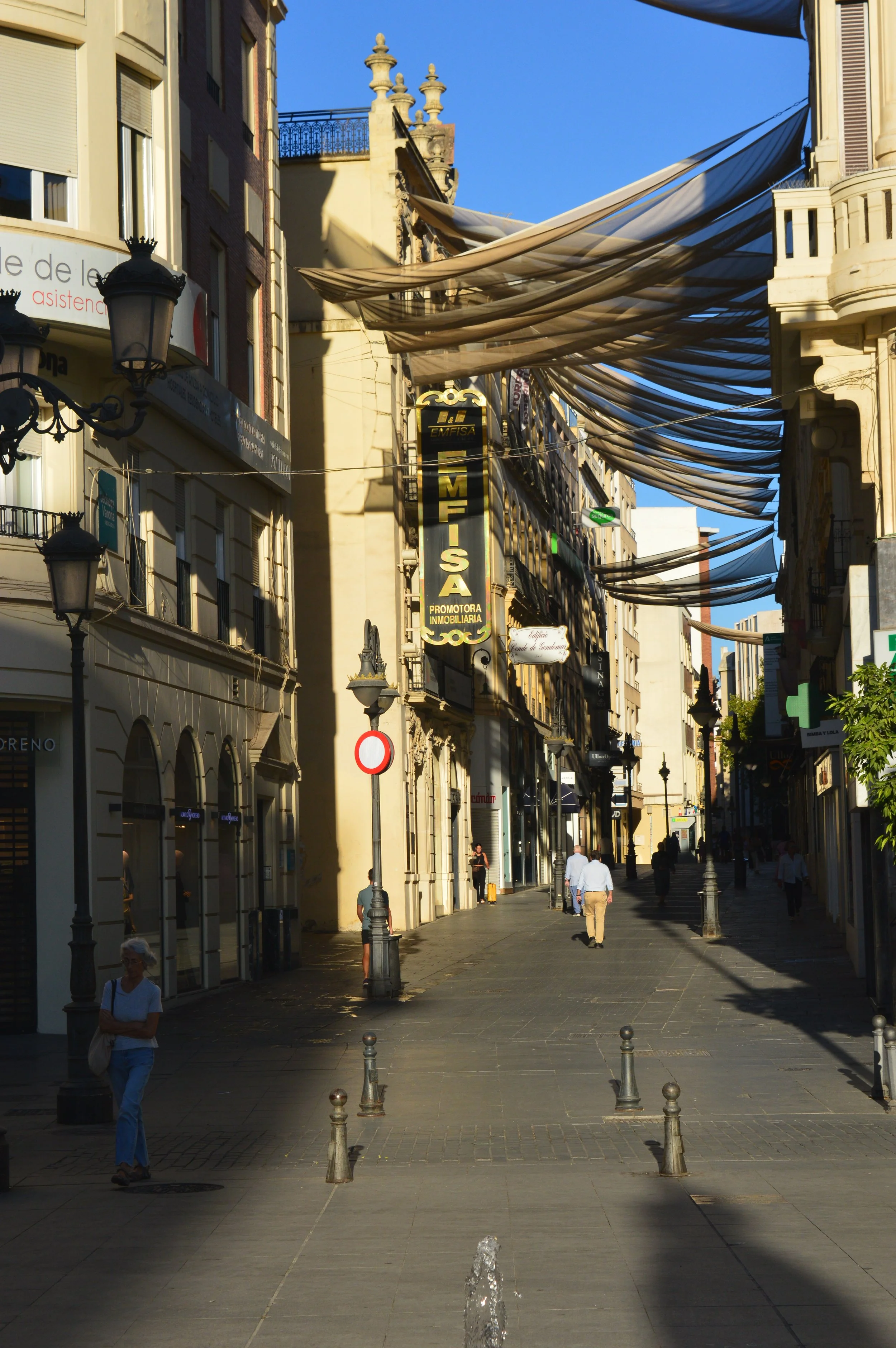
A Córdoban street and the draped streets of the city centre
The tour begins in the Plaza de las Tendillas, a historic marketplace in the centre of the city, centred around an equestrian statue of some famous Córdoban. Again, there were mostly Spanish people here, particularly big groups of families. I befriend the dads of the group, the typical Spanish cuñados (hard word to translate, but basically describes a forty-odd year-old man who likes beers and awful dad jokes), who find it hilarious that a guiri speaks Spanish. White sheets flutter in the evening breeze, hung roof-to-roof to shield people from the summer heat, and we head off. Towards the river, the shops filter out and the streets begin to narrow, marking the beginning of the judería, the old Jewish neighbourhood of the city. This area is truly beautiful, its tangled streets of white, pastel red, yellow, and blue houses shrink and grow around courtyard after courtyard of multicoloured flowers. Our guide talks about the great Muslim and Jewish philosophers which came from this city, most notably at a statue of the polymath Ibn Rushd (latinised as Averroes), who translated and commentated on many of Aristotle’s works. Fifteen minutes pass by and we’re now in the heart of the city, at the Cathedral of Córdoba and the Roman Bridge.
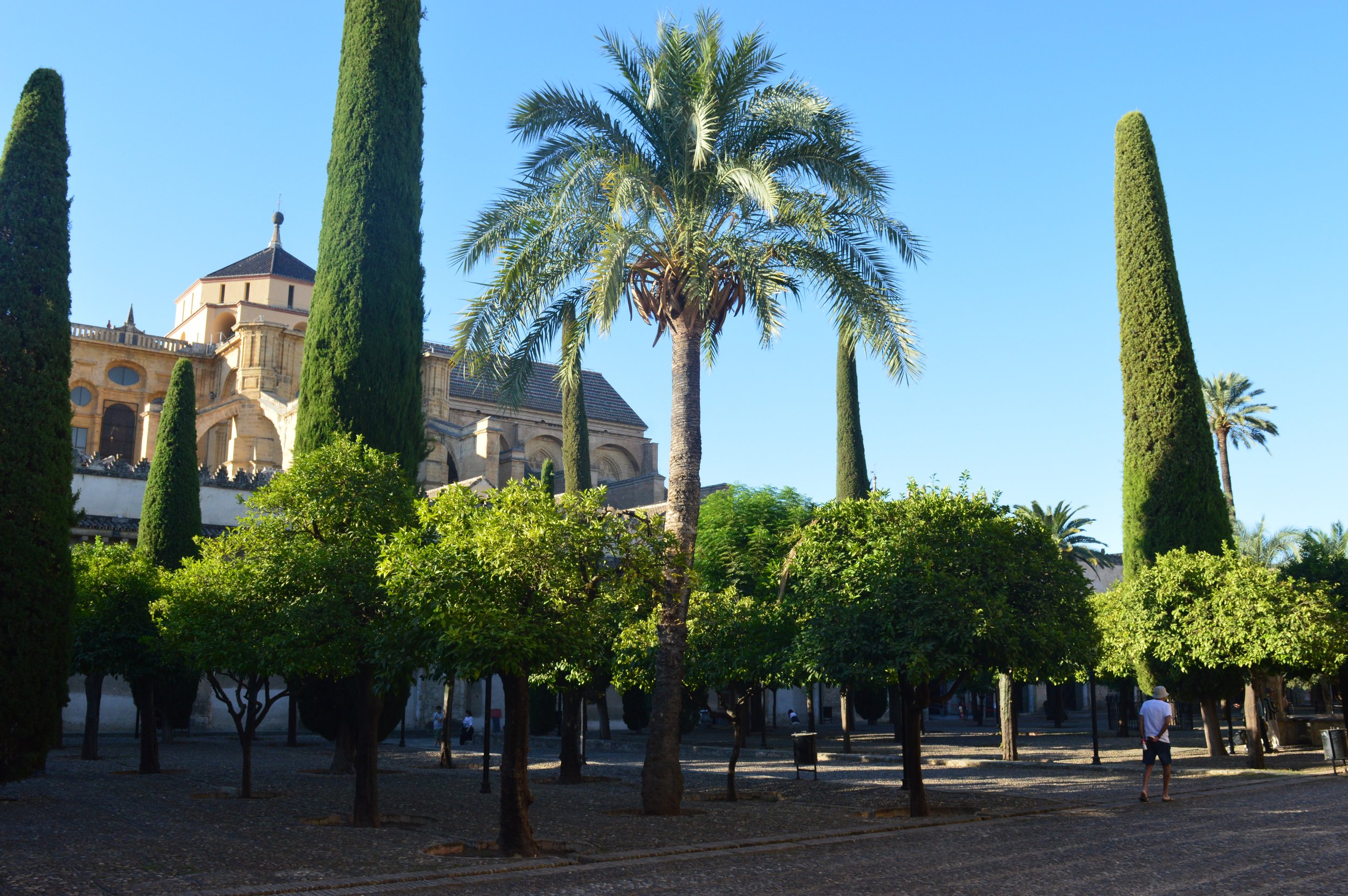
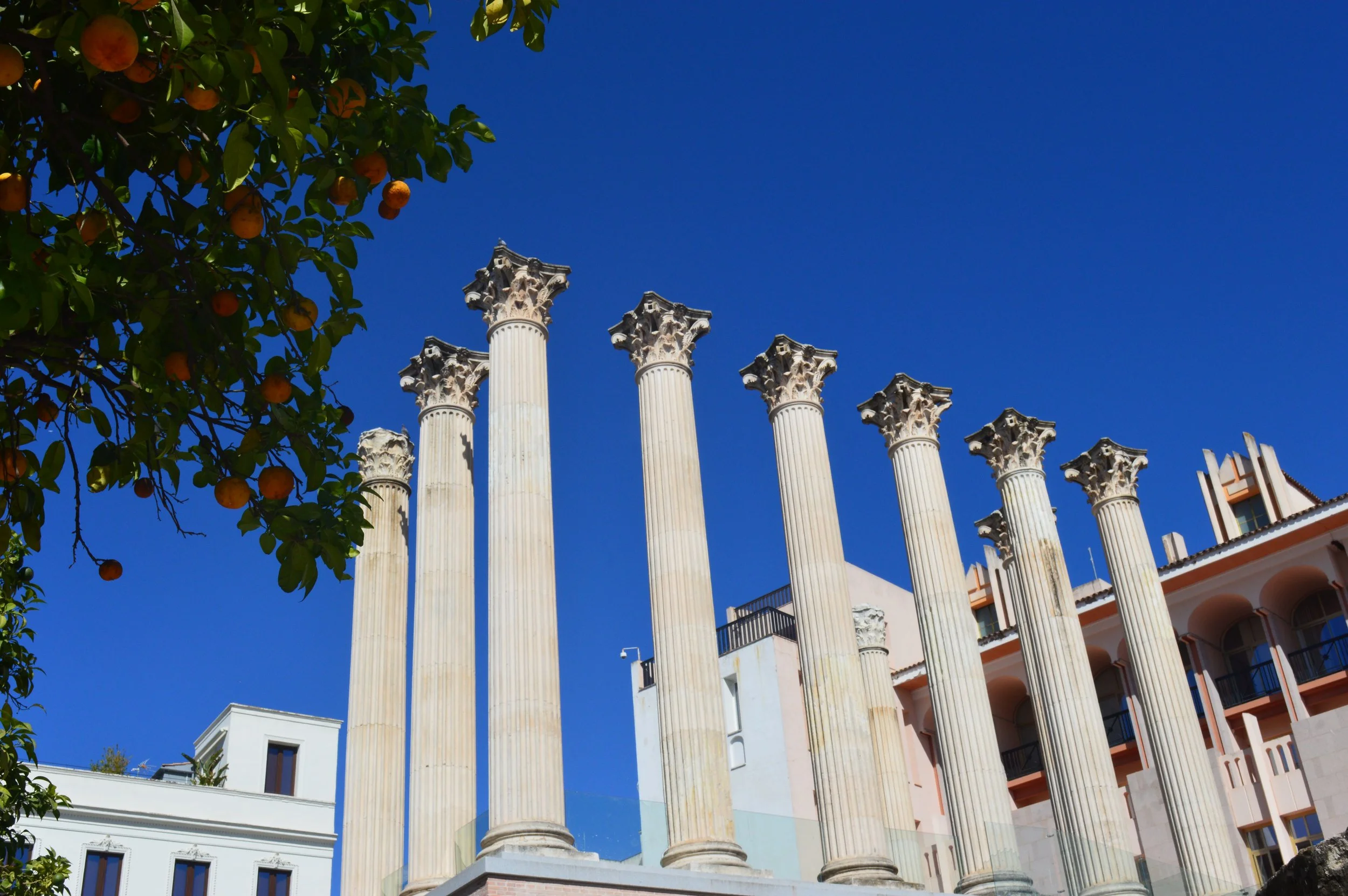
The Mézquita-Catedral's inner courtyards and the Roman temple
I say Cathedral, but in Spanish it’s known as the Mézquita-Catedral de Córdoba – the Mosque-Cathedral of Córdoba – because it was historically one of the largest mosques in the world. The first indications of this are in the chiselled calligraphy of the perimeter wall, which hugs the inner courtyards of palm trees and a grand minaret. The interior is without a doubt the most fascinating space I’ve ever been into; kaleidoscopic rows of horseshoe arches, striped red and white, reflect the ancient Moorish roots of the Cathedral. Carved into the centre of this maze is then an incongruous Christian cathedral, which simply…. begins. Rows and rows of pews ebb outwards, before being consumed once more into the tide of Moorish arches. I chat with the tour guide about the recent fire which had consumed part of the church, and I ask her about some of the comments I’d seen on Spanish news and social media. Many comments under posts about the fire had been celebrating the destruction as ‘good riddance’, which was realistically thinly veiled Islamophobia. She responds that it’s all tonterías, nonsense, and that if people are stupid enough to celebrate the ruin of a thousand-year old monument for their racism, then Spain is in a worrying place. Tour over, I head back to the hostel, which still seems completely empty. Luckily for me, my two roomies are snuggled up in bed already, so I awkwardly nod hello and clamber into the top bunk.
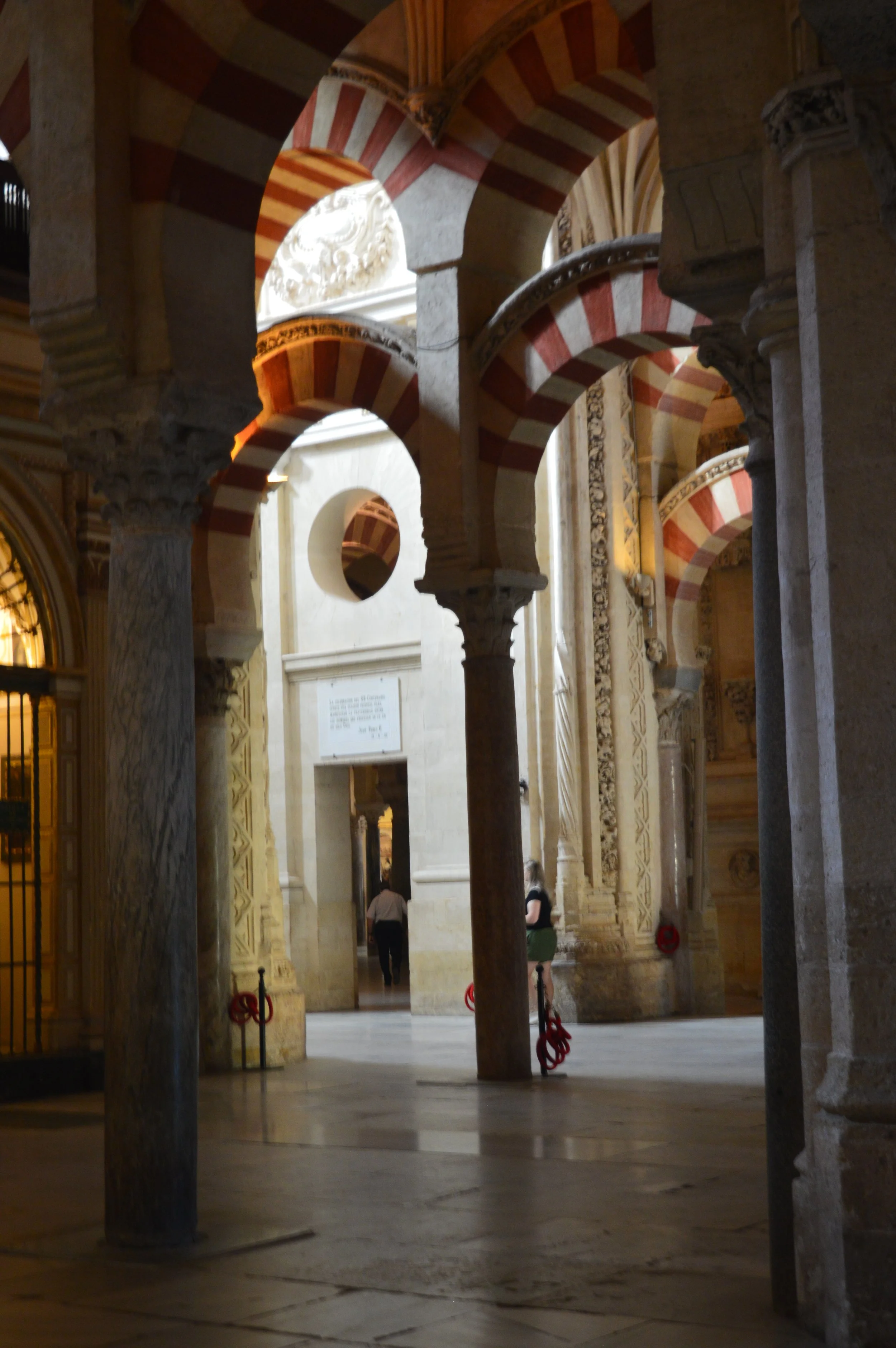
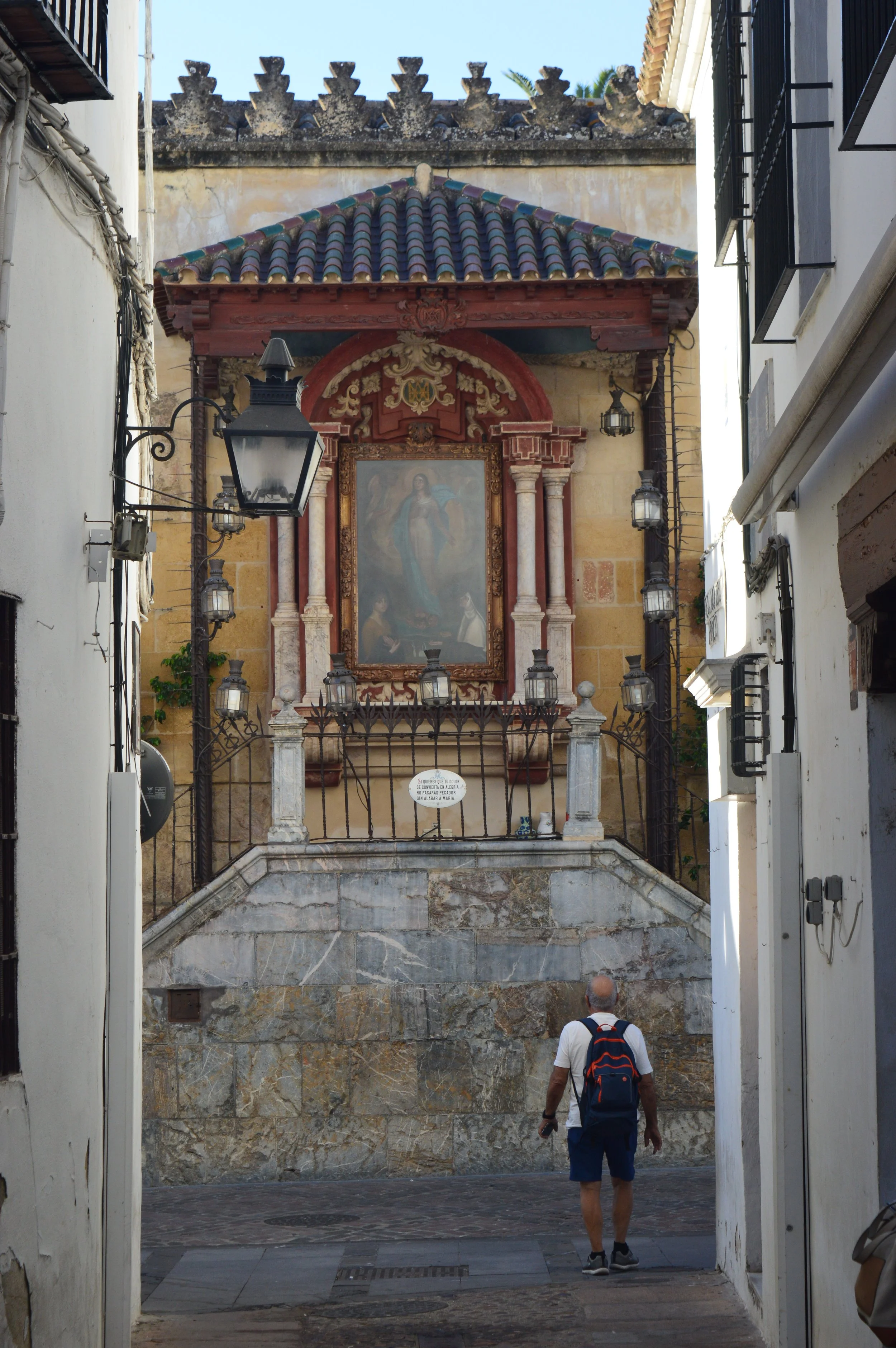
The Mézquita-Catedral's Moorish arches and a shrine on the Cathedral wall
The next morning, I explored the hostel again and still couldn’t shake that unnerving feeling. While solo travelling, you really notice the periods where you haven’t spoken to someone in a while, so I reckon more than anything, the lack of people my age had thrown me off. Making the most of the morning, I set off to a cafe to fuel up on a cappuccino and pantumaca, that Catalan staple of tomato brushed over toasted bread. I explored the Cathedral and looked around the museum of archaeology, which boasted a gorgeous courtyard of Roman mosaics, but I was still knackered. I decided if I wasn’t going to make friends in the hostel, perhaps today was an ideal one to rest. I spent the rest of the hottest hours sprawled in a deckchair, swimming occasional laps of the pool to refresh myself, and hearing clipped audio and laughter over the wall, which was shared by an outdoor cinema.
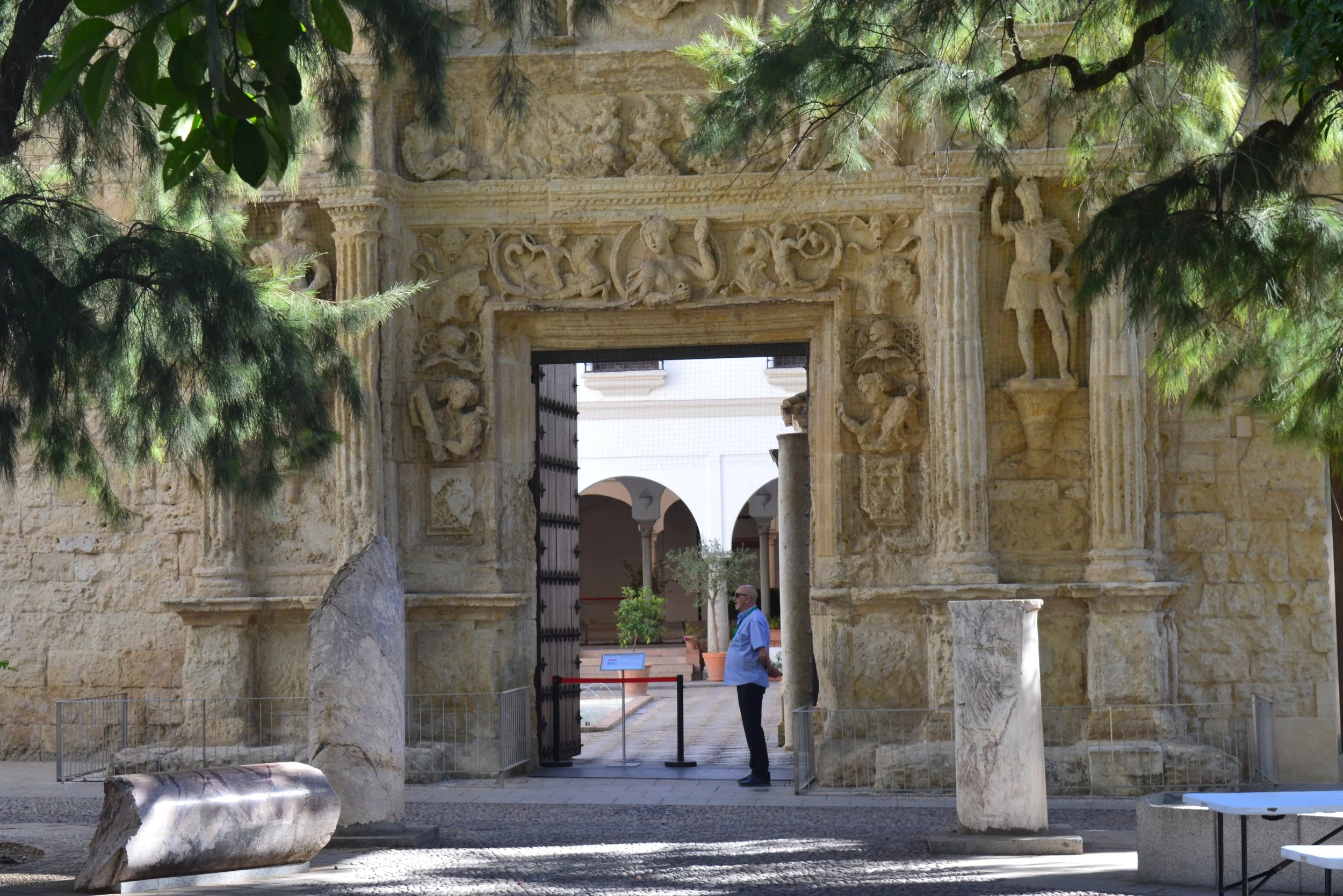
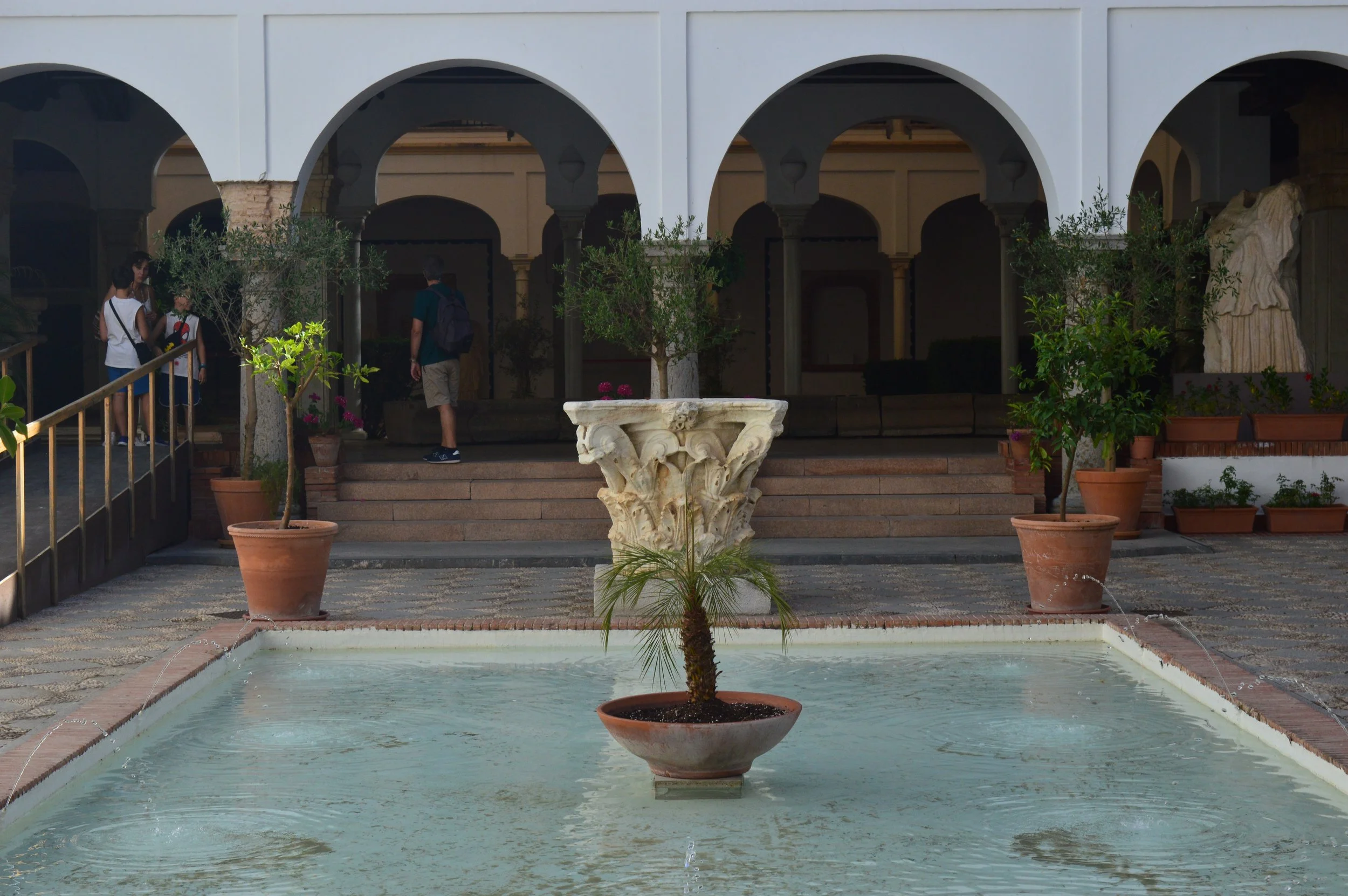
The museum of archaeology and an inner courtyard of the museum
Come evening time, I felt like a new man - I guess a rest was all I really needed. I looked online for ‘things to do tonight in Córdoba’ and bought the first ticket that showed up. An equestrian show in the royal stables. Well, I thought, could be cool to see them trot around a bit, not that I know anything about horses. My expectations of a little ‘trot around’ began to quickly slip away, however, when I was greeted by a grand stone archway which lead into the stables, absolutely heaving with people. Somehow, I had managed to buy a deluxe ticket that had been discounted last minute, so the porter ushered me past the crowd and into the stables. Stables, I must say, was an incredibly misleading word for it. A rectangular sand arena was lined by stands of chairs, atmospherically lit in the twilight by small lights nestled in flowers which stood trellised up the walls of the open-air courtyard. I grab a beer from the bar and find my seat – one of the fancy ones along the long side of the rectangle, allowing for much better views of the horses throughout the show.
The flamenco guitar fades away as people finally find their seats. Echoing across the arena, a voice announces that no photos or videos are allowed during the show, and begins a winding history of the equestrian tradition in Spain, how the great horses were renowned across the world for their temperament and breeding, not only as war horses, but also for dressage. The arena is black at this point, stars beginning to prickle the sky above, until a spotlight beams a circle in the centre of the sand. From the far side of the theatre, now in hushed reverence, a guitar sounds. Sand begins to be kicked up, but no-one can see where from. Then, into the circle of light, a hand appears, reaching towards the heavens. A woman in a red flamenco dress struts forwards and strikes another pose, both hands clapped upwards, her face a mask of passion. The music crescendos and she turns slowly, stomping her feet, sand sparkling in the light and dropping into the shadows, clapping now, then just as she fully turns, I hear gasps across the audience. A riderless horse has begun to gallop across the length of the arena, full speed, straight towards the woman. She stares the horse down unflinchingly, and just before the horse would hit her, it slows and rears upwards on its legs, mighty in that circular spotlight. The crowd erupts, cheering and clapping, and thus began an incredible show of flamenco, the horses literally dancing with the women, followed by unbelievable feats of dressage.
By the end of the night, I was astounded as the stables emptied out into the street next door. I sat myself down at a bar, and rode the high with some chicharrones de Cádiz, tortilla española, croquetas de jamón, and – of course – una cervecita to wash it all down. A testament to pushing yourself to experience new things and to pushing through discomfort, one of my least favourite parts of the trip had in a few hours become one of my favourites.
The morning after, I grabbed a coffee and an orange juice in the Plaza de Tendillas, and penned in my journal entry for Córdoba. Then, backpack on, I set off towards the city which I had been most excited to visit – Sevilla.
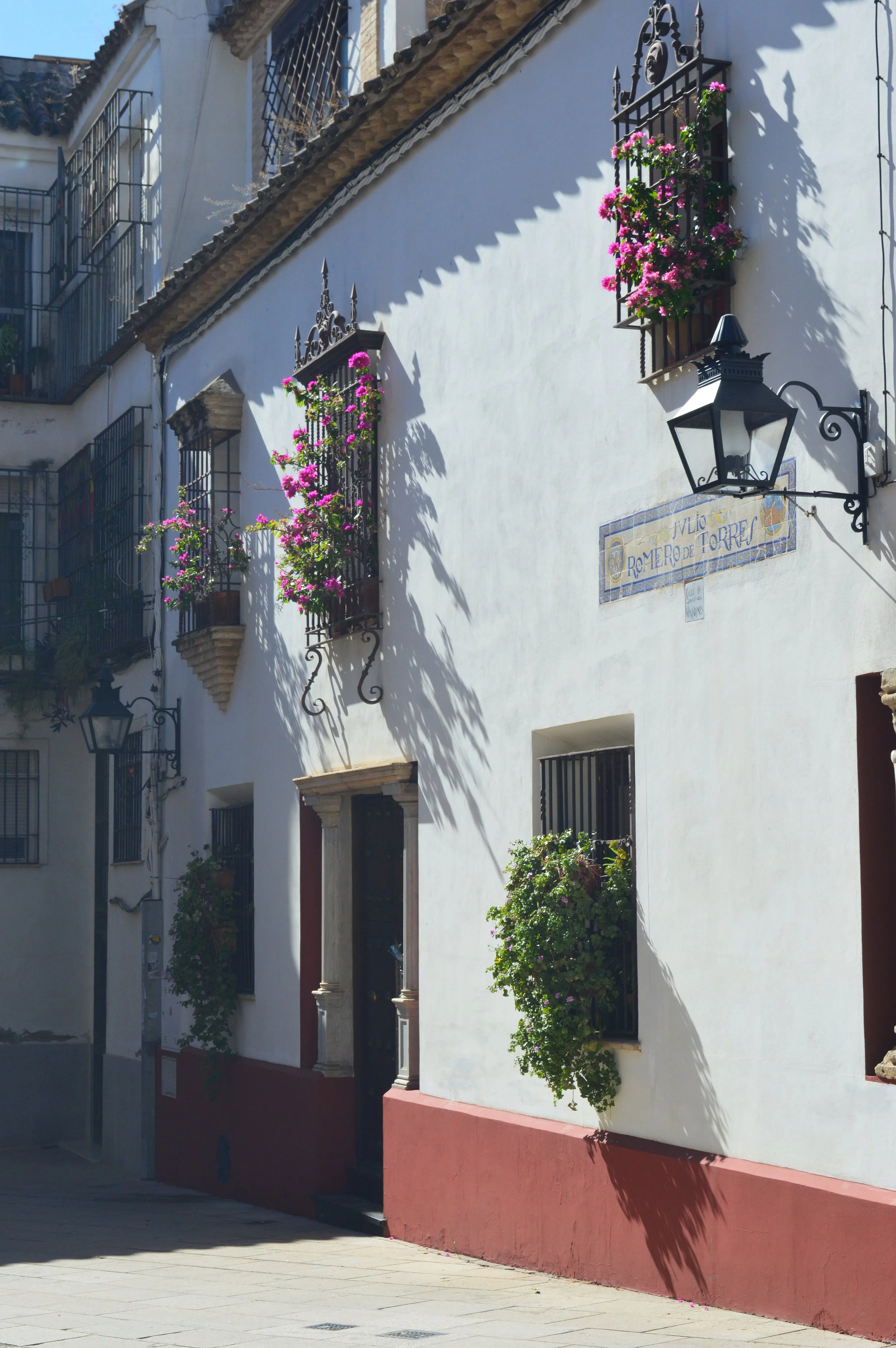
A typical Córdoban street
All photos belong to Asher Porter, unless otherwise stated