Asia
China, photographed by Isaac Ohringer

The Many Legacies of the First Emperor (II)
In the second instalment of his article, Sam reflects on the rehabilitation and reassessments of the First Emperor in the 20th century, spearheaded by Mao Zedong and continuing on after his death into late 1990s cinema.

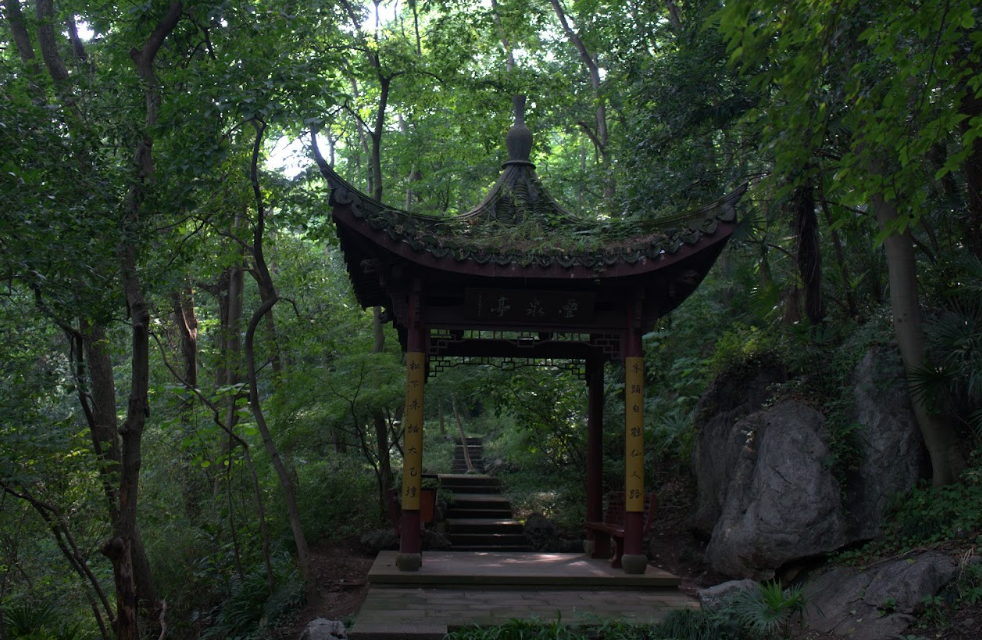
The Audioscapes of the Contemporary Chinese-Speaking World III - Sunset at West Lake (西湖)
In the third instalment of her column, Ella Eagle Davis focuses in on Chinese indie band Miserable Faith, reflecting on the transcendent and transportive quality of their song ‘West Lake.’

The Many Legacies of the First Emperor (I)
In this two-part article, Sam Meston explores the reasons behind the recent historiographical reevaluations of China’s First Emperor, Qin Shi Huang, beginning with a deep-dive into how he earned his title.
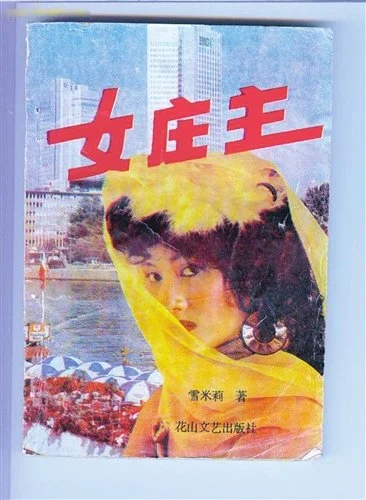
The Scandalous Non-Existence of Xue Mili
In this article, staff writer Tabitha Rubens delves into the explosive phenomenon of the “Xue Mili” novels that appeared in China in the late 1980s, and examines how this scandal was reflective of the shifts in the landscape of contemporary Chinese literature.


The Audioscapes of the Contemporary Chinese-Speaking World II - Who Will the Wind Blow Next?
In the second instalment of her column, Ella Eagle Davies explores the emotional significance of setting in memory through the lens of Taiwanese indie-rock band No Party for Cao Dong, in particular their song “Simon Says”.

A Gyopo Reads East I - Pachinko and the Double-Orientalism of Korean Existence
In his first column, Injae Lee lays out his thoughts upon reading Pachinko, the novel by Korean-American author Min Jin Lee. He relates the novel to his own studies in Orientalism at university and the way Orientalism continues to influence perceptions of Korean culture, exposing a darker side to the Hallyu that is exposing the world to Korean culture—and Korean culture to the world.

The Enduring Bitterness of Peppermint Candy (I)
In this two-part article, Hannah Kang Wolter reviews Lee Chang Dong’s Peppermint Candy (2000), a masterful tale of disillusionment and loss of innocence told in reverse chronology.

India is breaking up with Russia. Will they ever get back together?
Current Affairs Editor Akshar Abhyankar explores how the invasion of Ukraine has changed the Indo-Russian relationship - and what this means for the world.
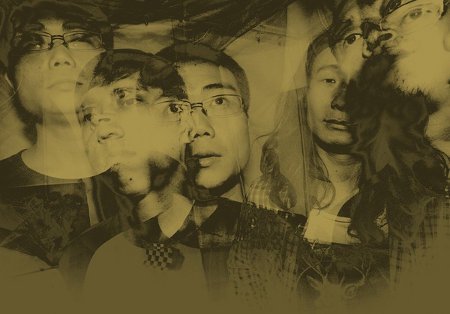
The Audioscapes of the Contemporary Chinese-Speaking World I - The Mountain Tit (山雀) of Hebei
In this first instalment of her column, Ella Eagle Davies focuses in on the bluesy notes of environmental rock from Hebei province, China, and what they reveal about a landscape under siege.

A Picture of Paper
In this article, Tabitha Rubens considers Zhang Xu Zhan’s 2022 solo exhibition, Jungle Jungle, and the tussle between tradition and modernity in Taiwan's contemporary art scene.

On the Importance of Teaching Mandarin
In this highly relevant article, Joe Rowan discusses the importance of learning Mandarin in post-Brexit Britain, with a key focus on why learning the language is key to the future of Sino-British relations.

The ‘Righteous Thief’ Liao Tianding, and How His Legacy is Shaping a New Generation of Taiwanese Resistance
East Asia columnist Liam Elliott Brady, currently on his year abroad in Taiwan, looks at the development of the Taiwanese legend Liao Tianding (1883-1909). From his death at the hands of Taiwan’s Japanese occupiers in 1909 to his deification in online gaming, Liao Tianding remains a potent symbol of Taiwanese independence. As popular discontent with the current Taiwanese president’s ‘soft China policy’ grows, the revival of Liao Tianding reflects a hallmark Taiwanese culture: the turn to folklore as a source of hope in an era defined by unprecedented uncertainty.
![Egg Tarts (ft. the British Empire) [Cantonese Remix]](https://images.squarespace-cdn.com/content/v1/5f0d8984a97fa66e78f52bb7/1649324106552-QYX5DXMZC71G6VUPRWNX/49-494824_drawing-of-the-dim-sum-style-egg-tart.png)
Egg Tarts (ft. the British Empire) [Cantonese Remix]
The egg tart is one of Hong Kong’s cultural trademarks, and a staple of Cantonese local cuisine. However, this sweet treat is not wholly unique to the city, and has its origins halfway across the world. Stephanie Jat delves into the history of the dish that marked her childhood, and details the remarkable journey which brought egg tarts to the table of the masses in Hong Kong.

Railway Guerrilla Stories Retold in China
Remake after remake concerning the role played by China’s northwestern guerrilla fighters during the Second Sino-Japanese War (1937-45) show a cinematic tradition that is still going strong in the 70 years since its inception: in this article, Staff Writer Bingbing Shi reviews Railway Heroes (2021), a remake of Zhao Ming’s 1956 classic, Railway Guerrilla, as well as the evolution of the Chinese ‘resistance genre’ as a whole.

Blank Scrolls: Emptiness in East Asian Art & Philosophy
Staff Writer for East Asia, Hannah Kang Wolter, explores the technique of negative space in Chinese art and the corresponding notion of emptiness in East Asian philosophy. Her medium for doing so - a comparison of the 2008 blockbuster film, Kung Fu Panda, and Huang Gongwang’s traditional Chinese landscape paintings from the 14th century.

Bing Bao III - The Rechao
For the next stop of his culinary journey through Taiwan, East Asia columnist Liam Elliott Brady takes us to the infamous rechao, where one finds the Taiwanese at their liveliest and, more often than not, their drunkest. From gongpao jiding (Kung Pao Chicken) to zhuxiegao (Pig’s Blood Cake), the rechao puts the idea of the buffet to shame through its abundance of local and foreign dishes.

Enter Winter in Sokcho, Elisa Shua Dusapin’s luminous, icy debut
Daphne Pleming reviews Elisa Shua Dusapin’s book Winter in Sokcho, exploring how the author prompts us to consider how we perceive ourselves and the people around us.

Hayao Miyazaki, Studio Ghibli, and the ‘Environmental Message’
Staff Writer Hannah Kang Walter reimagines how we should define Studio Ghibli films in terms of their so-called ‘environmentalism’, reflecting on Hayao Miyazaki’s self-ascribed status as a ‘lover of nature’ rather than a staunch environmentalist.
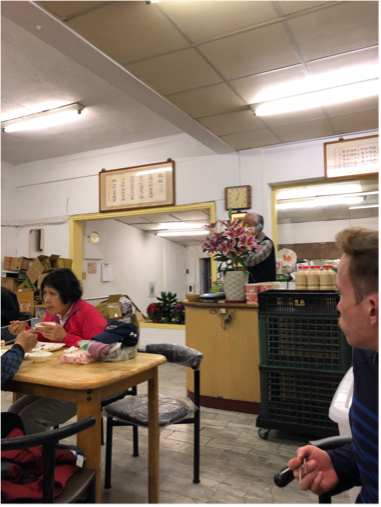
Bing and Bao II - A Culinary Diary in Taipei
East Asia columnist Liam Elliott Brady explores Taiwan’s rich vegetarian heritage and its historical links with Buddhism.