Layers of History: Photographing Paris
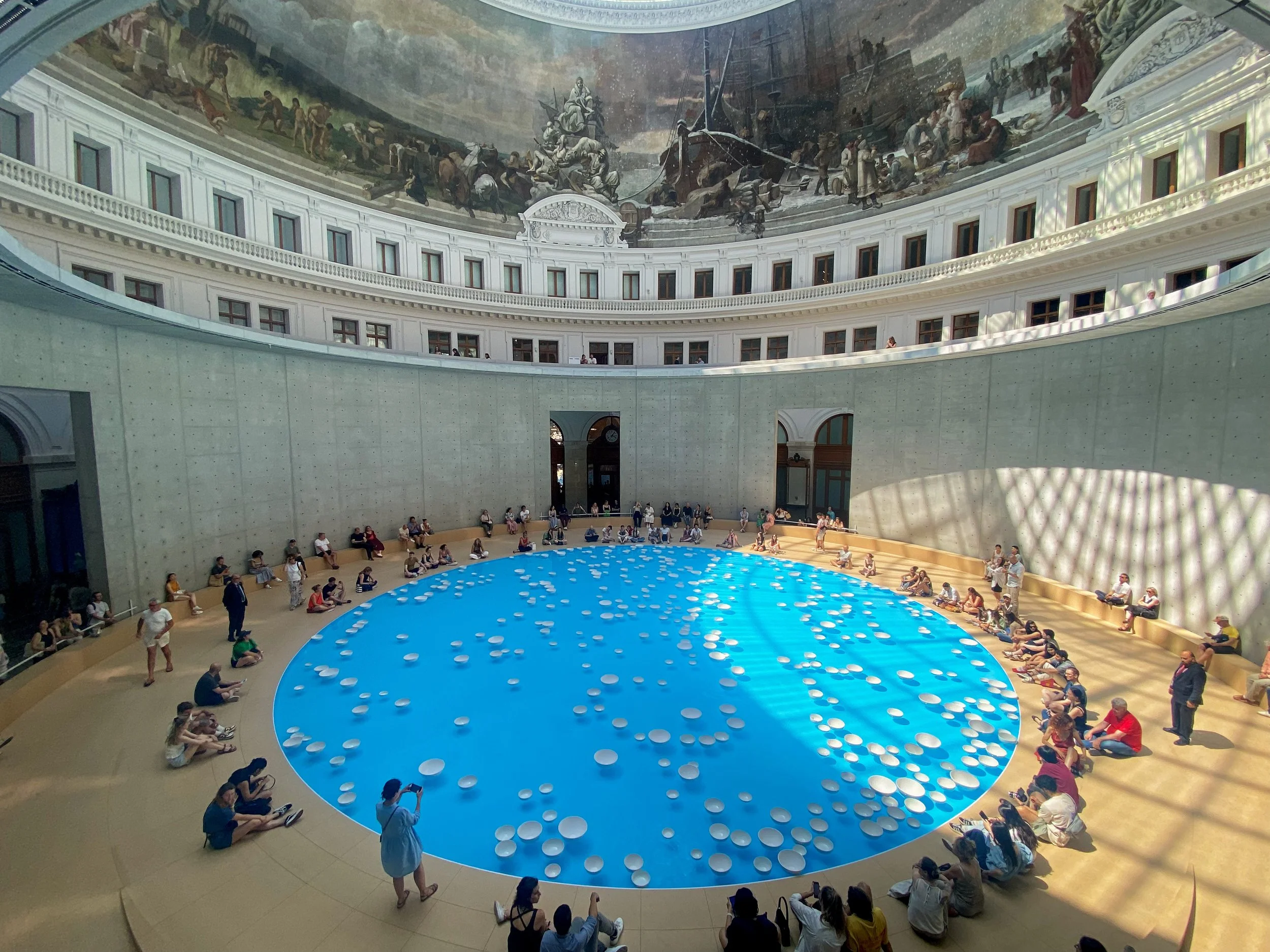
Clinamen, a 2025 installation by Céleste Boursier-Mougenot at the Bourse de Commerce in Paris - All images are the author’s own
While taking photos around Paris, I found myself fascinated by the unique blend of old and new in the city. 6000 years ago, people settled for the first time on an island on the Seine and it has been a capital since the year 500. These archeological remains are now mostly buried beneath centuries of new construction, but the city is still full of historical architecture: the buildings of the centre, in areas such as Île de la Cité and the Latin Quarter, date mostly from before 1800. When venturing further out, the city’s rich heritage remains apparent, with the iconic Haussman buildings of the 1850s as a staple of the architectural environment. Constructed as part of Baron Haussman’s monumental modernisation project, the buildings are recognizable for their white stone façades with marked horizontal lines, balconies on the second floor, and zinc roofs with small windows for the attic rooms.
Paris’s municipal administration has chosen over the years to preserve these original buildings as much as possible and to prevent any new construction from disturbing the character and the skyline of the city. However, it is by no means frozen in time: Paris is very much alive today, not only with the parisiens living inside the city limits, but also with all those who visit, whether among the numerous daily commuters from the suburbs or the 50 million tourists who flock to the city from around the world each year. All this activity calls for more modern spaces to accommodate it, so the city must shift and change to meet current needs whilst respecting its history, making sure that its heritage can be enjoyed by all. In the following series of photographs, I wanted to explore the multi-layered nature of Paris, highlighting the contrasting forces of conservation and renewal that are always present when wandering the city streets.
Bourse de Commerce
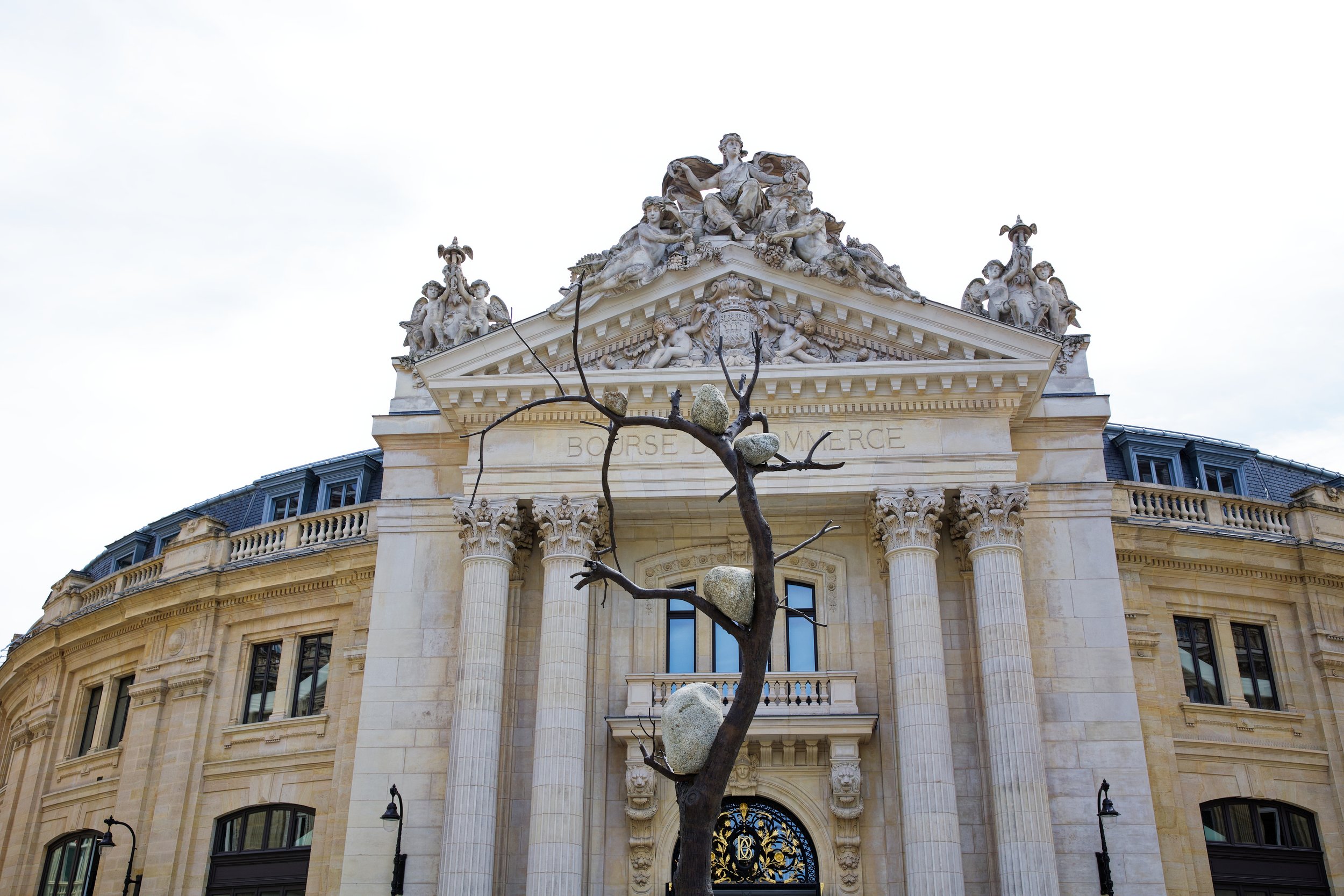
Entrance of the Bourse de Commerce in Paris’s first arrondissement
The Bourse de Commerce was formerly the grain store of Paris before becoming the stock exchange. When the finance industry moved into more modern offices, the historical building with its huge dome and elaborately painted ceiling needed to be preserved. In exchange for paying for the renovation, the Pinault collection (owned by French billionaire François Pinault) turned the building into an exhibition space for contemporary art. Art spills out of the Bourse de Commerce into the street, with an element of the exhibition visible outside to all those who walk by. Here, a tree fashioned from copper with stones strangely balanced on its branches: Idee di pietra (Ideas of stone) by Giuseppe Penone.
The main cupola of the Bourse de Commerce was renovated by the Japanese architect Tadao Ando, who built a cylinder of bare concrete concentric to the cupola’s walls. This preserves and showcases the beautiful painted ceiling (see title image), added to the building in 1889 when it became a trading space. Four painters represented the four continents, a fitting decor for a commodities exchange at a time when France’s industrialisation relied on trade with North America and its colonies in Asia and Africa. The space inside this concrete cylinder is used for a single art piece made specifically for the space, which changes on a regular basis. I had the opportunity to see Clinamen by Céleste Boursier-Mougenot, an installation involving ceramic bowls floating around a shallow pool, a truly mesmerising spectacle for all visitors.
Place des Halles
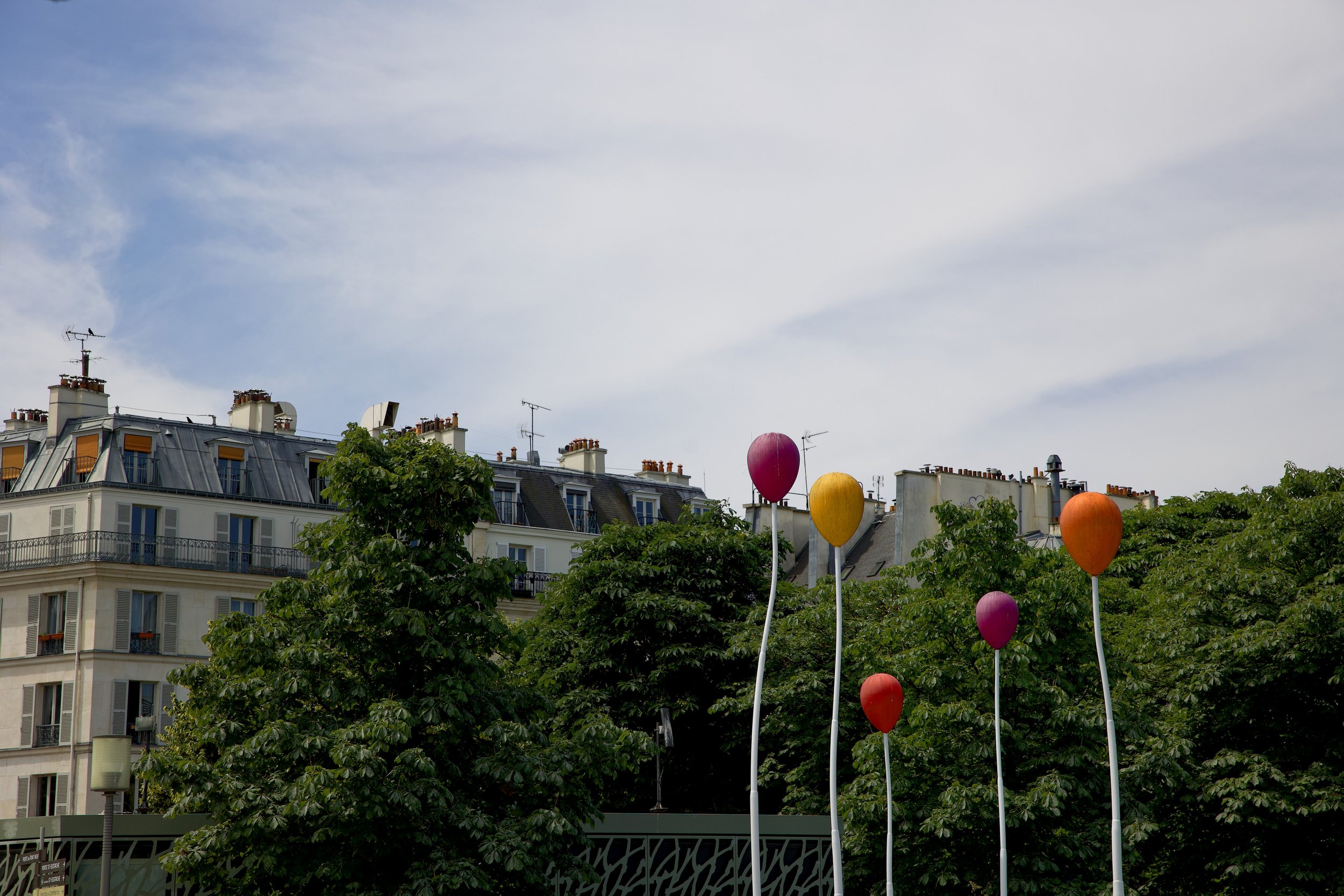
The Jardin Nelson Mandela in Place des Halles, first arrondissement
Place des Halles was previously the main marketplace where food from outside Paris was brought in and sold. As demand grew along with the city, the space became too small, so the marketplace was moved to Rungis in the suburbs of Paris. The Halles were changed into a public park and a shopping centre, continuing the tradition of trade there. The historical buildings surrounding the space have been preserved: the gothic church of Sainte Eustache, the Bourse de Commerce, and the traditional Haussman-style apartment buildings still stand today. These buildings interact with modern additions to the gardens, such as the sculptures of balloons above a children’s playground pictured here.
Paris Seine Rive Gauche
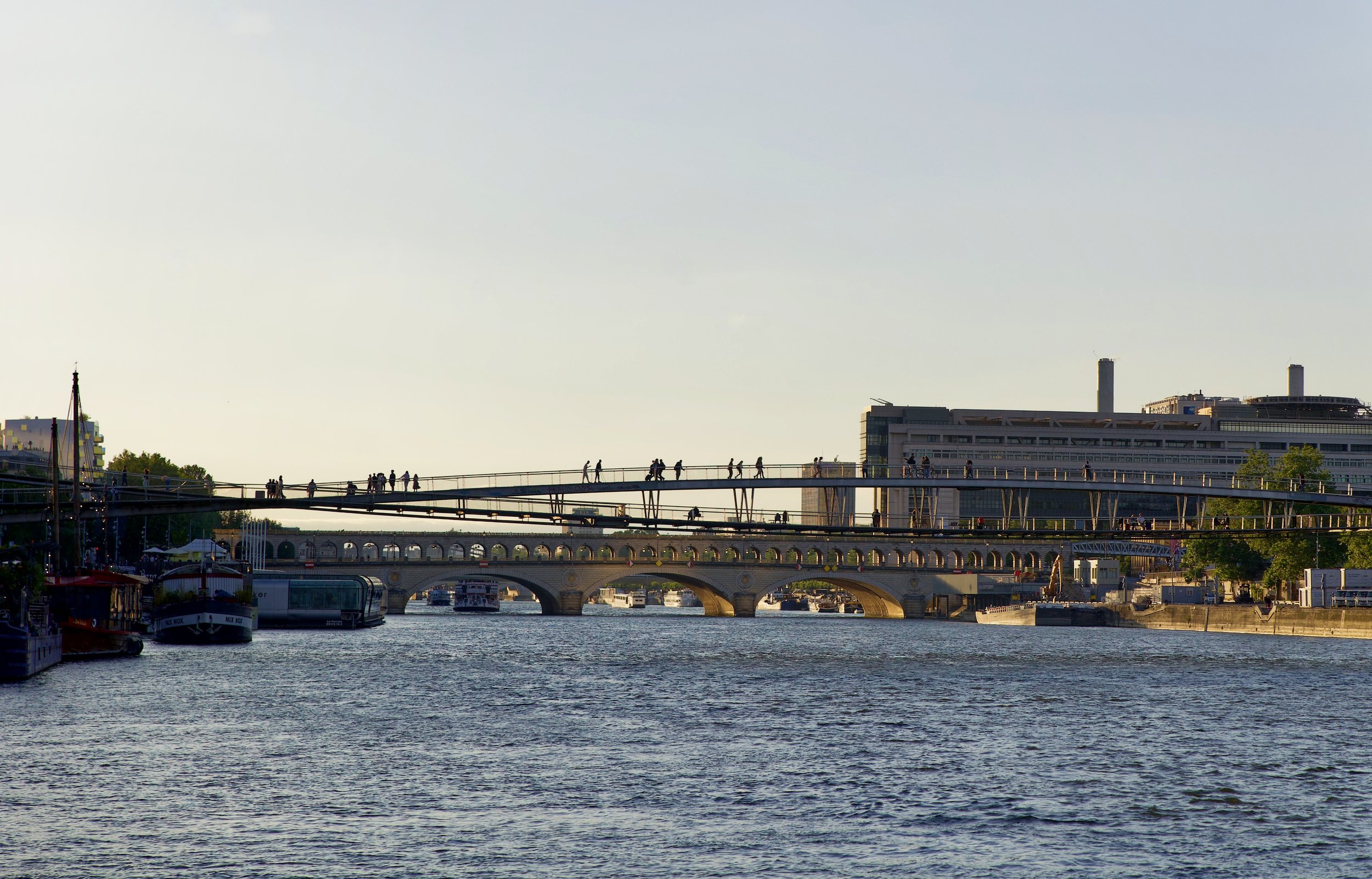
Passerelle Simone-de-Beauvoir over the Seine, connecting the Jardins de Bercy with François Mauriac quay
The banks of the Seine upstream of the historical center have been the site of architectural innovation in more recent years. In the 1990s, François Mitterrand, then president, decided to expand the Bibliothèque Nationale Française (French National Library, often referred to as the BNF). The site chosen for this expansion was Paris Seine Rive Gauche, previously a run-down industrial neighbourhood. The whole area saw extensive regeneration, including adding this double pedestrian bridge (Passerelle Simone-de-Beauvoir), whose striking modern lines contrast the historical bridge directly beyond it.
Hôtel de Ville
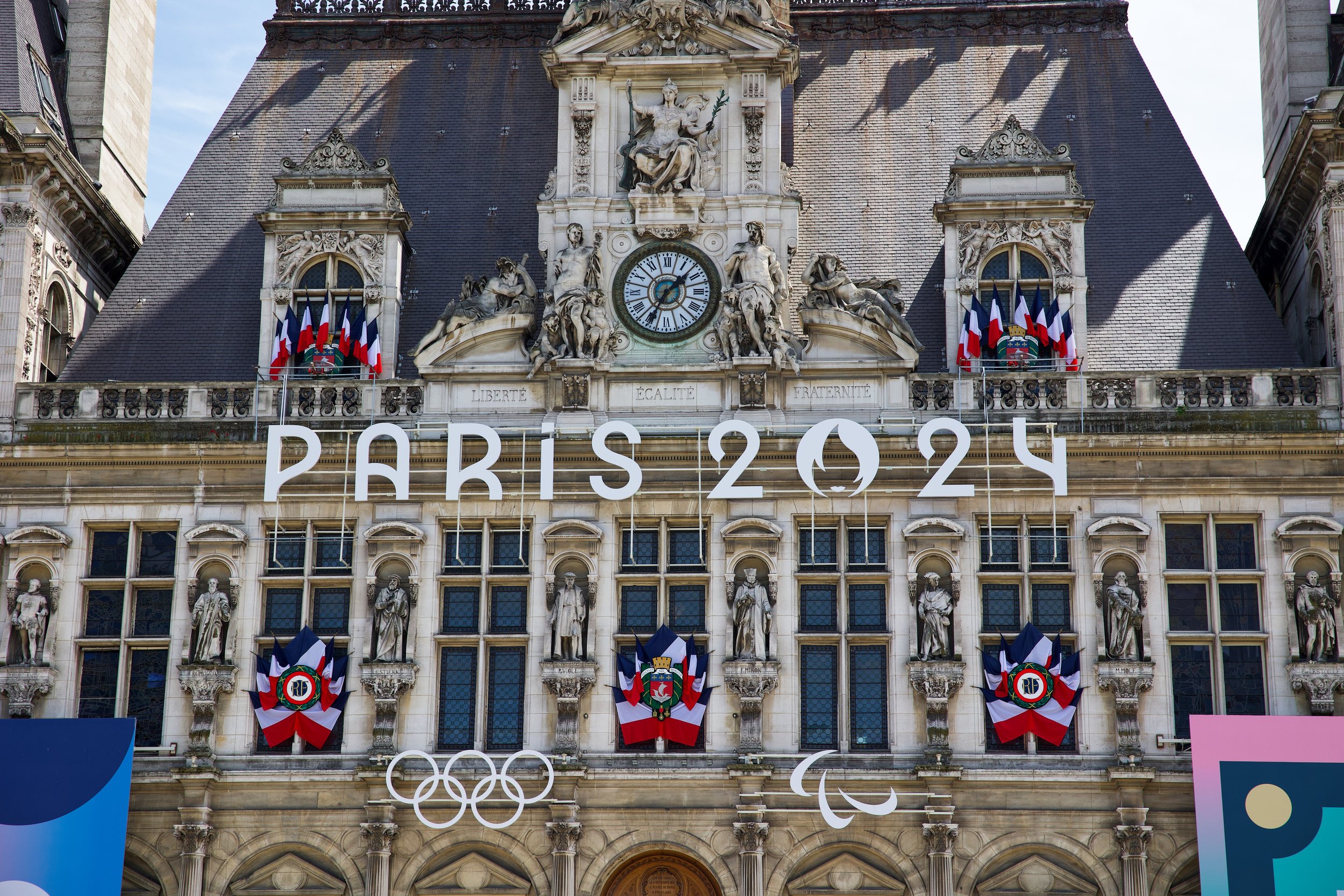
Paris City Hall in the fourth arrondissement during the 2024 Olympic Games
The Hôtel de Ville (City Hall) is in the historical heart of the city, close to the Seine and its ancient islands. But despite its anchorage in the past, it also reflects the current democratic life of the city and hosts numerous events and celebrations. During the 2024 Paris Olympics, the square in front of the hall was turned into a fan zone and the Olympic and Paralympic logos adorned the façade, directly alongside the coat of arms of the city.
Hôtel de Poulpry
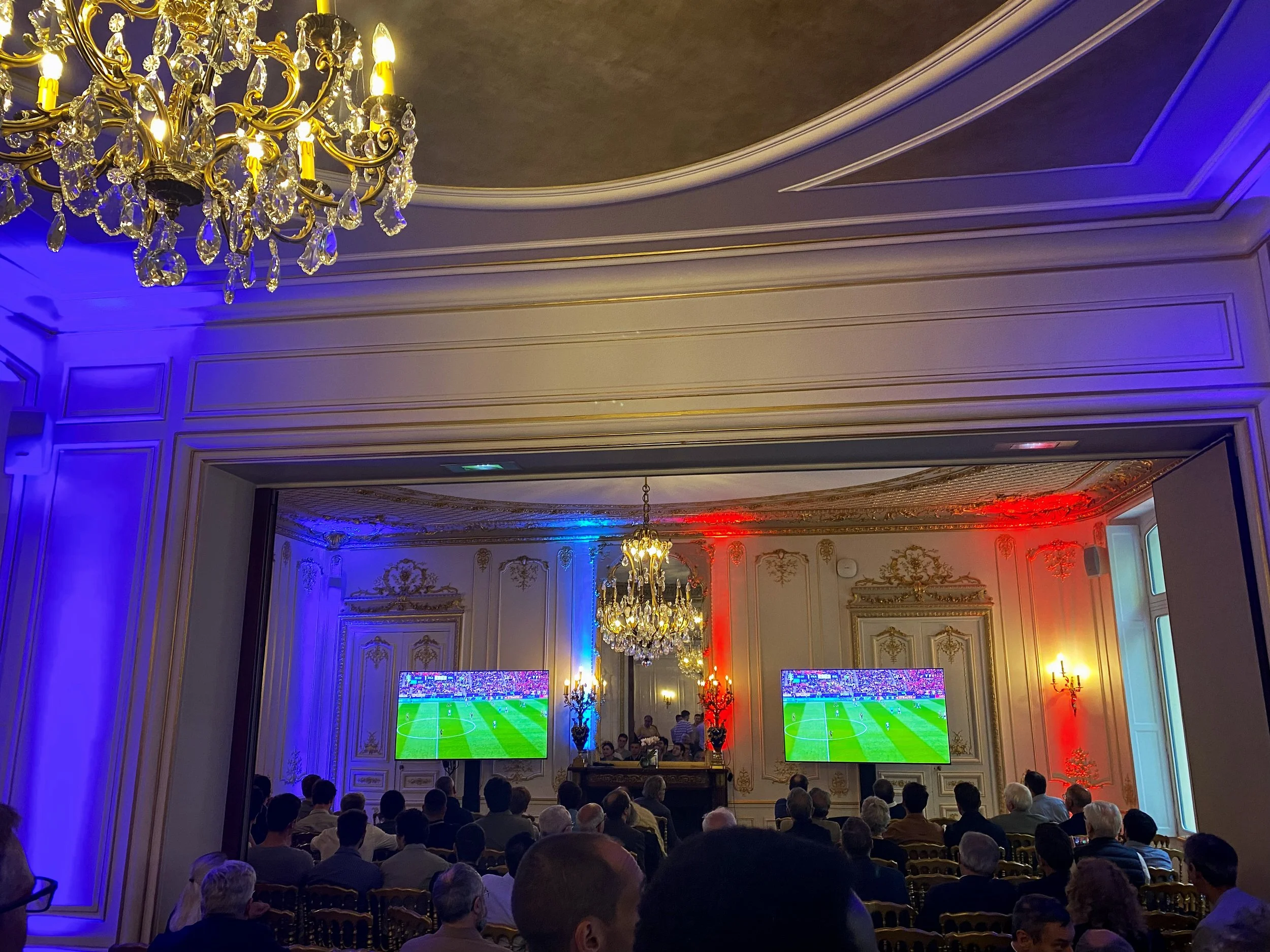
Interior of Hôtel de Poulpry in the seventh arrondissement during a UEFA European Football Championship match
The interior of buildings can also be a place of remarkable transformations. This room is found in the Hôtel de Poulpry, built in 1640 as a private residence for aristocrats. It is now the Maison des Polytechniciens, a club bringing together the alumni of École Polytechnique, a long-established French science university. This is why I was invited to a cocktail reception there, which just so happened to fall on the same day that the French football team was playing in the Euros! So, rather incongruously, the stately room of the ancien régime, with its chandeliers and decorative ceiling mouldings, was used for streaming the football match.