Photo: Adeola Amure, with permission for the CLC
It was the golden swirls of dust clinging to the buildings scattering the skyline that I loved. The swirls that danced around the edges of apartment blocks, office towers and storefronts, picking up people's lives as they went. The ash of cigarettes lying on the road, the clouds of sand forming at the feet of children stood by a kiosk: everything joined those swirls. They symbolised, to me, the entirety of this place I was coming to know. It was an imperfect symbol, but, for my heart at least, good enough.
It fascinated me, just how little it had changed. Not just in appearance, but in sentiment, in spirit. That same desire to survive permeated its surface, seeping into the roots and across the foundations of the hard ground it stood on. It lay all around, etched into the mind of the city itself, emanating life to those selling goods on the roadside, the shopkeepers, the drivers, the clerks. It felt real and unreal, dry and hot, alive and rich.
Of the thousands, millions of experiences one could have, it seemed as though Cairo itself had already hand-picked little moments for me. Immediately, it stood out: what I would be compelled to observe, to confront, how I would draw from my experiences, what I would write about. It all seemed predetermined. As I started to interpret the city around me, its story unfolded into a hundred pages, offering itself up for me to consume.
I saw ripples of waves formed by the heat on the surface of roads as we drove from one place to the next. I noticed many things in those Uber rides with their determined drivers, dusty cars and bumpy roads. The wind would whip and blow my hair back and forth as we sped along the motorway, and I would look out the window because I knew there would always be something to see. It was there in the eyes of the woman crossing the street between the speeding, unrelenting cars, in the rise and fall of a street dog’s ribs, in the group of men gathered, laughing, cigarettes slipping between their fingers. There was always something. I loved travelling around that city. I loved being able to observe. It planted in me a feeling, one that told me I could really get to know Cairo. It lured me in, made the city indispensable to me.
Going back to Cairo made me wonder how much I had grown since I was last there. That childlike way of experiencing the city had gone, but it had been replaced by something just as passive, a soft haze covering my eyes and clouding my view. A softness that coated the harsh edges of a storied city, presenting me with a rose-tinted version. Yet, in the new way I looked at Cairo, there was something distinct from my childhood, something more purposeful.
After so many years there is still a certain fondness I feel for Cairo, although I find it challenging to pinpoint the origin of this sentiment. Fragmented childhood memories surface to offer an answer but it would be unjust to claim my fascination as simply nostalgia for my upbringing. My love of Cairo is more thrilling, more emotional. It is a fixation forming part of an attempt to understand myself, and the reflections of that self I see in the city.
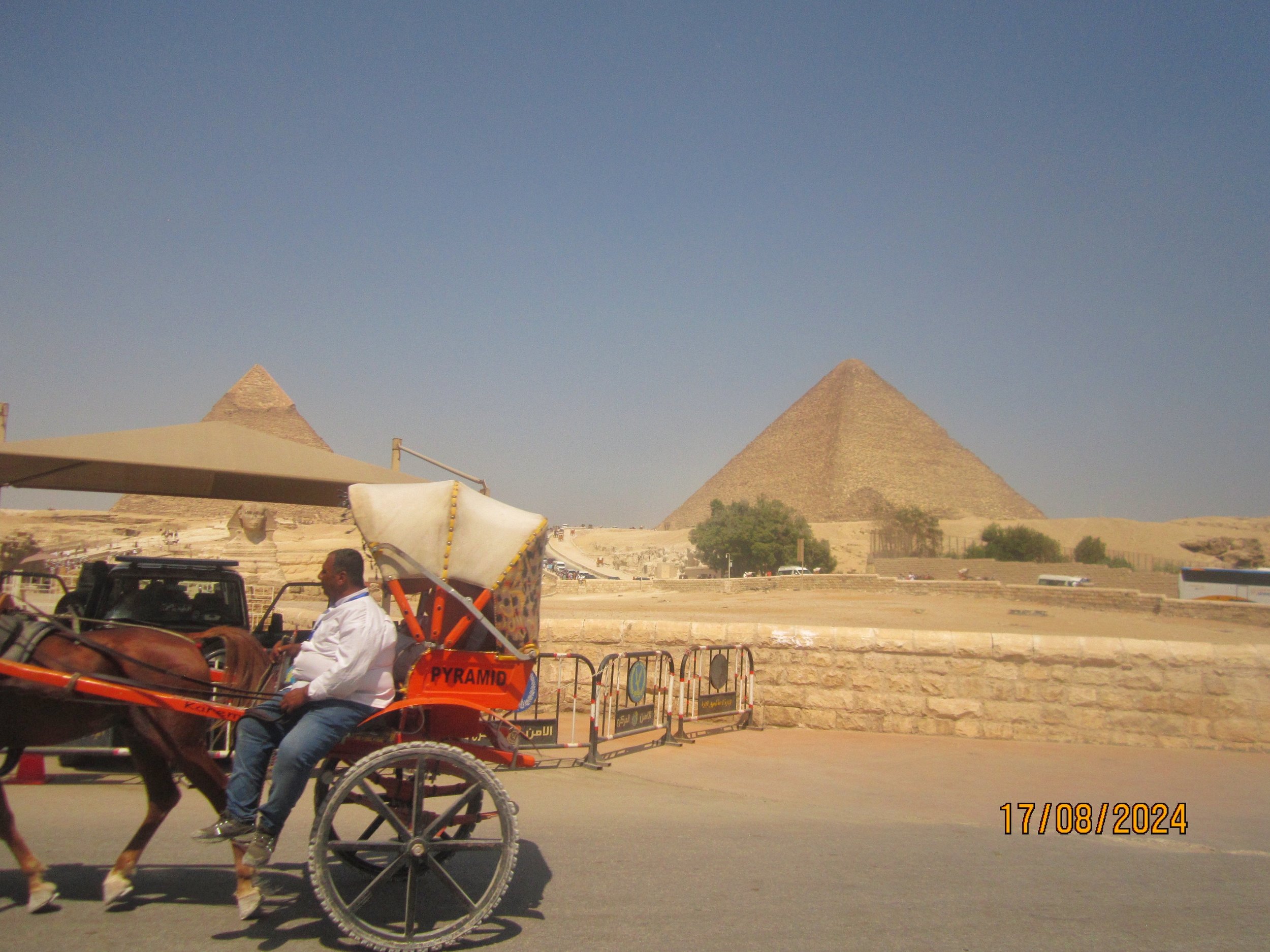
I like looking back now at the photos I took while on that trip. I took quite a few. Pulling out my little camera, snapping fragments of people's busy lives whenever I got the chance. Although, I hesitated at times to capture what I saw. I did not know what it was exactly that I feared, but I realise now that I was afraid of being perceived. I felt I would shatter the idyllic frame I had built around Cairo, that one glance of my subject beyond the camera into the lens of my eye would cause me to question what exactly I was doing there. I feared they would see me for what I was, and what exactly that was, at the time I did not know.
But I see now what it was. That privileged presumption granted only to a foreigner, one who believes they can capture the essence of the places they visit in the pictures they take and words they write, understanding the city’s depths from the surfaces they inhabit. It is that privilege that let me return to the city and the will to break past that barrier will undoubtedly and uncontrollably keep bringing me back.
Cairo gifted me moments of realisation. It gifted me moments of understanding and belonging, however faint they may have been. I know there will always be a special place in my heart for Cairo. I would not and could not have it any other way. I only wish I get the chance to unravel the tight layers the city wrapped around me, revealing what really lies within it and, by extension, within me.