What’s going on in Catalonia these days?
Will Kirby, News Editor
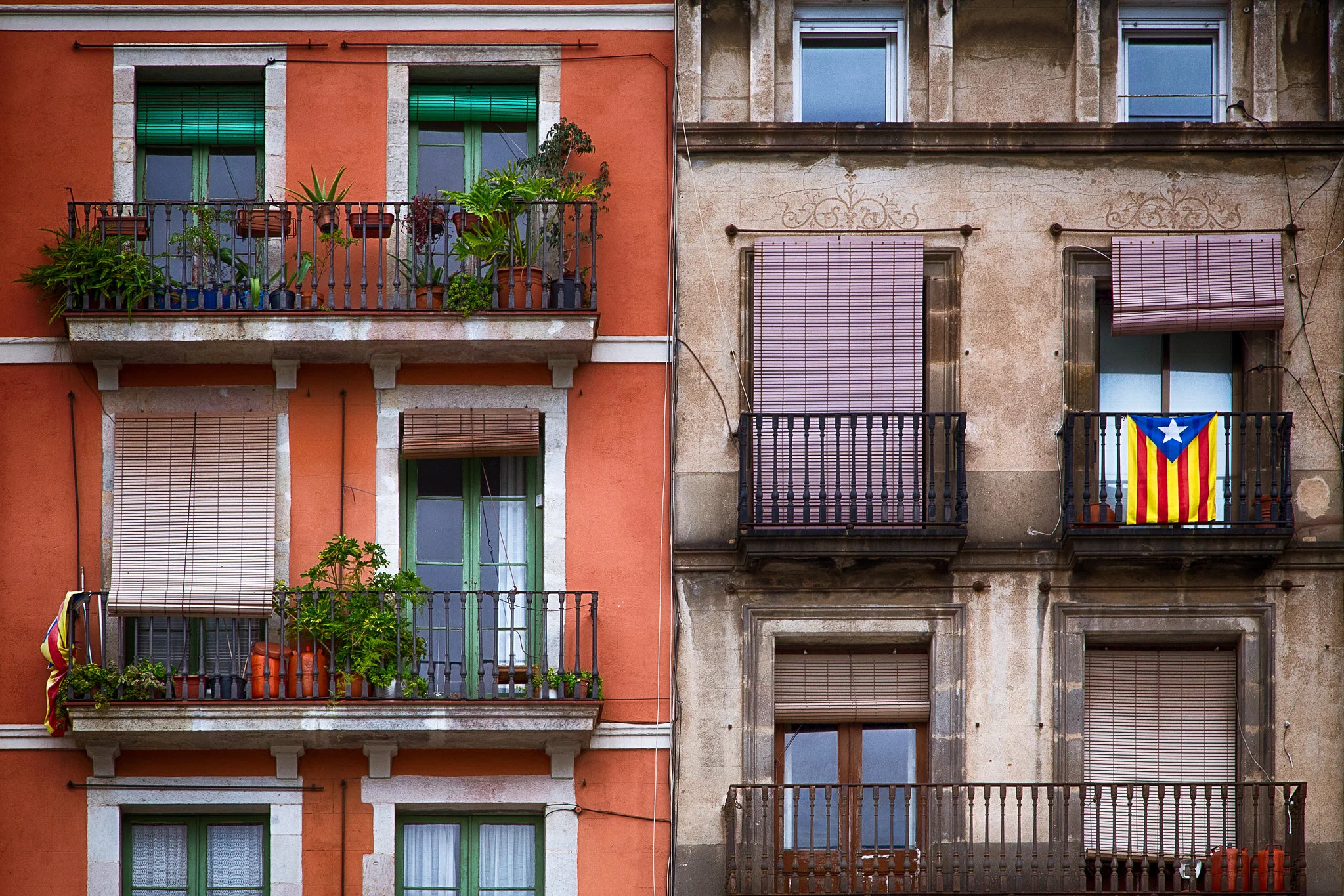
Catalan independence flag on a balcony in Barcelona (Photo: Derek Giovanni Flickr, CC BY-NC-ND 2.0, via Flickr)
Llegeix la versió en català d’aquest article aquí. | Read the Catalan version of this article here.
Over three years ago now, on 1 October 2017 an unconstitutional referendum on Catalan independence was held, despite a ruling against it by the Constitutional Court and the Spanish government not supporting it.
The violence of the Policía Nacional and the Guardia Civil against Catalan citizens, who were simply exercising the electoral rights they had been granted by the Catalan Government, came to be known around the world. The widespread reporting of images from the day in international media was a key factor in the story reaching such a wide audience.
From that day on, what is known as el procés has continued to dominate not just politics, but also the front pages, the judiciary and conversation topics among friends catching up over beers on the terraces of Catalonia’s bars.
However, it is not exactly right to say that 1 October was the start of el procés, rather it was the culmination of a movement which had been growing ever larger for seven years. A bonfire which politicians, both the separatists and the unionists, and various crises had been feeding, to the point that it was impossible to put it out without exacerbating divisions.
Today, the Republic of Catalonia does not exist. Instead, the political and economic situation of Catalonia is, on the surface, the same as it was over a decade ago.
An important difference, however is that nine Catalan politicians are sentenced to between nine and thirteen years in prison. As well as this, seven of their fellow politicians are now in exile, among them Carles Puigdemont, the ex-Catalan President. Several international organisations, including the UN and Amnesty International, consider the sentences to be “excessive and disproportionate” or “arbitrary”.
On 14 February, elections were held in Catalonia (the sixth time Catalans have been called to the polls in just six years, without counting either of the independence votes that were held), brought about by the removal from office of the ex-president of the Generalitat, Quim Torra, for disobedience last year.
Independentism, once again, dominated as a key issue in Catalan politics this time round. Even if, for some political parties, explicitly and purposefully ignoring it as a campaign talking point was their way of making it the biggest issue once again.
Among the parties who would prefer to move on and keep the events of the last decade in the past is the unionist Socialist Party of Catalonia (PSC). With the arrival of the former health minister who led Spain through the Covid-19 pandemic, Salvador Illa, at the helm of the party, there has been a sort of shift in the status quo. The spin doctors were quick to come up with a name for this too: the “Illa effect”.
The PSC wanted to be the number one political force in Catalonia once again, after a decade of separatist domination of the halls of power. However, in the end, the voters denied the party such a clear-cut victory.
If anything, election night has left the waters of Catalan politics even more murky and difficult to navigate than before.
The PSC won in terms of votes, although, with 33 seats, they equal the independentist Esquerra Republicana in the chamber. Also, the independentist parties collectively won enough seats to outnumber the unionist parties and have the ability to block coalition formations in any upcoming investiture votes.
The darker side of the election was that far-right party Vox won their first seats in Catalonia, gaining 11 in the Parlament. The unionist right wing in Catalan politics has always failed to hold a particularly decisive position, however the main right-of-centre parties, Ciutadans (Cs) and the People’s Party (PP), lost heavily in this election, opening the door to the far right.
Discussions are now underway to decide who will be the next president of Catalonia, with the independentist parties looking to find a way to lock the unionist parties out of power and prolong their grasp on Catalan political institutions. This will prove difficult, given the considerable, growing differences between the parties.
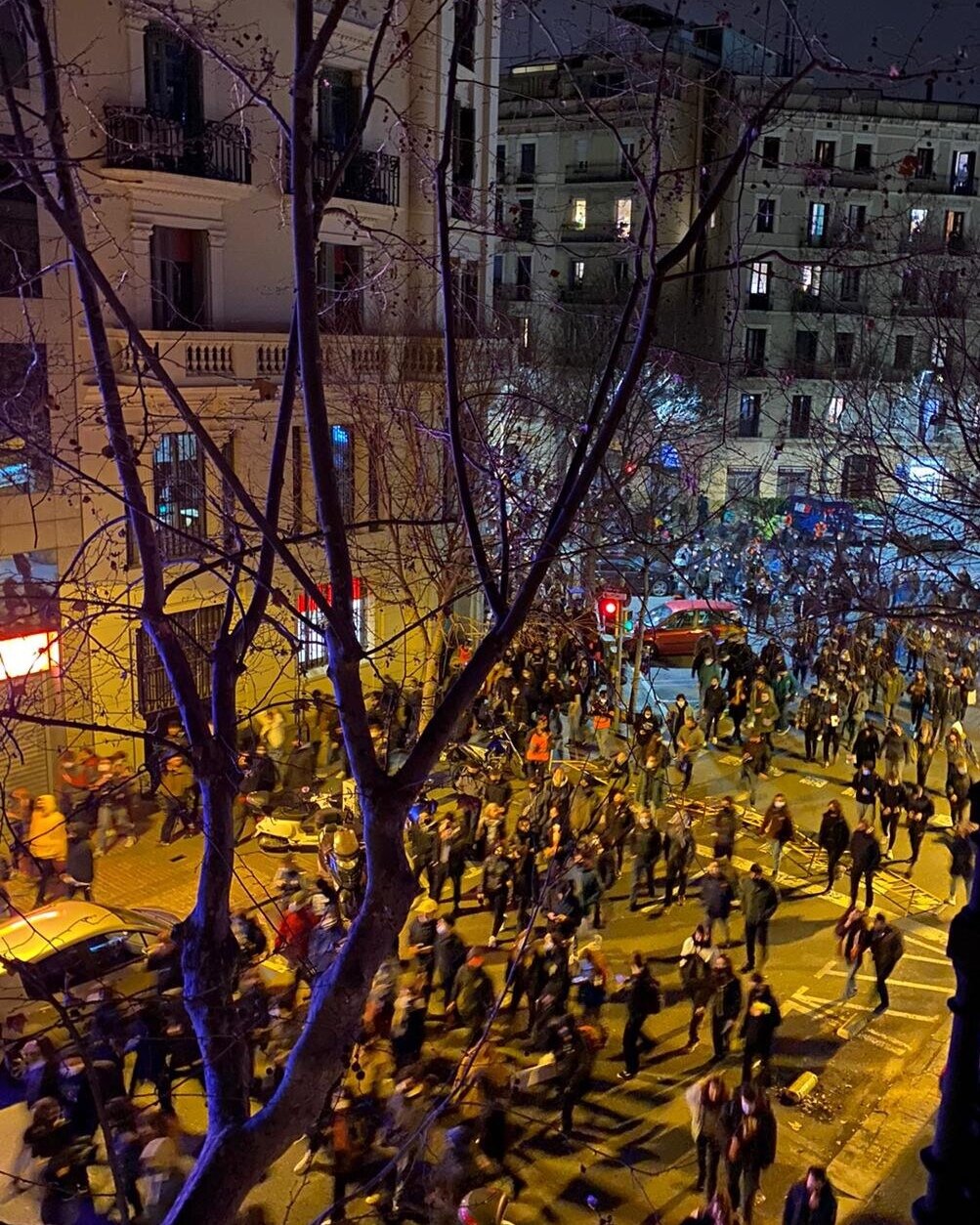
Protest in Barcelona in support of freedom of speech (Photo: Natacha Maurin)
Against the backdrop of the violent protests of the past few weeks, which are in support of the imprisoned musician Pablo Hasél and freedom of speech and have paralysed the streets of the Catalan capital, Barcelona, tensions are running even higher. The young people of Catalonia are angry: they suffer from the highest youth unemployment rate in Europe, with nearly 4 in 10 under-25s out of work, and they feel politicians have consistently ignored them for years now.
Read Natacha Maurin’s article on the protests in Barcelona following the imprisonment of Pablo Hasél here.
Few things are a given when it comes to Catalan politics. However, the next few weeks and months are almost certain to throw up a number of curveballs as Catalonia’s politicians try and settle on a new political modus operandi while also calming fever-pitch tensions which are boiling over on the street.
Thumbnail photo: Toshiko Sakurai, CC BY-NC-ND 2.0, via Flickr