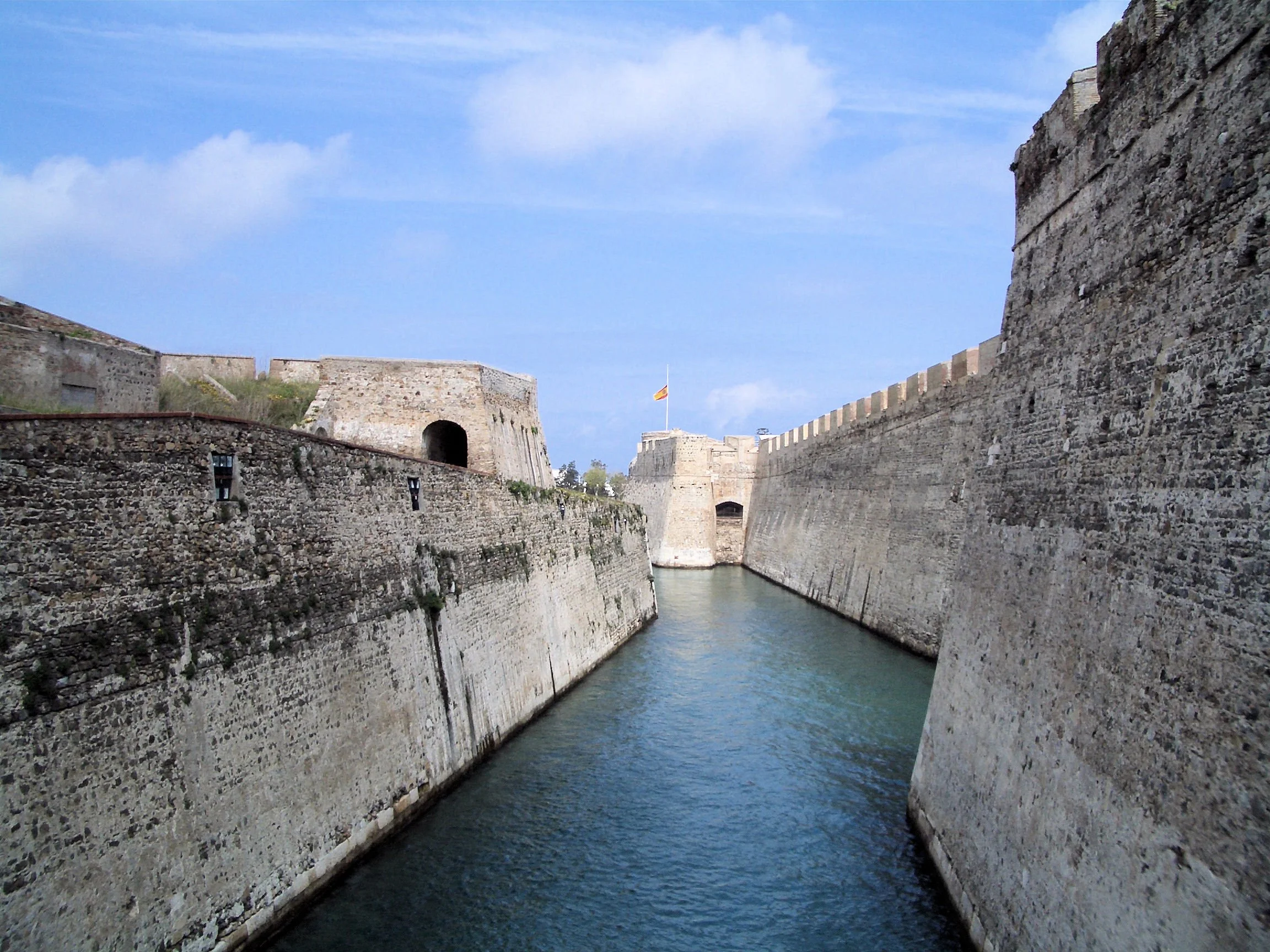
Moat of the Royal Wall at Ceuta (Image credit: The Red Hat of Pat Ferrick, https://commons.wikimedia.org/wiki/File:Moat_of_Royal_Wall_At_Ceuta_2.jpg, via Wikimedia Commons / Public Domain)
Walking a tightrope between two continents is always fraught. Ceuta and Melilla, balancing on this fraying rope for half a millennium, know that better than most: any slip invites diplomatic controversy, religious fallout, and social schisms. The two cities, perched on the North African coastline, form an unstable crossroads: officially part of Spain since 1497 (Melilla) and 1580 (Ceuta), they are nevertheless claimed by Morocco and divided on religious and national lines.
As the only parts of the EU located in Africa, the enclaves are haunted by territorial disputes. Morocco, arguing they are colonies of Spain, demands control of both; in 2023, for example, President Mayara publicly announced his confidence the two ‘occupied’ cities would be one day ‘recovered’. Madrid, meanwhile, insists their control is legitimate, highlighting Ceuta and Melilla’s long history under Spanish rule and the UN’s decision to exclude them from its list of territories to be decolonised. However, Spain’s linguistic and cultural policies betray a lack of political willpower to protect the cultures of the enclaves it claims are crucial to its territorial integrity. Inevitably, it is innocents that are caught in the crossfire of these disputes. In 2021, for example, Morocco allowed 6,000-8,000 migrants, including at least 1,500 minors, to swim to Ceuta in response to Spain’s decision to hospitalise one of their political opponents.
It comes as no surprise, then, that the cities are encircled by heavily militarised borders. Those imposing wire fences, cutting like a scar across the land, are an apt symbol of life in the enclaves. Yet these borders can tell us as much about exchange as division. The movement of goods from Ceuta and Melilla to Morocco, though often illegal, is frequently tolerated. Indeed, it is the main pillar of the cities’ economies; between ten and fifteen thousand people cross the border daily as part of this commerce. Others travel from Morocco to work in the enclaves during the day, and a significant group of Muslim immigrants have settled more permanently.
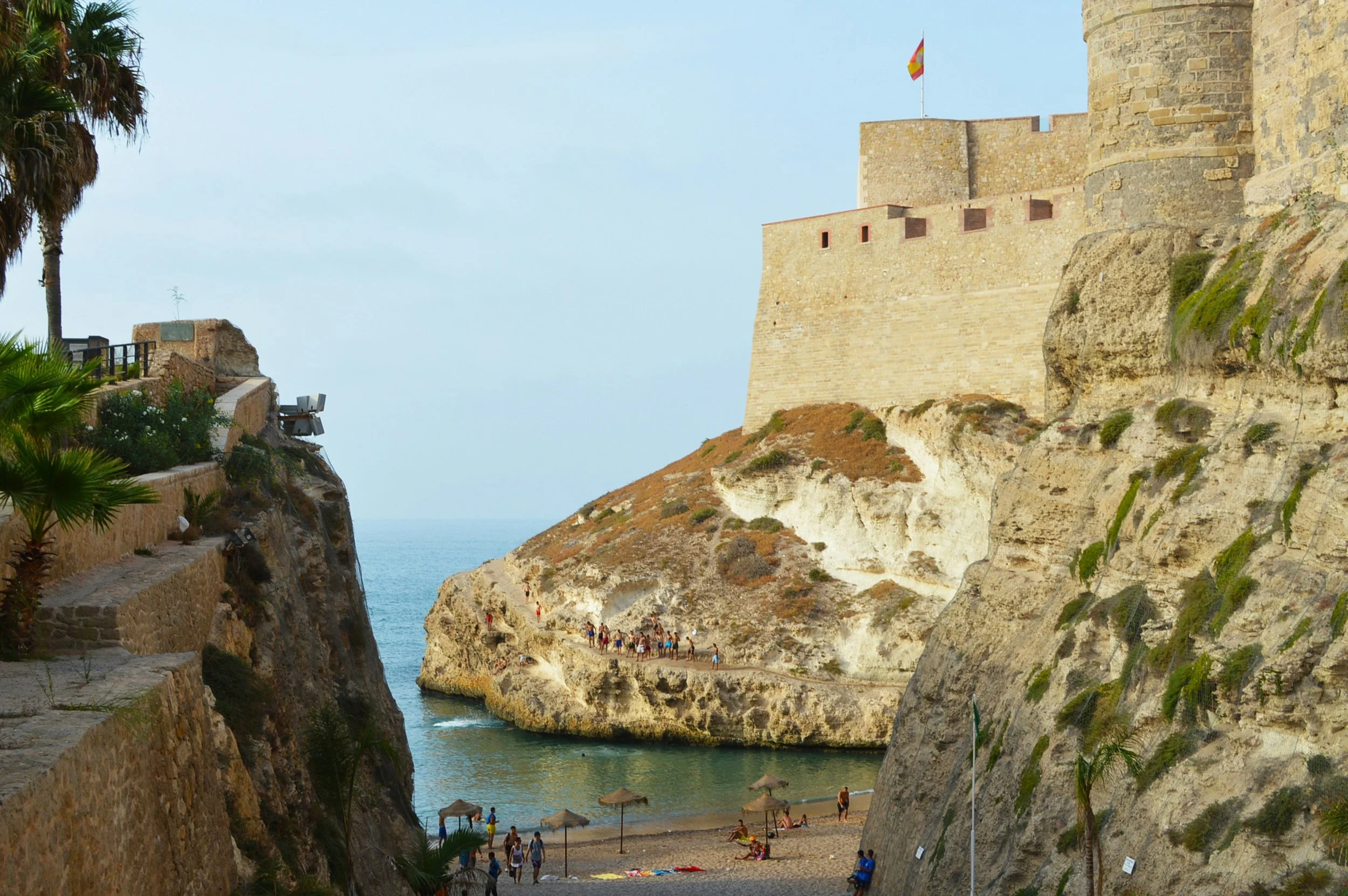
Melilla (Image credit: Christelle Hayek, https://unsplash.com/photos/people-walking-on-brown-concrete-building-near-body-of-water-during-daytime-HyvM_JBmbxA, via Unsplash)
These groups are only the latest in a long line of people to become part of this liminal zone. Originally populated by Spanish soldiers and convicts, the cities experienced a commercial boom in the nineteenth century which saw Andalusians and Moroccans alike settle in large numbers. Divides, however, can often be more religious than national: the Christian majority clings fiercely to Catholicism, more so than their peninsular counterparts, while some Muslims speak of the frustrations of identifying with both españolidad and Islam.
The official line on this diversity is clear: the cities are hailed as oases of tolerance, hybridity and convivencia (a Spanish term translated as ‘living together’, suggesting cohesion between diverse cultures), almost like a reincarnation of the religious harmony that supposedly prevailed in the medieval Iberian Peninsula. The reality is less picturesque. In practice, there is a clear dividing line between the two cultures. While recent changes have begun to create more integrated populations, those of Spanish descent have historically dominated central neighbourhoods, while residents of Moroccan origin occupied the outskirts near the border. Locals speak of a profound cultural ‘segregation’ dividing the city, where ‘belonging’ particularly often hinges on birthplace. In Melilla, for example, even the term melillenses, the original word for the city’s inhabitants, is reserved for so-called ‘locals’, with a different suffix used to form melillero, which refers to recent arrivals. In this context, immigrants and their descendants feel a pressure to prove their ‘Spanishness’, against accusations they support a Moroccan ‘takeover’. It is a prejudice with centuries-old roots, which could be blamed on the Reconquista, Spain’s 800-year campaign to end Muslim rule in the Iberian Peninsula in the Middle Ages.
The enclaves’ relationship with Europe is just as contentious. Though legally part of the EU, Ceuta and Melilla exist on the margins of the organisation. They became the first in North Africa to vote in EU Parliamentary Elections in 1989, an important symbolic and political step—but only two of the candidates came from the enclaves. Even the reluctance of European football teams to play Spain in either city (motivated by local civil disturbances, concerns over political implications, or Moroccan pressure, depending on who you ask) speaks volumes. The UEFA’s argument in 1987 that European matches should be on European soil is outright damning. Though primarily symbolic snubs, they keep the EU and UEFA firmly on one side of the Mediterranean, and Ceuta and Melilla stranded on another shore.
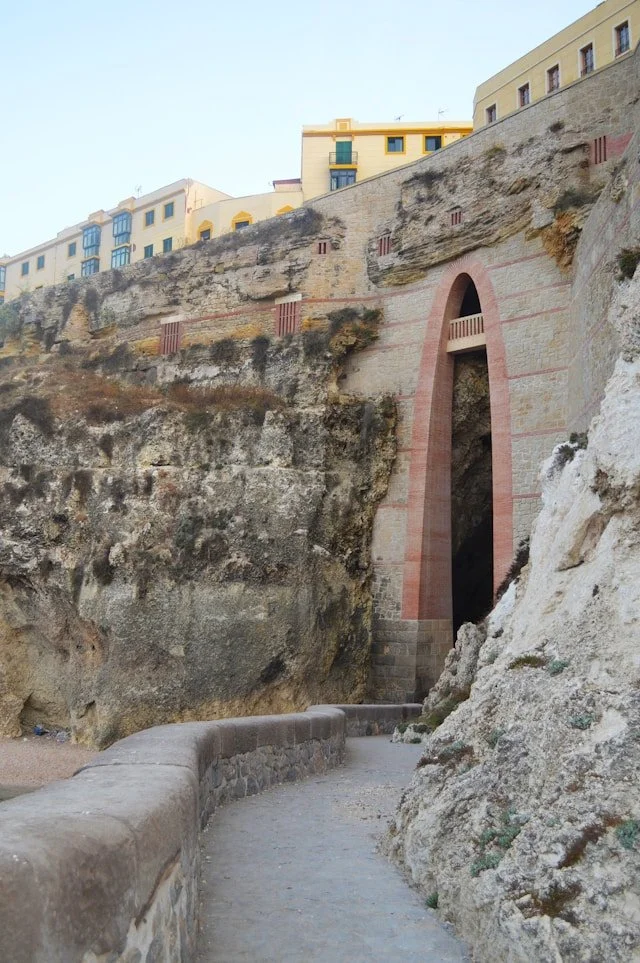

Melilla la Vieja, Melilla (Image credit: Christelle Hayek, https://unsplash.com/photos/brown-concrete-building-near-river-during-daytime-DTSumDrtoto, via Unsplash)
The core of the cultural schism, however, lies with Spain and, inevitably, with language. Multilingualism, we are told, characterises the Iberian Peninsula: the issue of equality for co-official languages such as Gallego, Euskara and Catalan has dominated Spanish politics for decades. Yet Ceuta and Melilla’s ‘other’ languages, Dariya (Moroccan Arabic) and Tamazight are often silenced. This is despite the promises of Spain’s 1978 Constitution, which declares that linguistic diversity ‘is a cultural heritage which shall be especially respected and protected.’ While some initiatives to preserve the two languages have been approved, including the teaching of Tamazight to soldiers and civil servants, they are far from welcome in formal education, where some teachers ban their use in the classroom. Proposals to change this situation are met with the familiar defence of Castilian as the ‘common tongue’, while Dariya and Tamazight are dismissed for their lack of value and prestige. It is a difficult attitude to defend; when factoring in the presence of undocumented migrants, one study estimates their speakers likely make up well over 50% of the population.
None of this implies a fatalistic attitude. Indeed, there are signs of a shift in both cities. Both have politicians campaigning for a change in mentality: in 2006, for example, the Unión Demócrata Ceutí proposed an article enshrining the protection of Dariya in law and promoting its use in education and the media. However, their failure to pass the act indicates there is still an immense amount of work to be done.
Ultimately, the cities are reminders that, however much governments throughout history have denied it, Spain has always had one foot in North Africa. From centuries of Muslim rule in the Iberian Peninsula to the Arabic loan words characterising Castilian, from its endless disputes with Morocco to the surge of immigration from Africa, Spain has always been dancing on a tightrope between two continents. For better or worse, Ceuta and Melilla are the heirs to that legacy.